
Interview: Nestlé head of sustainability on its regenerative agriculture push

Milk, spreads and cheese might be staple products on many dining tables, but that does not shield their producers from demands that they reduce their environmental impact. Food giants, and dairy producers in particular, face a tough challenge when it comes to protecting the wider world.
From high greenhouse emissions and large water footprint, to heavy land use and manure pollution, it is well-acknowledged that the production of dairy can place pressure on agriculture and the climate.
In the UK alone, an estimated 1.8 million dairy cows require extensive grazing land and feed crops, leading to around 70% of agricultural land being used for livestock. Further challenges arise as the land used to grow feed crops often relies on mono cultures, which reduce biodiversity and degrade soil over time.
Nestlé is a key user of dairy products, and while it is best known as the owner some of the UK’s most recognisable food and drink brands, it is what’s happening behind the scenes on British farms that is getting its sustainability team excited.
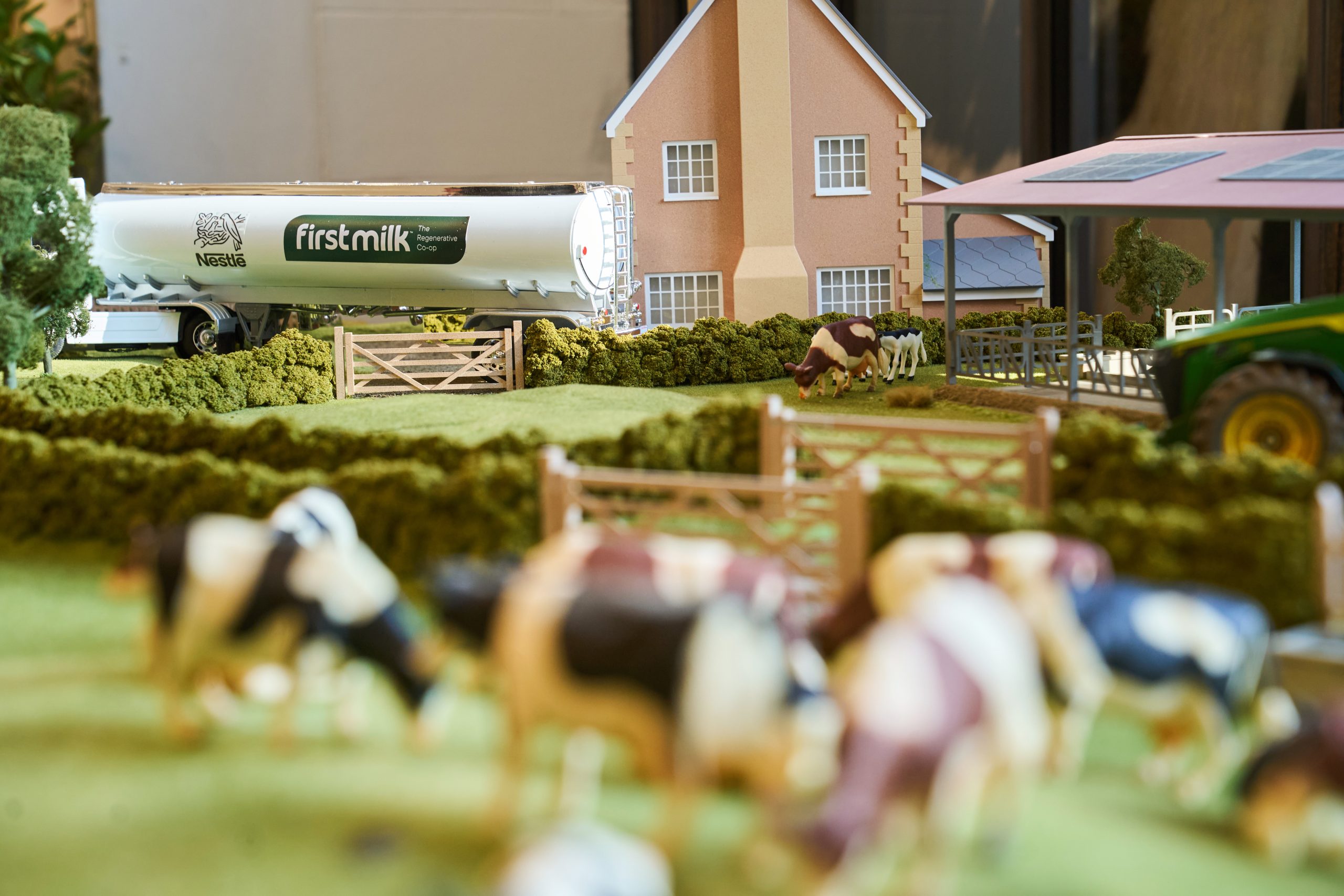
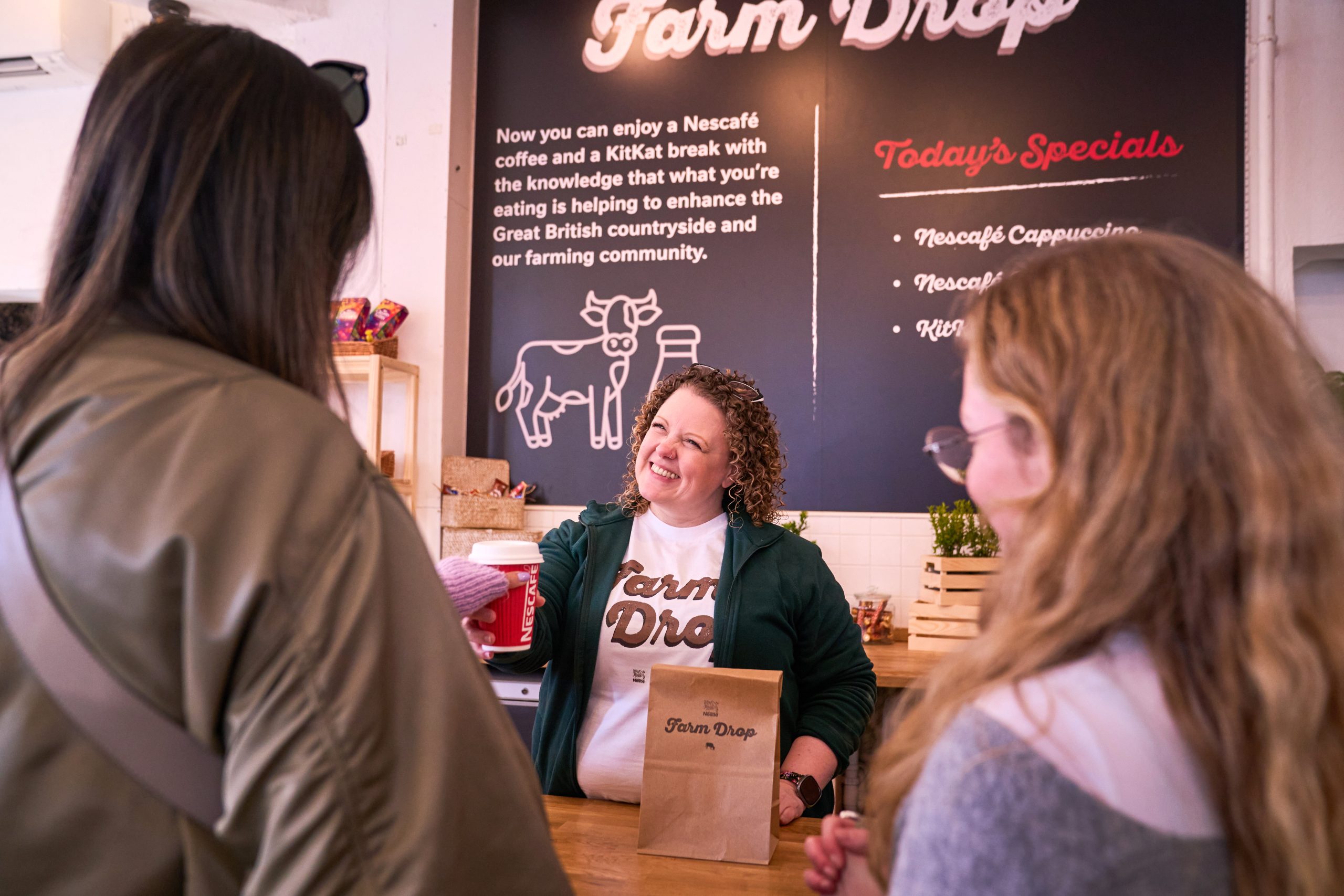
The FMCG giant is seeking a greener future, starting from the ground up. Last week, in the heart of London’s Shoreditch, Nestlé launched a pop-up in collaboration with British dairy co-operative First Milk. The initiative offered a surprising escape from the city’s grey bustle: a green oasis inspired by the British countryside.
Originally a café, the space was transformed into a mini farm-themed installation for the day, filled with green foliage, displays of regenerative soil, and insight into Nestlé’s sustainability push. The event marked a celebration of the food manufacturer’s ongoing trials of regenerative farming methods aimed at improving soil health, boosting biodiversity and making dairy farming more sustainable.
At the heart of this regenerative agriculture push is a two-decade partnership with First Milk. And the results, says Nestlé UK & Ireland head of sustainability Dr Emma Keller, are already speaking for themselves.
Cultivating change: regenerative farming practices in action
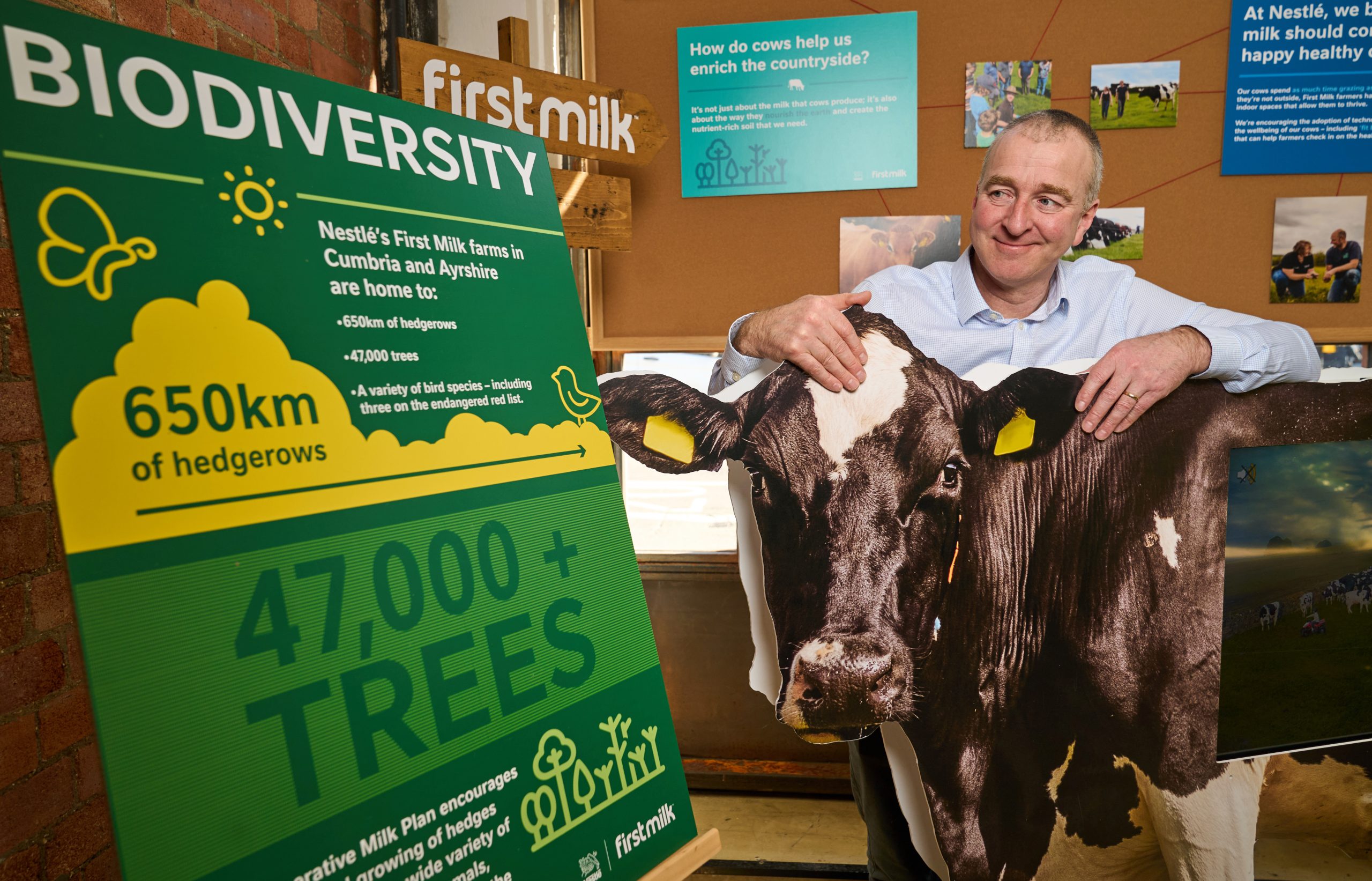
“We’ve been working with First Milk for over 21 years now, it’s been a long journey of trial, learning, and adaptation,” says Keller.
One of the most exciting changes, she says, is the introduction of multi-species herbal leys, which involve planting a variety of grass species in a single field. Where a farmer may have previously planted one or two types of grass, now they’re planting five, six or even seven.
“This does wonders for soil biodiversity, bringing different microorganisms and rooting depths into the mix,” she explains. “It makes the soil more nutritious and better at capturing carbon. Plus, it’s fantastic for the cows. Just like us, they benefit from variety in their diet.”
Another key shift is the adoption of rotational mob grazing, where cows are moved across different sections of pasture, allowing fields to rest and regenerate for up to 90 days, sometimes at higher grazing intervals. It is part of a rotational grazing strategy that can include grazing methods such as adaptive multi-paddock, rotational grazing, mob grazing and integrated crop-livestock systems.
While a more common practice in the UK, Nestlé has now incorporated the method into its framework guidelines for the 500,000 farmers it works with across hundreds of countries around the world.
“This approach gives cows a better-quality diet and helps nature bounce back – from improving soil health to supporting wildlife,” says Keller.
Supporting farmers on the journey
Making the switch to regenerative practices isn’t always straightforward, especially when it means deviating from generations of farming tradition. Nestlé says it recognises this and works closely with farmers to de-risk the transition.
This is achieved by helping mitigate financial risks, by providing a safety net if things don’t go as planned, as well as a financial incentive in the form of sustainability bonuses.
“We share the risk with them,” Keller says. “If we’re asking a farmer to try something new, we help provide a buffer if things don’t go to plan. More than that, we pay a sustainability bonus on top of the milk price, based on the regenerative practices they adopt.”
This approach, she adds, isn’t just about improving sustainability, it’s about supporting the long-term resilience of UK farming in the face of climate change.
Measuring impact and seeing results
So what has the impact been so far? According to Keller, both the data and the anecdotal evidence point to meaningful progress. “We’re on track for a 50% reduction in carbon footprint from First Milk’s farmers by the end of 2025. That’s huge.”
Listing benefits, Keller talks about results that go beyond just statistics, to seeing visible improvements on farms – from healthier soil teeming with worms to the return of native wildlife.
On the ground, farmers are using fewer chemical inputs, cow health is improving, and antibiotic use is down. “You can actually see it. Fields are teeming with dung beetles and earthworms, woodland areas are being restored, and birds are returning. It’s tangible, not just theoretical. And that’s incredibly motivating for farmers.”
Regenerative agriculture in the bigger picture
With Nestlé committed to net zero by 2050, Emma says regenerative agriculture is a critical pillar of the company’s wider environmental strategy.
“We’ve set a goal to source 50% of our agricultural ingredients from regenerative farming by 2030. That’s equivalent to 14 million tonnes of raw materials globally,” says Keller. “It’s a huge lift. But it’s essential if we’re going to hit our climate goals.
“But inevitably, it also sits alongside other pressing sustainability ambitions, that deserve just as much or even more attention. This includes halving emissions by 2030, cutting virgin plastic use, and transforming manufacturing operations.”
As a result elsewhere, beyond agriculture, Nestlé is also investing in renewable energy, recyclable packaging, and product reformulation to reduce environmental impact across its portfolio.
“But regenerative agriculture is fundamental,” Keller adds. “Up to 90% of our emissions are in our agricultural supply chain. If we don’t work with farmers, whether here in the UK or with smallholder farmers in Pakistan, we simply won’t get there.”
The First Milk partnership is a flagship programme for Nestlé, but Keller is hopeful it can serve as a blueprint.
She says: “What we want to do is show that this works, and not just because Nestlé says it does, but because farmers say it does. And if it doesn’t work for the farmer, it doesn’t work full stop.”