Deliveroo’s Suzy McClintock: on-demand grocery is becoming a weekly habit

Deliveroo
ConvenienceFeaturesInnovationSupermarketsSustainability

Deliveroo is nominated for Grocer of the Year at this year’s RG Excellence Awards, Suzy McClintock, VP consumer, explains why shoppers are using rapid grocery delivery for more than emergency top-ups.

When Deliveroo first moved into grocery, the quick-commerce conversation was often framed around speed. How fast could a basket reach a customer’s door, and how many emergencies could the model solve?

McClintock says the bigger shift is not simply about shaving minutes off fulfilment, it is about recognising that grocery shopping no longer revolves around one predictable weekly shop.

A convenient channel

“People don’t shop in channels. They shop in missions,” she explains. “Nobody wakes up and explicitly decides to be an online grocery customer. They simply choose the channel that is most convenient and aligned with their needs.”

Those missions vary widely. One customer may need dinner sorted on a Tuesday evening, another may be topping up before the weekend, replacing a forgotten ingredient, or buying a last-minute gift on the way to a friend’s house. In each case, the basket size, urgency and expectation are different.

This plays into a longer-term grocery trend that predates the rise of on-demand apps, according to McClintock.

Smaller households, less advance meal planning and a greater focus on buying fresh food closer to the point of consumption have all helped to loosen the grip of the traditional big weekly shop.

“The single big weekly stock-up has been quietly unbundling into several smaller shops for a long time,” she adds.

That is where Deliveroo’s model fits naturally: “A model built to deliver a big fortnightly shop in a two-hour slot serves a small midweek top-up badly. A model built around stores close to where people live serves it well.”

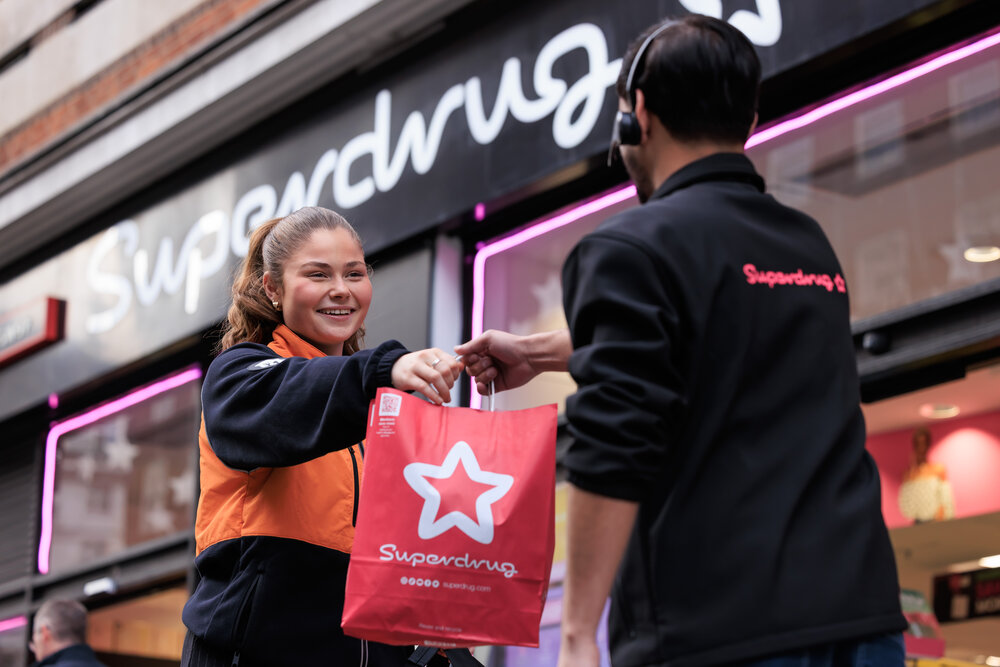
Many grocers and convenience stores in London pledge delivery in under 30 minutes

While the earliest phase of rapid grocery was concentrated in dense urban areas, Deliveroo is now focused on expanding the proposition beyond major city centres.

“Many parts of the country still can’t get a grocery order in under an hour, but that gap is closing fast,” reveals McClintock.

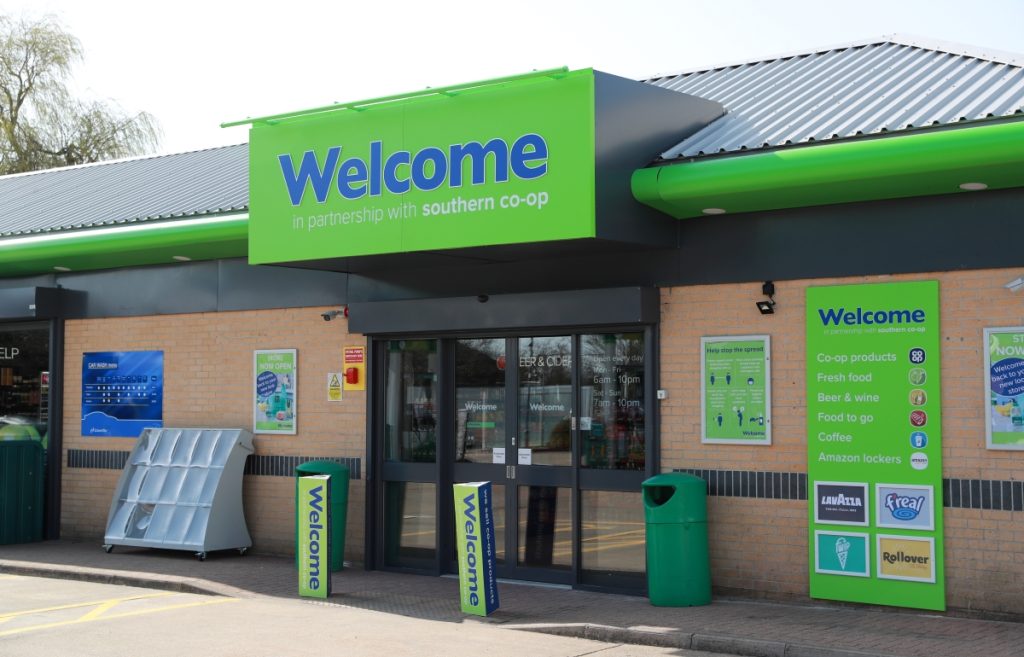
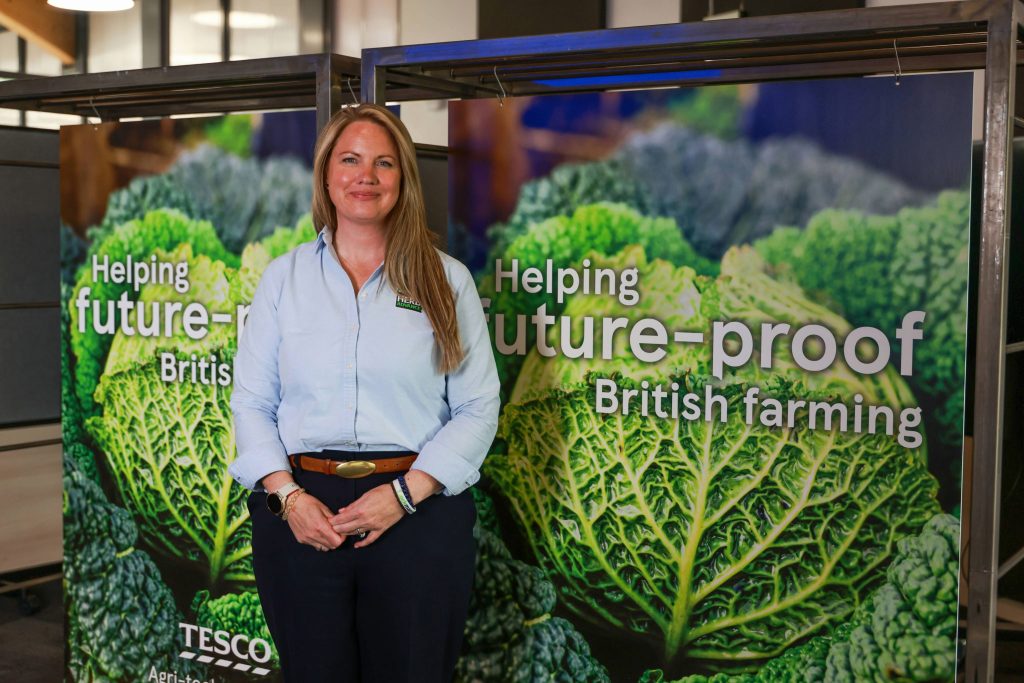
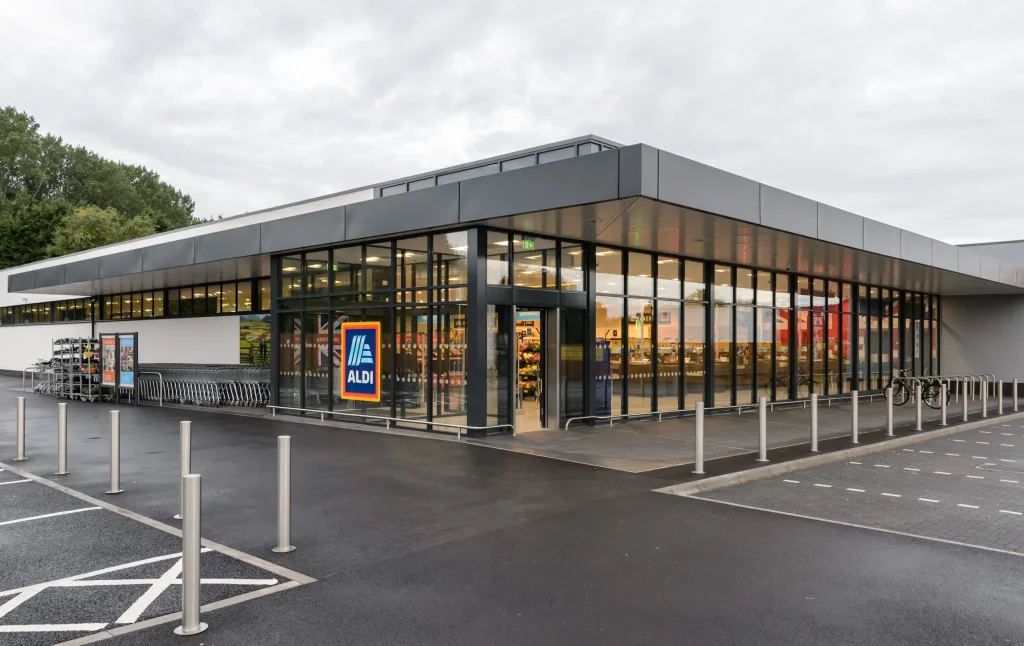
Over the past year, Deliveroo has brought Tesco onto the platform and expanded coverage and range with Co-op, Asda, Waitrose and Boots. It is also preparing to launch a trial with Aldi next month.

McClintock explains: “Every store we connect to opens up a catchment that had no on-demand option at all.”

However, serving customers outside city centres requires a slightly different playbook. In market towns and less dense areas, the question is less about being the fastest possible service and more about giving shoppers enough choice to complete a meaningful basket.

“Outside city centres, what makes it work is range rather than speed,” she notes. “If a customer can do a proper shop with us instead of a top-up, everything else follows.”

That is why features such as multi-store ordering and deeper product selection are becoming increasingly important. The same fulfilment model that works for a forgotten ingredient in central London may need to support a fuller grocery mission elsewhere.


Subscribe to Grocery Gazette for free

Sign up here to get the latest grocery and food news each morning


Delivering for consumers

McClintock stresses that Deliveroo cannot simply tell shoppers that on-demand grocery offers the same quality and value as a traditional supermarket shop. It has to prove it order by order. “You don’t convince them, you show them,” she says.

That means getting the operational details right. This could br fruit arriving in good condition, chilled items staying cold and substitutions making sense for the customer. ” McClintock adds: “Quality in grocery is unglamorous and specific. Delivering on those details is what earns us repeat orders.”

Value has also become a bigger part of the equation as shoppers scrutinise every spend. Deliveroo has integrated Nectar and Clubcard into its app so customers can collect points and access member pricing as they would in store.

Alongside Deliveroo Plus, its own loyalty programme, McClintock argues this helps reposition rapid grocery as an everyday service rather than an occasional premium.

“Customers are more intentional than they were a couple of years ago,” she notes. “They expect every decision to work harder. Integrating Nectar and Clubcard into our app means they collect points and get member pricing exactly as they would in store.”

Customers can collect Nectar and Clubcard points when shopping on the Deliveroo app

McClintock says the relationship with grocery partners is increasingly shaped by data, range planning and customer behaviour.

“We’ve gone from being a delivery channel to being a key part of how our partners understand a rapidly changing market,” she says.

One example is Bundles, which allows customers to shop across up to three retailers in a single basket for one delivery fee. The feature was designed after Deliveroo noticed customers abandoning a whole shop when one essential item was unavailable.

“People were dropping a whole shop over one unavailable item, often something non-negotiable like a particular milk for a dietary need,” McClintock says. “So we made it possible to finish the shop elsewhere on the platform.”

The result is a more strategic conversation with partners. Retailers can see what customers are searching for, how demand moves throughout the day and which ranges travel well.  She stresses: “The conversation used to be about delivery times, now it’s about range and pricing.”

A local commerce platform

As Deliveroo pushes further into grocery and other new verticals, McClintock sees the company’s role as connecting more local commerce to online demand rather than replacing the high street with distant fulfilment infrastructure.

She says: “We are ultimately building the world’s leading local commerce platform, helping local businesses of all sizes to grow and compete in an increasingly online and AI-driven world and supporting local jobs and businesses on the high street.”

The advantage of Deliveroo’s model is that spend remains anchored in existing local shops and restaurants.

McClintock concludes: “The stores are already there, the customers are already nearby, and our network connects them together for seamless online deliveries. We’re laser focused on creating a better connected high street, one insight at a time.”

Deliveroo joins Asda, Lidl and Morrisons in the Grocer of the Year category at this year’s RG Excellence Awards. See the full shortlist, and all categories here. This year’s RG Excellence Awards will be hosted at the Underglobe on 14 October 2026. 

ConvenienceFeaturesInnovationSupermarketsSustainability

Leave a Reply

Your email address will not be published. Required fields are marked *

Fill out this field
Fill out this field
Please enter a valid email address.

Deliveroo’s Suzy McClintock: on-demand grocery is becoming a weekly habit

Deliveroo

Deliveroo is nominated for Grocer of the Year at this year’s RG Excellence Awards, Suzy McClintock, VP consumer, explains why shoppers are using rapid grocery delivery for more than emergency top-ups.

When Deliveroo first moved into grocery, the quick-commerce conversation was often framed around speed. How fast could a basket reach a customer’s door, and how many emergencies could the model solve?

McClintock says the bigger shift is not simply about shaving minutes off fulfilment, it is about recognising that grocery shopping no longer revolves around one predictable weekly shop.

A convenient channel

“People don’t shop in channels. They shop in missions,” she explains. “Nobody wakes up and explicitly decides to be an online grocery customer. They simply choose the channel that is most convenient and aligned with their needs.”

Those missions vary widely. One customer may need dinner sorted on a Tuesday evening, another may be topping up before the weekend, replacing a forgotten ingredient, or buying a last-minute gift on the way to a friend’s house. In each case, the basket size, urgency and expectation are different.

This plays into a longer-term grocery trend that predates the rise of on-demand apps, according to McClintock.

Smaller households, less advance meal planning and a greater focus on buying fresh food closer to the point of consumption have all helped to loosen the grip of the traditional big weekly shop.

“The single big weekly stock-up has been quietly unbundling into several smaller shops for a long time,” she adds.

That is where Deliveroo’s model fits naturally: “A model built to deliver a big fortnightly shop in a two-hour slot serves a small midweek top-up badly. A model built around stores close to where people live serves it well.”

Many grocers and convenience stores in London pledge delivery in under 30 minutes

While the earliest phase of rapid grocery was concentrated in dense urban areas, Deliveroo is now focused on expanding the proposition beyond major city centres.

“Many parts of the country still can’t get a grocery order in under an hour, but that gap is closing fast,” reveals McClintock.

Over the past year, Deliveroo has brought Tesco onto the platform and expanded coverage and range with Co-op, Asda, Waitrose and Boots. It is also preparing to launch a trial with Aldi next month.

McClintock explains: “Every store we connect to opens up a catchment that had no on-demand option at all.”

However, serving customers outside city centres requires a slightly different playbook. In market towns and less dense areas, the question is less about being the fastest possible service and more about giving shoppers enough choice to complete a meaningful basket.

“Outside city centres, what makes it work is range rather than speed,” she notes. “If a customer can do a proper shop with us instead of a top-up, everything else follows.”

That is why features such as multi-store ordering and deeper product selection are becoming increasingly important. The same fulfilment model that works for a forgotten ingredient in central London may need to support a fuller grocery mission elsewhere.


Subscribe to Grocery Gazette for free

Sign up here to get the latest grocery and food news each morning


Delivering for consumers

McClintock stresses that Deliveroo cannot simply tell shoppers that on-demand grocery offers the same quality and value as a traditional supermarket shop. It has to prove it order by order. “You don’t convince them, you show them,” she says.

That means getting the operational details right. This could br fruit arriving in good condition, chilled items staying cold and substitutions making sense for the customer. ” McClintock adds: “Quality in grocery is unglamorous and specific. Delivering on those details is what earns us repeat orders.”

Value has also become a bigger part of the equation as shoppers scrutinise every spend. Deliveroo has integrated Nectar and Clubcard into its app so customers can collect points and access member pricing as they would in store.

Alongside Deliveroo Plus, its own loyalty programme, McClintock argues this helps reposition rapid grocery as an everyday service rather than an occasional premium.

“Customers are more intentional than they were a couple of years ago,” she notes. “They expect every decision to work harder. Integrating Nectar and Clubcard into our app means they collect points and get member pricing exactly as they would in store.”

Customers can collect Nectar and Clubcard points when shopping on the Deliveroo app

McClintock says the relationship with grocery partners is increasingly shaped by data, range planning and customer behaviour.

“We’ve gone from being a delivery channel to being a key part of how our partners understand a rapidly changing market,” she says.

One example is Bundles, which allows customers to shop across up to three retailers in a single basket for one delivery fee. The feature was designed after Deliveroo noticed customers abandoning a whole shop when one essential item was unavailable.

“People were dropping a whole shop over one unavailable item, often something non-negotiable like a particular milk for a dietary need,” McClintock says. “So we made it possible to finish the shop elsewhere on the platform.”

The result is a more strategic conversation with partners. Retailers can see what customers are searching for, how demand moves throughout the day and which ranges travel well.  She stresses: “The conversation used to be about delivery times, now it’s about range and pricing.”

A local commerce platform

As Deliveroo pushes further into grocery and other new verticals, McClintock sees the company’s role as connecting more local commerce to online demand rather than replacing the high street with distant fulfilment infrastructure.

She says: “We are ultimately building the world’s leading local commerce platform, helping local businesses of all sizes to grow and compete in an increasingly online and AI-driven world and supporting local jobs and businesses on the high street.”

The advantage of Deliveroo’s model is that spend remains anchored in existing local shops and restaurants.

McClintock concludes: “The stores are already there, the customers are already nearby, and our network connects them together for seamless online deliveries. We’re laser focused on creating a better connected high street, one insight at a time.”

Deliveroo joins Asda, Lidl and Morrisons in the Grocer of the Year category at this year’s RG Excellence Awards. See the full shortlist, and all categories here. This year’s RG Excellence Awards will be hosted at the Underglobe on 14 October 2026. 

ConvenienceFeaturesInnovationSupermarketsSustainability

Social

SUBSCRIBE TO OUR DAILY NEWSLETTER

  • This field is for validation purposes and should be left unchanged.

Most Read

Most Read

ConvenienceFeaturesInnovationSupermarketsSustainability

Leave a Reply

Your email address will not be published. Required fields are marked *

Fill out this field
Fill out this field
Please enter a valid email address.

RELATED STORIES

Latest Feature

Menu

Please enter the verification code sent to your email: