
Dr. Will’s finds its flavour as healthier condiments hit the mainstream

Features

Co-founder and CEO Liam White shares how changing attitudes to ultra-processed food, founder-led social media and sharper retail pitches are helping Dr. Will’s challenge grocery’s condiment giants.

When Liam White left investment banking for the world of food start-ups, he saw a chance to rethink one of grocery’s most habitual categories. Dr. Will’s began in 2017 with a simple proposition: condiments should taste indulgent without relying on added sugar or an unnecessarily long ingredients list.

The idea was rooted in co-founder Dr Will Breakey’s family experience. His mother, a nursery school teacher, had watched parents cover vegetables in sugary ketchup and barbecue sauce to persuade children to eat them. White also saw an opportunity to balance food, flavour and nutrition. His personal experience in middle-distance athletics and inspiration from his mother, who is a food writer, confirmed the potential.

White explains: “A condiment’s whole purpose is to add to a meal. It can’t be something that’s just a health product.”

The team therefore questioned: “Can we make something taste amazing, but it’s also better for you at the same time?”.

Waiting for the market to catch up

Dr. Will’s arrived before healthier condiments became an obvious growth story. White says the team saw snacking shift towards protein bars, popcorn, fruit and nuts and expected sauces to follow quickly.

Instead, changing established buying habits proved slow. The recent focus on ultra-processed food, coupled with a post-pandemic interest in health and fitness, has changed the picture.

Dr. Will’s can be found on the shelves of Tesco, Sainsbury’s, Waitrose and Co-op

“The one thing you can’t control is trends and when they happen,” he notes. “Getting into a retailer is really difficult, but it’s the easy part in the grand scheme of things. It’s much harder to change consumer behaviour and to get people to pick products up off the shelf.”

That challenge is especially acute in condiments, where legacy brands command huge awareness and shoppers often buy the same products for decades. Yet White believes more consumers are now prepared to pay extra for quality, scrutinise ingredient lists and use product-scanning apps.

Dr. Will’s positions itself around all-natural ingredients, no added sugar using dates instead and a growing choice of olive and avocado oil products.

“People are choosing to allocate their hard-earned money towards better-quality food, and that’s an amazing thing,” he says.

Eating out less also gives shoppers room to spend more on groceries, he adds, while still saving against the cost of a restaurant meal.

Founder-first marketing

Social media has become central to closing the awareness gap. White is a prominent presence on Dr. Will’s TikTok, using the founder story and direct customer contact as advantages that multinational competitors cannot easily replicate.

“What’s really important to me is keeping the distance between us and the customer as small as possible, and that feedback loop really tight,” he says.

“We’re reading every single email they send, every review they make, and we’re using that to shape new products, improve our existing products and change our marketing.”

The promise, White argues, must remain easy to understand. Shoppers should be able to trust the brand without decoding every label. That consistency supports a more personal sales pitch online, where honest accounts of building the business sit alongside product education and customer replies.


Subscribe to Grocery Gazette for free

Sign up here to get the latest grocery and food news each morning


Pitch the retailer’s opportunity

Emerging brands seeking listings at Tesco, Sainsbury’s Co-op and Waitrose should look to move beyond enthusiasm for the product and explain the commercial role it can play, White stresses. Retailers have finite shelf space, he says, but a range built only around category bestsellers can miss shoppers who are willing to trade up.

“The question you need to answer is: what am I delivering for the retailer? You need to think from their point of view,” White advised.

“Use any data that you have. Data is power,” he stresses.

That may include direct-to-consumer performance, social engagement and evidence that a brand can bring younger shoppers into stores. White credits his investment-banking background with sharpening the analysis, financial modelling, project management and presentation skills needed to turn that evidence into a persuasive retail case.

A new route into the basket

Dr. Will’s latest move takes the brand beyond the ambient condiment aisle. Its 30g dip pots have launched in Tesco chillers beside breaded chicken, giving shoppers a lower-cost way to discover the range and placing the brand in a high-footfall part of the store.

White describes Tesco’s decision to work with Dr. Will’s on the project as “a big seal of approval”. More broadly, he sees the combination of wellness culture and direct founder communication creating unusually favourable conditions for challenger brands.

“If you’re making something healthier, it’s a really, really good time,” he says. “Social media enables you to communicate with customers directly and tell an authentic founder story.”

Features

Leave a Reply

Your email address will not be published. Required fields are marked *

Fill out this field
Fill out this field
Please enter a valid email address.

Features

Share:

Dr. Will’s finds its flavour as healthier condiments hit the mainstream

Co-founder and CEO Liam White shares how changing attitudes to ultra-processed food, founder-led social media and sharper retail pitches are helping Dr. Will’s challenge grocery’s condiment giants.

When Liam White left investment banking for the world of food start-ups, he saw a chance to rethink one of grocery’s most habitual categories. Dr. Will’s began in 2017 with a simple proposition: condiments should taste indulgent without relying on added sugar or an unnecessarily long ingredients list.

The idea was rooted in co-founder Dr Will Breakey’s family experience. His mother, a nursery school teacher, had watched parents cover vegetables in sugary ketchup and barbecue sauce to persuade children to eat them. White also saw an opportunity to balance food, flavour and nutrition. His personal experience in middle-distance athletics and inspiration from his mother, who is a food writer, confirmed the potential.

White explains: “A condiment’s whole purpose is to add to a meal. It can’t be something that’s just a health product.”

The team therefore questioned: “Can we make something taste amazing, but it’s also better for you at the same time?”.

Waiting for the market to catch up

Dr. Will’s arrived before healthier condiments became an obvious growth story. White says the team saw snacking shift towards protein bars, popcorn, fruit and nuts and expected sauces to follow quickly.

Instead, changing established buying habits proved slow. The recent focus on ultra-processed food, coupled with a post-pandemic interest in health and fitness, has changed the picture.
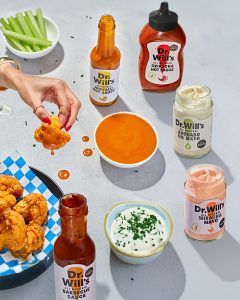
Dr. Will’s can be found on the shelves of Tesco, Sainsbury’s, Waitrose and Co-op

“The one thing you can’t control is trends and when they happen,” he notes. “Getting into a retailer is really difficult, but it’s the easy part in the grand scheme of things. It’s much harder to change consumer behaviour and to get people to pick products up off the shelf.”

That challenge is especially acute in condiments, where legacy brands command huge awareness and shoppers often buy the same products for decades. Yet White believes more consumers are now prepared to pay extra for quality, scrutinise ingredient lists and use product-scanning apps.

Dr. Will’s positions itself around all-natural ingredients, no added sugar using dates instead and a growing choice of olive and avocado oil products.

“People are choosing to allocate their hard-earned money towards better-quality food, and that’s an amazing thing,” he says.

Eating out less also gives shoppers room to spend more on groceries, he adds, while still saving against the cost of a restaurant meal.

Founder-first marketing

Social media has become central to closing the awareness gap. White is a prominent presence on Dr. Will’s TikTok, using the founder story and direct customer contact as advantages that multinational competitors cannot easily replicate.

“What’s really important to me is keeping the distance between us and the customer as small as possible, and that feedback loop really tight,” he says.

“We’re reading every single email they send, every review they make, and we’re using that to shape new products, improve our existing products and change our marketing.”

The promise, White argues, must remain easy to understand. Shoppers should be able to trust the brand without decoding every label. That consistency supports a more personal sales pitch online, where honest accounts of building the business sit alongside product education and customer replies.


Subscribe to Grocery Gazette for free

Sign up here to get the latest grocery and food news each morning


Pitch the retailer’s opportunity

Emerging brands seeking listings at Tesco, Sainsbury’s Co-op and Waitrose should look to move beyond enthusiasm for the product and explain the commercial role it can play, White stresses. Retailers have finite shelf space, he says, but a range built only around category bestsellers can miss shoppers who are willing to trade up.

“The question you need to answer is: what am I delivering for the retailer? You need to think from their point of view,” White advised.

“Use any data that you have. Data is power,” he stresses.

That may include direct-to-consumer performance, social engagement and evidence that a brand can bring younger shoppers into stores. White credits his investment-banking background with sharpening the analysis, financial modelling, project management and presentation skills needed to turn that evidence into a persuasive retail case.

A new route into the basket

Dr. Will’s latest move takes the brand beyond the ambient condiment aisle. Its 30g dip pots have launched in Tesco chillers beside breaded chicken, giving shoppers a lower-cost way to discover the range and placing the brand in a high-footfall part of the store.

White describes Tesco’s decision to work with Dr. Will’s on the project as “a big seal of approval”. More broadly, he sees the combination of wellness culture and direct founder communication creating unusually favourable conditions for challenger brands.

“If you’re making something healthier, it’s a really, really good time,” he says. “Social media enables you to communicate with customers directly and tell an authentic founder story.”


Features

Social

SUBSCRIBE TO OUR DAILY NEWSLETTER

  • This field is for validation purposes and should be left unchanged.

Most Read

Most Read

Features

Leave a Reply

Your email address will not be published. Required fields are marked *

Fill out this field
Fill out this field
Please enter a valid email address.

RELATED STORIES

Latest Feature

Menu

Please enter the verification code sent to your email: