Opinion: Why drinks brands can’t buy their way onto your feed anymore

Features

For many drinks brands, 2026 marks a fundamental change in how social media works for them. With the latest high fat, sugar, or salt (HFSS) advertising restrictions now in force across the UK, the old model of paying for reach through product-led social ads, boosted influencer content and performance media is becoming far less available, writes Stuart Witter, Associate Creative Director at Bloom.

The UK’s new rules place a total restriction on paid-for online advertising for identifiable less healthy food and drink products, while also introducing a TV watershed. For drinks brands that have relied on paid social to generate fast attention, that is a significant shift. But it doesn’t mean social media no longer matters. It means the role of social changes. Organic posts and brand advertising still offer room to build distinctiveness and affinity.

That’s the real implication of HFSS for drinks brands on social media. The approach is shifting from how to spend money to interrupt people, to how to earn attention and interest without relying on ad spend. In practice, that means designing brands to travel organically: to be recognisable in-feed, expressive and flexible enough to create social ideas people want to share, imitate or join.

Seen this way, HFSS could mark a useful reset. It pushes brands away from short-term, product-led social activity and towards more enduring brand building: from paid influencer placements to earned advocacy, from campaign bursts to always-on cultural presence and from sales messages to social behaviours people actively welcome into their feeds.

There is no shortage of noise from drinks brands on social media. However, the bigger opportunity now lies in how to effectively use the platforms for brand building.

What organic-first social demands from brand design 

Strong brand foundations allow you to earn relevance through carefully chosen and crafted brand assets, and through depth of storytelling. They are of course branding 101, but designing those assets to work on social media is more important than ever.  

It’s not about creating prescriptive guardrails and deploying core main assets on every post. Audiences are quick to reject content that feels over-branded or over-controlled. Instead, amid the fast pace of socials, brand recognition often comes from subtler signals: colour, sound, rhythm, language and visual codes. Veuve Clicquot, for example, has an understated, decorative style and design language that immediately cues the brand. 

A clear sense of personality can also point the way on social media. When we worked with Britvic on its recent rebrand of Tango, we wanted to amplify its bold and British irreverent attitude. This central idea informed a rich visual language that allows the brand to play in today’s urban everyday – and show up on socials in an entertaining and distinct way. The new identity shows up in the award-winning Be Notorious Every Day social campaign from Coolr, allowing it to organically lean into IYKYK culture and show up on creator feeds (leading 1.3m views and a 74 per cent follower increase in just four months).  


Subscribe to Grocery Gazette for free

Sign up here to get the latest grocery and food news each morning


Owning the occasion 

These examples also show the power of a strong central idea or insight – a through line that everyone, from in-house creatives to external agencies and partner creators, inherently understands and can build on. On social media, linking that idea to occasion can be particularly effective. As a brand, owning an occasion allows you to become the facilitator of everyday moments and rituals.  

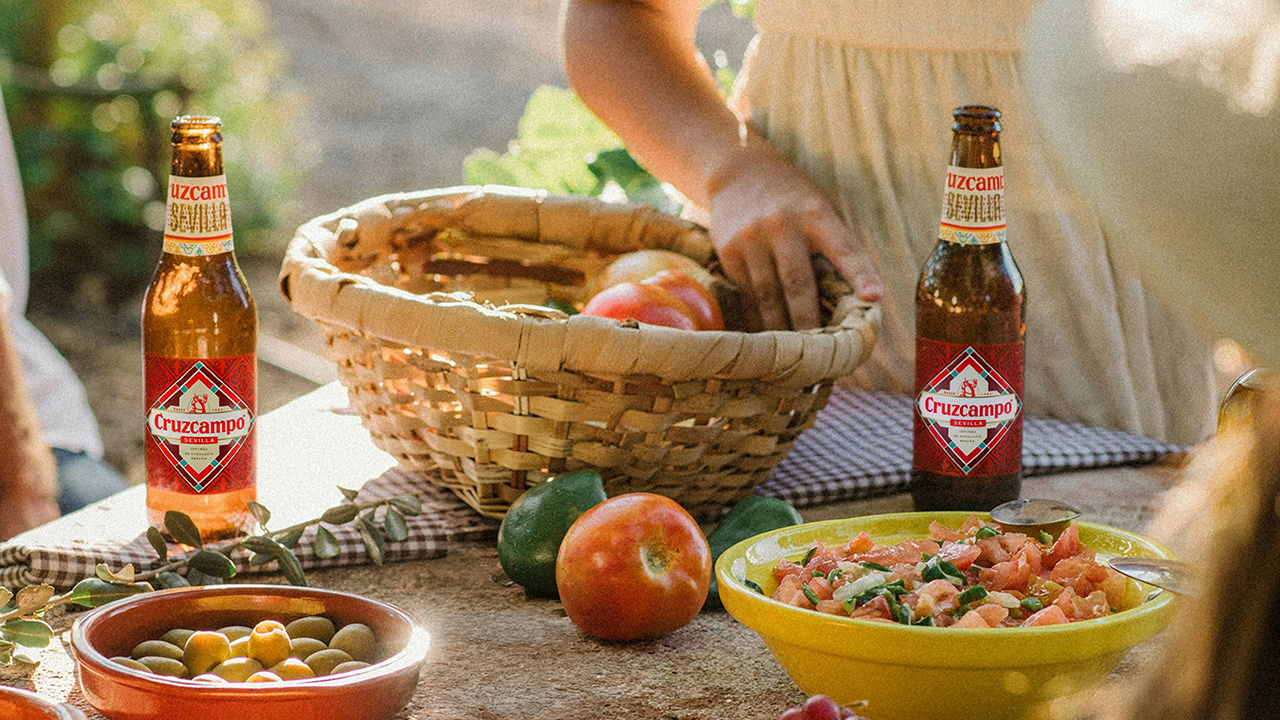
Our identity for Heineken UK’s Cruzcampo lager, for example, leaned into Spain’s ‘tardeo’, the moment of the day when the shadows lengthen, work ends and minds relax. We used early evening shadows, Sevillian tiles and mellow yellows to evoke that occasion when only a crisp flavoursome Iberian lager will do. Cruzcampo is now building association with a specific time in people’s lives, projecting a mood, an attitude and an experience.  

This is perfectly captured in the brand’s ‘Choose to Cruz’ campaign [pictured], where warm, sun-drenched visuals and local imagery invite consumers to break away from routine. By actively incentivising spontaneous post-work meetups, the brand transforms the abstract concept of tardeo into a tangible, lived experience for the UK market. 

This is especially important for influencer and creator partnerships. If HFSS regulations restrict obvious paid-for product placements, brands need to give creators more leeway to play with their assets and meaning. When a brand dictates every beat, audiences can see the join. If it defines the insight, the codes and the territory clearly, giving collaborators room to bring their own audience and instincts to it, the result feels more native, more genuinely entertaining. San Pellegrino’s partnership with Lewis Hamilton, for example, brought the F1 star and some of his closest friends together for dinner, unscripted, unrehearsed. The brand backdrop was the idea of the premium water sparking connection through conversation – yet the content evolved naturally. 

Lifting the veil 

There is also a bigger opportunity for drinks brands to show more of themselves. Behind-the-scenes content, founder stories, rituals, people or production choices around a drink can all create a sense of participation and genuine interest. In food, Graze’s “100 Days of Graze” has been one of the most engaging series of content from a brand in a while: a transparent, personality-led attempt to bring people into the process of rebuilding the brand following last year’s uncoupling from Unilever. In drinks, the same principle applies when brands let people feel closer to their purpose, behaviour and world, rather than simply showing another polished product shot.  

For HFSS-affected brands, the drink may no longer be able to carry the whole message in paid media, but the brand can build memory structures, cultural presence and affinity through what it consistently does and represents. 

The brands that adapt best will use this moment to sharpen what they are known for, make their assets more socially fluent and give people a reason to invite the brand into their feeds. HFSS restricts certain routes to attention, yes; but it also raises the value of brands that are distinctive enough to earn it. 

Features

Leave a Reply

Your email address will not be published. Required fields are marked *

Fill out this field
Fill out this field
Please enter a valid email address.

Features

Share:

Opinion: Why drinks brands can’t buy their way onto your feed anymore
For many drinks brands, 2026 marks a fundamental change in how social media works for them. With the latest high fat, sugar, or salt (HFSS) advertising restrictions now in force across the UK, the old model of paying for reach through product-led social ads, boosted influencer content and performance media is becoming far less available, writes Stuart Witter, Associate Creative Director at Bloom.

The UK’s new rules place a total restriction on paid-for online advertising for identifiable less healthy food and drink products, while also introducing a TV watershed. For drinks brands that have relied on paid social to generate fast attention, that is a significant shift. But it doesn’t mean social media no longer matters. It means the role of social changes. Organic posts and brand advertising still offer room to build distinctiveness and affinity.

That’s the real implication of HFSS for drinks brands on social media. The approach is shifting from how to spend money to interrupt people, to how to earn attention and interest without relying on ad spend. In practice, that means designing brands to travel organically: to be recognisable in-feed, expressive and flexible enough to create social ideas people want to share, imitate or join.

Seen this way, HFSS could mark a useful reset. It pushes brands away from short-term, product-led social activity and towards more enduring brand building: from paid influencer placements to earned advocacy, from campaign bursts to always-on cultural presence and from sales messages to social behaviours people actively welcome into their feeds.

There is no shortage of noise from drinks brands on social media. However, the bigger opportunity now lies in how to effectively use the platforms for brand building.

What organic-first social demands from brand design 

Strong brand foundations allow you to earn relevance through carefully chosen and crafted brand assets, and through depth of storytelling. They are of course branding 101, but designing those assets to work on social media is more important than ever.  

It’s not about creating prescriptive guardrails and deploying core main assets on every post. Audiences are quick to reject content that feels over-branded or over-controlled. Instead, amid the fast pace of socials, brand recognition often comes from subtler signals: colour, sound, rhythm, language and visual codes. Veuve Clicquot, for example, has an understated, decorative style and design language that immediately cues the brand. 

A clear sense of personality can also point the way on social media. When we worked with Britvic on its recent rebrand of Tango, we wanted to amplify its bold and British irreverent attitude. This central idea informed a rich visual language that allows the brand to play in today’s urban everyday – and show up on socials in an entertaining and distinct way. The new identity shows up in the award-winning Be Notorious Every Day social campaign from Coolr, allowing it to organically lean into IYKYK culture and show up on creator feeds (leading 1.3m views and a 74 per cent follower increase in just four months).  


Subscribe to Grocery Gazette for free

Sign up here to get the latest grocery and food news each morning


Owning the occasion 

These examples also show the power of a strong central idea or insight – a through line that everyone, from in-house creatives to external agencies and partner creators, inherently understands and can build on. On social media, linking that idea to occasion can be particularly effective. As a brand, owning an occasion allows you to become the facilitator of everyday moments and rituals.  

Our identity for Heineken UK’s Cruzcampo lager, for example, leaned into Spain’s ‘tardeo’, the moment of the day when the shadows lengthen, work ends and minds relax. We used early evening shadows, Sevillian tiles and mellow yellows to evoke that occasion when only a crisp flavoursome Iberian lager will do. Cruzcampo is now building association with a specific time in people’s lives, projecting a mood, an attitude and an experience.  

This is perfectly captured in the brand’s ‘Choose to Cruz’ campaign [pictured], where warm, sun-drenched visuals and local imagery invite consumers to break away from routine. By actively incentivising spontaneous post-work meetups, the brand transforms the abstract concept of tardeo into a tangible, lived experience for the UK market. 

This is especially important for influencer and creator partnerships. If HFSS regulations restrict obvious paid-for product placements, brands need to give creators more leeway to play with their assets and meaning. When a brand dictates every beat, audiences can see the join. If it defines the insight, the codes and the territory clearly, giving collaborators room to bring their own audience and instincts to it, the result feels more native, more genuinely entertaining. San Pellegrino’s partnership with Lewis Hamilton, for example, brought the F1 star and some of his closest friends together for dinner, unscripted, unrehearsed. The brand backdrop was the idea of the premium water sparking connection through conversation – yet the content evolved naturally. 

Lifting the veil 

There is also a bigger opportunity for drinks brands to show more of themselves. Behind-the-scenes content, founder stories, rituals, people or production choices around a drink can all create a sense of participation and genuine interest. In food, Graze’s “100 Days of Graze” has been one of the most engaging series of content from a brand in a while: a transparent, personality-led attempt to bring people into the process of rebuilding the brand following last year’s uncoupling from Unilever. In drinks, the same principle applies when brands let people feel closer to their purpose, behaviour and world, rather than simply showing another polished product shot.  

For HFSS-affected brands, the drink may no longer be able to carry the whole message in paid media, but the brand can build memory structures, cultural presence and affinity through what it consistently does and represents. 

The brands that adapt best will use this moment to sharpen what they are known for, make their assets more socially fluent and give people a reason to invite the brand into their feeds. HFSS restricts certain routes to attention, yes; but it also raises the value of brands that are distinctive enough to earn it. 

Features

Social

SUBSCRIBE TO OUR DAILY NEWSLETTER

  • This field is for validation purposes and should be left unchanged.

Most Read

Most Read

Features

Leave a Reply

Your email address will not be published. Required fields are marked *

Fill out this field
Fill out this field
Please enter a valid email address.

RELATED STORIES

Latest Feature

Menu

Please enter the verification code sent to your email: