
Supermarket fridge failures expose grocery’s next climate pressure point
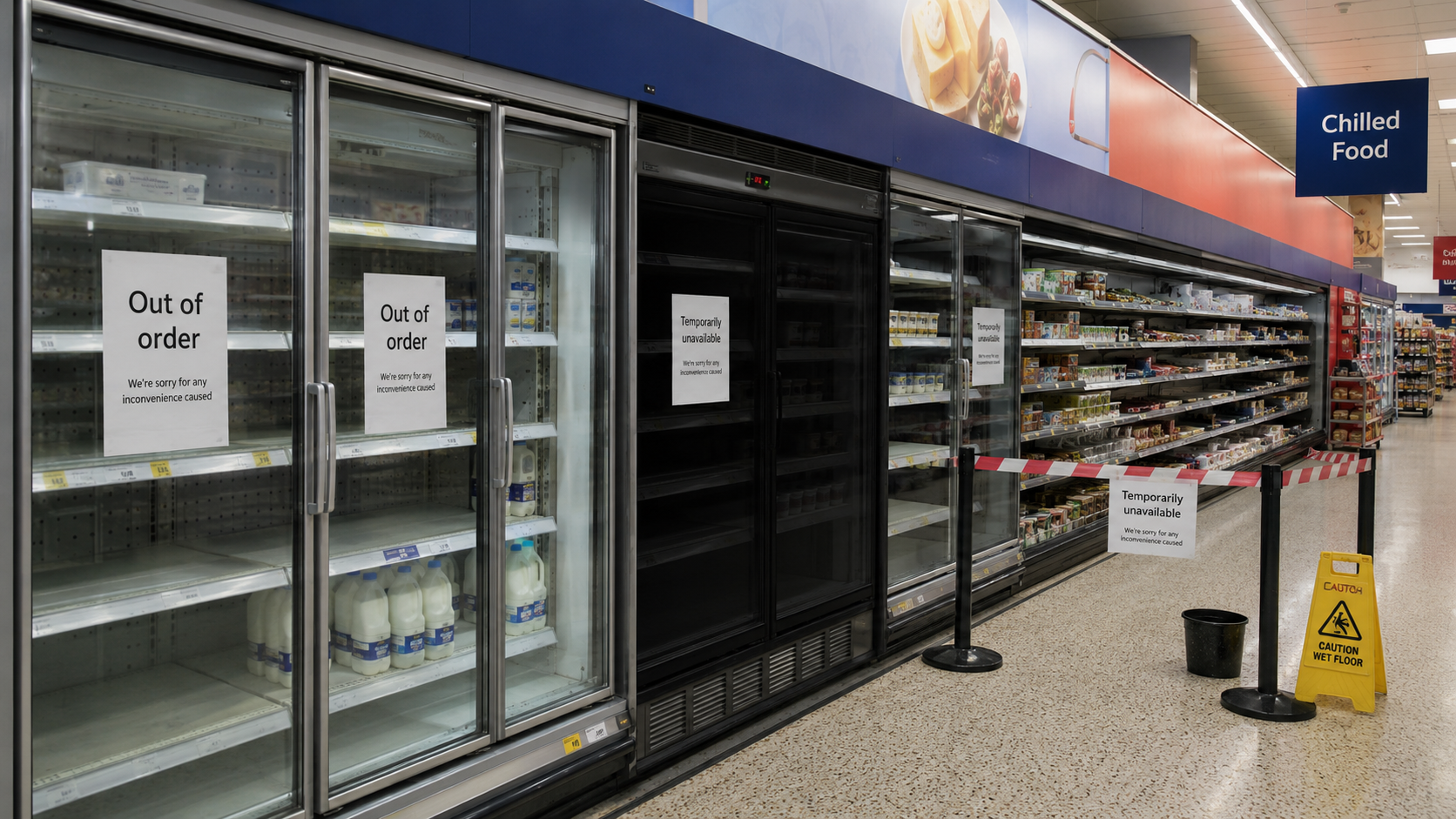
Grocers are facing a fresh heatwave headache as supermarket fridges and freezers fail under extreme summer temperatures, leaving shoppers confronted with empty shelves, sealed-off aisles and reduced chilled food availability.
Reports of refrigeration problems have spread across several major grocers in recent days, with shoppers flagging issues at stores run by Sainsbury’s, M&S, Morrisons and Tesco, to name a few.
The disruption has affected chilled and frozen ranges including milk, meat, fresh produce, ready meals and ice cream, turning the heatwave into an immediate availability problem for supermarkets already battling pressure on service, waste and operating costs.
In some stores, customers reported entire chilled sections being switched off or blocked from access. Others said freezers were awaiting repair, leaking water or had been cleared of stock after equipment failed in the heat.
The problems have been reported across the country, including Manchester, Birmingham, Oxfordshire, Wales, the Forest of Dean and Swindon, as the UK faces an exceptional spell of extreme heat.
The Met Office issued a red extreme heat warning for parts of England and Wales this week, with temperatures forecast to approach 40°C in some areas. The UK Health Security Agency also extended red heat-health alerts across six regions of England, warning that the conditions could disrupt transport, food, energy and water systems, as well as businesses.
Supermarkets depend on a tightly controlled cold chain from depot to store to shelf. When in-store refrigeration fails, the impact is immediate. Stock has to be removed, categories disappear from sale, staff are diverted to manage affected aisles, and online availability can quickly suffer.
It also creates a food safety issue. Food Standards Agency guidance says chilled food must be kept at 8°C or below in England, Wales and Northern Ireland, while fridges should operate at 5°C or below in practice. If retailers cannot guarantee the temperature of chilled stock, the safest option is to withdraw it from sale.
That can mean heavy losses. High-value fresh and chilled ranges are among the most exposed when refrigeration systems fail, particularly meat, dairy, prepared meals, sandwiches and premium convenience lines. Frozen food can also be affected, with any loss of temperature control putting quality and safety at risk.
The issue has been particularly visible because it hits categories that shoppers expect to buy during hot weather. Demand for frozen desserts, cold drinks, barbecue food and fresh meal solutions tends to rise sharply during heatwaves. At the same time, refrigeration equipment is being asked to work harder, often in stores with higher footfall, more frequent door openings and warmer ambient conditions.
British Frozen Food Federation chief executive Rupert Ashby has warned that older legacy stores may not have been designed for regular periods of severe heat. He said retail freezers come under greater pressure in hot weather as demand for frozen products rises, meaning systems are “working overtime” to stay cool.
That’s the core problem for supermarkets. The sector’s store estate wasn’t built for a future in which extreme summer temperatures become a recurring operating risk.
Many larger supermarkets run on complex, energy-intensive refrigeration systems installed across sprawling chilled, frozen and fresh food departments. Older stores, in particular, can be harder to cool efficiently, especially where refrigeration has been retrofitted over time or where buildings were not designed for prolonged high heat.
The problem is not simply whether a fridge can stay cold, but whether the whole store can keep trading normally when refrigeration, air conditioning, delivery schedules, staff welfare and customer demand are all under strain at once.
Supermarkets have spent years investing in energy efficiency, carbon reduction and lower-emission refrigeration gases. Those programmes remain essential, particularly given the sector’s exposure to energy costs and sustainability targets. But extreme heat is now testing whether store infrastructure is robust enough to protect availability as well as emissions performance.
There’s also an acute customer trust issue. Shoppers may accept a one-off gap on a shelf, but a store with empty chillers, taped-off aisles or no milk available risks looking unreliable at exactly the moment customers are making urgent, weather-driven shopping trips.
The impact can spill into online, too. One Tesco shopper reportedly claimed there were no ice cream products available for delivery, underlining how in-store or local fulfilment disruption can quickly flow through to digital availability.
Heatwaves change shopping behaviour fast. Customers want immediate access to chilled drinks, barbecue food, salad, dairy, ice cream and lighter meal solutions. If one supermarket cannot supply them, shoppers may switch to a nearby rival, convenience store or delivery platform.
The cost of the disruption is likely to sit across several lines of the business: lost sales, wasted stock, emergency maintenance, additional labour, customer complaints and, in some cases, reduced online order fulfilment.
There is also the operational burden on store teams. Staff have to remove affected products, communicate with customers, manage safety risks around leaking equipment or wet floors, and monitor what can and cannot be sold. During a red heat alert, they are doing that while also working in more difficult conditions themselves.
Morrisons has reportedly handed out free bottles of water to customers entering stores in response to the heat, highlighting how grocers are being pulled into a broader duty-of-care role during extreme weather.
The immediate fix is maintenance and repair. The longer-term challenge is investment.
Grocers will need to look harder at which parts of their estate are most vulnerable to heat-related equipment failure. That means understanding the age and condition of refrigeration systems, the resilience of store air conditioning, the layout of chilled and frozen aisles, and how stores perform under sustained high ambient temperatures.
It also means using data more aggressively. Temperature monitoring, remote diagnostics and predictive maintenance can help retailers spot systems under pressure before they fail. Stores already track refrigeration performance closely for food safety reasons, but heatwaves may require a more dynamic approach, with risk alerts triggered by weather forecasts, store conditions and equipment performance.
There may also be questions around range and replenishment during extreme heat. Retailers could reduce exposure on the most vulnerable lines, increase monitoring of high-risk cabinets, adjust delivery timing, or prioritise fast-moving essentials such as milk, meat and chilled drinks where capacity becomes constrained.
None of that removes the need for capital investment. Refrigeration is expensive, disruptive to replace and often competes with other store priorities. But the current heatwave has shown how quickly ageing systems can become a trading problem.
For years, the grocery sector has talked about climate risk largely through the lens of supply chains, farming, sourcing and emissions, yet this week has shown the risk is also inside the store.
If extreme heat becomes a more regular part of the British summer, commercial refrigeration is far from simply back-office facilities issue. It will be central to availability, food safety, customer experience and store profitability.
Sign up here to get the latest grocery and food news each morning