
As Poundland pulls back from grocery, which retailers stand to gain?

Image depicting the following stories: Poundland, Asda, Iceland Home Bargains, Aldi and Lidl. For rival retailers operating in the low-cost space, Poundland’s retreat is an open goal. We take a look at the top contenders in the sector to replace Poundland as the place-to-go for shoppers hoping to source discount grocery products.
DiscountersFeaturesSupermarkets

After years of carving out space in the discount grocery market, Poundland is shifting its strategy by scaling back its food offering and axing its frozen food division.

This decision to quietly step away from its grocery proposition – while not entirely unexpected given its new owner’s prioritisation of the retailer’s wider non-grocery offerings – creates a vacuum in the UK’s discount grocery landscape.

For rival retailers operating in the low-cost space, Poundland’s retreat is an open goal. We take a look at the contenders in the sector to replace Poundland as the place-to-go for shoppers hoping to source discount grocery products.

Poundland’s retreat

Some may argue Poundland’s chilled and frozen food division was one that never quite lived up to its early promise.

It began in 2019 and by mid-2021 was available in around 200 stores. In June 2023, Poundland expanded the range to over 570 stores, and fresh fruit & veg to over 400 stores, with plans to add another 50 by summer, before also beginning to offer beer, wine and spirits in select stores.

Yet in June, following acquisition by Gordon Brothers, Poundland announced a restructuring plan where it would withdraw frozen food where it was offered, chilled food offer would be reduced in place of the grocery focus, shifting to £3 meal deal and select chilled essentials like milk.

Overall, chief executive Stephan Borchart said, the group intends to “undertake a process to separate Poundland from the Group as part of a wider strategy shift away from FMCG, with a divesture expected before the end of FY25”.

Meanwhile, the plan also includes closing 68 stores (with up to 150 eventual closures) and shutting down distribution centres, like those in Darton (2025) and Bilston (2026).

As grocery retailers go, Poundland has never been the biggest player in the room: at its peak, in 2023 the discounter hit £1.95bn up 23% from £1.58bn in 2022, marking its greatest turnover in recent years. More recently, in 2024, it was down 21.5% to £1.67bn, while its H1 revenue faltered to £985m.

In comparison, this is dwarfed by even the smallest of the Big Six, such as Lidl which last year recorded a pre-tax profit of £156.8m and a revenue of £11.7bn.

Nevertheless, the confirmation of an official pullback from broader grocery offerings, with frozen categories effectively being scrapped, creates a new key question looking ahead: who is ready to fill it?

Home Bargains: The quiet giant with full-range ambitions

While often overlooked in the discount grocery compared to Aldi or Lidl, Home Bargains has quietly become a dominant force in the value retail sector.

With turnover soaring to £4.2 billion, an 11% increase, and shareholders receiving a whopping £1.2 billion dividend in 2024, it’s a business not just surviving but thriving. More importantly, it’s expanding.

Crucially, the retailer is continuing to ramp up its grocery and frozen food range, particularly in its larger “full range” stores, which already offer everything from chilled meals and pet food to confectionery and household essentials. This puts it in direct competition with the space Poundland is now vacating.

Just earlier this year, Home Bargains launched an exclusive new range of frozen meals with renowned chef Tom Kitchi, with prices ranging from £2.89 to £2.99.

Meanwhile, strategically, Home Bargains has a footprint advantage too. While Aldi and Lidl dominate in urban centres, Home Bargains has built its empire largely outside the M25, focusing on retail parks, market towns and suburbs.

It is precisely in these locations that Poundland’s grocery shopper is now looking for alternatives. Some may argue that its more than just a coincidence, it’s the perfect opportunity.

Iceland: A frozen-focused contender

Iceland executive chairman Richard Walker has 'apologised' to loan sharks for the success of the supermarket's microloan initiative, depicting here an Iceland storefront

Then there’s Iceland. For all the press attention its £1 frozen range has garnered, the reality is that Iceland has been quietly and methodically scaling its offering for some time.

It now stocks over 750 items at the £1 price point, many directly comparable to what Poundland trialled in its now-defunct frozen food rollout.

Unlike Poundland, Iceland is known as a frozen food specialist, with ambitions to become a full-range supermarket rivalling some of the Big Six. In recent months, alongside investing in NPD and price promotions, Iceland Foods has also rapidly expanded its retail media offering across its store estate with potential plans for thousands of digital screens.

And as it continues to invest in convenience-sized stores, click-and-collect, and direct-to-consumer options, it’s positioned to absorb much of the demand that Poundland’s exit will leave behind.

While customers who turned to Poundland for frozen meals and everyday basics are unlikely to stretch to full-price supermarkets. Iceland, which is known for its frozen value offers, could be the natural heir to that shopper segment.

Aldi, Lidl and the discounters

Aldi and Lidl store

The UK’s biggest discounters, Aldi and Lidl, are continuing to add stores at pace, and both have successfully extended their customer base well beyond budget-conscious households.

With increasing penetration in urban areas, Aldi in particular is likely to absorb some of Poundland’s grocery customers in London and other cities.

That said, their offering is slightly different in nature. Whereas Poundland and Home Bargains traffic heavily in branded packaged goods, discounters rely more on own-label and bulk shopping missions. Poundland’s grocery exit won’t spark a stampede to Aldi, but it will almost certainly nudge some traffic that direction, particularly in areas where other value options are limited.

Aldi already poses a challenge to the traditional supermarket, after overtaking Morrisons in 2022 to be the UK’s fourth biggest grocer, while in April the discounter surpassed Asda for market share of food and drink sales for the first time, according to Kantar data, despite Asda’s continued efforts to turn around its declining figures.

Elsewhere, Lidl is also performing well, repeatedly being named the UK’s fastest growing grocer, and in August, overtook Morrisons to become the UK’s fifth-largest supermarket for food and drink sales.

Asda’s Rollback

Asda

Then there’s Asda. Long the most price-aggressive of the traditional supermarkets, led by Allan Leighton the grocer has recently returned to form with a fresh wave of “rollback” campaigns and competitive pricing in its own-brand and Just Essentials ranges.

In March, the latest wave of Rollback price cuts saw nearly 10,000 products – almost a third of the supermarket chain’s entire range – reduced in price since the campaign was first introduced at the end of January.

And while Asda isn’t a direct replacement for Poundland’s discount grocery proposition, its flexibility, across full-line supermarkets, smaller formats, and online, makes it a contender to pick up disaffected customers from multiple avenues. That includes those who had turned to Poundland for their top-up shops or freezer fillers.

Last month, Asda also launched its first-ever fixed-price Meal Deal at £3.74. Available nationwide in supermarkets, Express stores and online, the deal offers a main, snack and drink from more than 132 mains, 336 snacks and 222 drinks, without the need for a loyalty card.

Pricing was a focal point of the new launch, which replaces Asda’s three-for-two deal and, according to the retailer, undercuts rivals such as Tesco (which recently raised its prices to £4.25 without a Clubcard) and Sainsbury’s (£3.95). Even Morrisons, which pitches its loyalty offer at £3.60, charges £4 for non-members.

“We knew we had to undercut the rest of the market,” Asda food-to-go buying manager told Grocery Gazette. “We wanted our customers to have great value, great quality and great price. So that’s what we really focused on… We are just determined to be the very best.”

Despite being a smaller retailer, Poundland’s grocery exit, or scale back, reshapes the playing field. For buyers, suppliers and customers, a reordering of the discount grocery map is underway, and for competitors, it presents a clear opening to double down on value and loyalty plays, hoovering up all the shoppers Poundland will now lose as it pulls back.

DiscountersFeaturesSupermarkets

Leave a Reply

Your email address will not be published. Required fields are marked *

Fill out this field
Fill out this field
Please enter a valid email address.

As Poundland pulls back from grocery, which retailers stand to gain?

Image depicting the following stories: Poundland, Asda, Iceland Home Bargains, Aldi and Lidl. For rival retailers operating in the low-cost space, Poundland’s retreat is an open goal. We take a look at the top contenders in the sector to replace Poundland as the place-to-go for shoppers hoping to source discount grocery products.

After years of carving out space in the discount grocery market, Poundland is shifting its strategy by scaling back its food offering and axing its frozen food division.

This decision to quietly step away from its grocery proposition – while not entirely unexpected given its new owner’s prioritisation of the retailer’s wider non-grocery offerings – creates a vacuum in the UK’s discount grocery landscape.

For rival retailers operating in the low-cost space, Poundland’s retreat is an open goal. We take a look at the contenders in the sector to replace Poundland as the place-to-go for shoppers hoping to source discount grocery products.

Poundland’s retreat

Some may argue Poundland’s chilled and frozen food division was one that never quite lived up to its early promise.

It began in 2019 and by mid-2021 was available in around 200 stores. In June 2023, Poundland expanded the range to over 570 stores, and fresh fruit & veg to over 400 stores, with plans to add another 50 by summer, before also beginning to offer beer, wine and spirits in select stores.

Yet in June, following acquisition by Gordon Brothers, Poundland announced a restructuring plan where it would withdraw frozen food where it was offered, chilled food offer would be reduced in place of the grocery focus, shifting to £3 meal deal and select chilled essentials like milk.

Overall, chief executive Stephan Borchart said, the group intends to “undertake a process to separate Poundland from the Group as part of a wider strategy shift away from FMCG, with a divesture expected before the end of FY25”.

Meanwhile, the plan also includes closing 68 stores (with up to 150 eventual closures) and shutting down distribution centres, like those in Darton (2025) and Bilston (2026).

As grocery retailers go, Poundland has never been the biggest player in the room: at its peak, in 2023 the discounter hit £1.95bn up 23% from £1.58bn in 2022, marking its greatest turnover in recent years. More recently, in 2024, it was down 21.5% to £1.67bn, while its H1 revenue faltered to £985m.

In comparison, this is dwarfed by even the smallest of the Big Six, such as Lidl which last year recorded a pre-tax profit of £156.8m and a revenue of £11.7bn.

Nevertheless, the confirmation of an official pullback from broader grocery offerings, with frozen categories effectively being scrapped, creates a new key question looking ahead: who is ready to fill it?

Home Bargains: The quiet giant with full-range ambitions
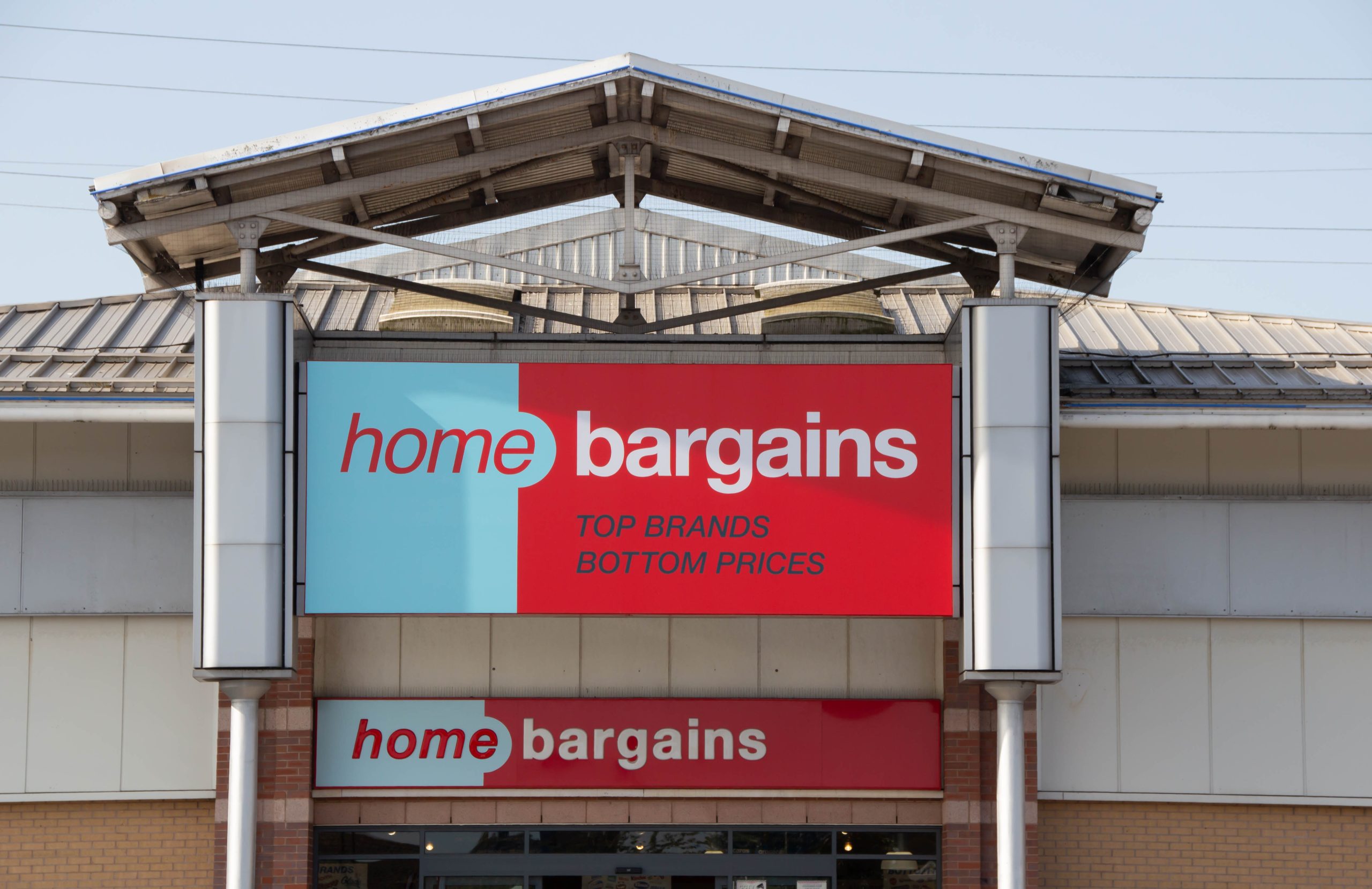
While often overlooked in the discount grocery compared to Aldi or Lidl, Home Bargains has quietly become a dominant force in the value retail sector.

With turnover soaring to £4.2 billion, an 11% increase, and shareholders receiving a whopping £1.2 billion dividend in 2024, it’s a business not just surviving but thriving. More importantly, it’s expanding.

Crucially, the retailer is continuing to ramp up its grocery and frozen food range, particularly in its larger “full range” stores, which already offer everything from chilled meals and pet food to confectionery and household essentials. This puts it in direct competition with the space Poundland is now vacating.

Just earlier this year, Home Bargains launched an exclusive new range of frozen meals with renowned chef Tom Kitchi, with prices ranging from £2.89 to £2.99.

Meanwhile, strategically, Home Bargains has a footprint advantage too. While Aldi and Lidl dominate in urban centres, Home Bargains has built its empire largely outside the M25, focusing on retail parks, market towns and suburbs.

It is precisely in these locations that Poundland’s grocery shopper is now looking for alternatives. Some may argue that its more than just a coincidence, it’s the perfect opportunity.

Iceland: A frozen-focused contender

Iceland executive chairman Richard Walker has 'apologised' to loan sharks for the success of the supermarket's microloan initiative, depicting here an Iceland storefront

Then there’s Iceland. For all the press attention its £1 frozen range has garnered, the reality is that Iceland has been quietly and methodically scaling its offering for some time.

It now stocks over 750 items at the £1 price point, many directly comparable to what Poundland trialled in its now-defunct frozen food rollout.

Unlike Poundland, Iceland is known as a frozen food specialist, with ambitions to become a full-range supermarket rivalling some of the Big Six. In recent months, alongside investing in NPD and price promotions, Iceland Foods has also rapidly expanded its retail media offering across its store estate with potential plans for thousands of digital screens.

And as it continues to invest in convenience-sized stores, click-and-collect, and direct-to-consumer options, it’s positioned to absorb much of the demand that Poundland’s exit will leave behind.

While customers who turned to Poundland for frozen meals and everyday basics are unlikely to stretch to full-price supermarkets. Iceland, which is known for its frozen value offers, could be the natural heir to that shopper segment.

Aldi, Lidl and the discounters

Aldi and Lidl store

The UK’s biggest discounters, Aldi and Lidl, are continuing to add stores at pace, and both have successfully extended their customer base well beyond budget-conscious households.

With increasing penetration in urban areas, Aldi in particular is likely to absorb some of Poundland’s grocery customers in London and other cities.

That said, their offering is slightly different in nature. Whereas Poundland and Home Bargains traffic heavily in branded packaged goods, discounters rely more on own-label and bulk shopping missions. Poundland’s grocery exit won’t spark a stampede to Aldi, but it will almost certainly nudge some traffic that direction, particularly in areas where other value options are limited.

Aldi already poses a challenge to the traditional supermarket, after overtaking Morrisons in 2022 to be the UK’s fourth biggest grocer, while in April the discounter surpassed Asda for market share of food and drink sales for the first time, according to Kantar data, despite Asda’s continued efforts to turn around its declining figures.

Elsewhere, Lidl is also performing well, repeatedly being named the UK’s fastest growing grocer, and in August, overtook Morrisons to become the UK’s fifth-largest supermarket for food and drink sales.

Asda’s Rollback

Asda

Then there’s Asda. Long the most price-aggressive of the traditional supermarkets, led by Allan Leighton the grocer has recently returned to form with a fresh wave of “rollback” campaigns and competitive pricing in its own-brand and Just Essentials ranges.

In March, the latest wave of Rollback price cuts saw nearly 10,000 products – almost a third of the supermarket chain’s entire range – reduced in price since the campaign was first introduced at the end of January.

And while Asda isn’t a direct replacement for Poundland’s discount grocery proposition, its flexibility, across full-line supermarkets, smaller formats, and online, makes it a contender to pick up disaffected customers from multiple avenues. That includes those who had turned to Poundland for their top-up shops or freezer fillers.

Last month, Asda also launched its first-ever fixed-price Meal Deal at £3.74. Available nationwide in supermarkets, Express stores and online, the deal offers a main, snack and drink from more than 132 mains, 336 snacks and 222 drinks, without the need for a loyalty card.

Pricing was a focal point of the new launch, which replaces Asda’s three-for-two deal and, according to the retailer, undercuts rivals such as Tesco (which recently raised its prices to £4.25 without a Clubcard) and Sainsbury’s (£3.95). Even Morrisons, which pitches its loyalty offer at £3.60, charges £4 for non-members.

“We knew we had to undercut the rest of the market,” Asda food-to-go buying manager told Grocery Gazette. “We wanted our customers to have great value, great quality and great price. So that’s what we really focused on… We are just determined to be the very best.”

Despite being a smaller retailer, Poundland’s grocery exit, or scale back, reshapes the playing field. For buyers, suppliers and customers, a reordering of the discount grocery map is underway, and for competitors, it presents a clear opening to double down on value and loyalty plays, hoovering up all the shoppers Poundland will now lose as it pulls back.

DiscountersFeaturesSupermarkets

Social

SUBSCRIBE TO OUR DAILY NEWSLETTER

  • This field is for validation purposes and should be left unchanged.

Most Read

Most Read

DiscountersFeaturesSupermarkets

Leave a Reply

Your email address will not be published. Required fields are marked *

Fill out this field
Fill out this field
Please enter a valid email address.

RELATED STORIES

Latest Feature

Menu

Please enter the verification code sent to your email: