Plant-based industry leading green investment to cut emissions

Packs of Quorn products.
NewsSustainability

Investments in plant-based meat alternatives lead to greater cuts in greenhouse emissions compared to other green investments.

According to a report by the Boston Consulting Group, each dollar invested into improving meat and dairy altenratives resulted in three times more greenhouse gas reduction compared to investment in cement technology.

Green investments into meat substitutes also reduced gases seven times more than green building investments and 11 times more compared to zero-emission cars.

READ MORE: THIS launches frozen plant-based range to appeal to Gen Z

The disaprity is due to the high impact of livestock agriculture, where beef for example results in six to 30 times more emissions than tofu.

Investments in alternative proteins including fermented products and cell-based meat has also soared to $1 billion (£830 million) in 2019 and $5 billion in 2021.

The report also said alternatives currently make up 2% of meat, dairy and egg products sold but is expected to reach 11% in 2035.

“Widespread adoption of alternative proteins can play a critical role tackling climate change,” BCG partner Malte Clausen said.

“We call it the untapped climate opportunity – you’re getting more impact from your investment in alternative proteins than in any other sector of the economy.”

Clausen added: “There’s been a lot of investments into electric vehicles, wind turbines and solar panels, which is all great and helpful to reduce emissions, but we have not seen comparable investment yet [in alternative proteins], even though it’s rising rapidly. “If you really care about impact as an investor, this is an area that you definitely need to understand.”

Currently, meat and dairy products use 83% of farmland and cause 60% of agricultural greenhouse emissions. However, it only provides 18% of calories and 37% of protein.

Click here to sign up to Grocery Gazette’s free daily email newsletter

NewsSustainability

Leave a Reply

Your email address will not be published. Required fields are marked *

Fill out this field
Fill out this field
Please enter a valid email address.

Plant-based industry leading green investment to cut emissions
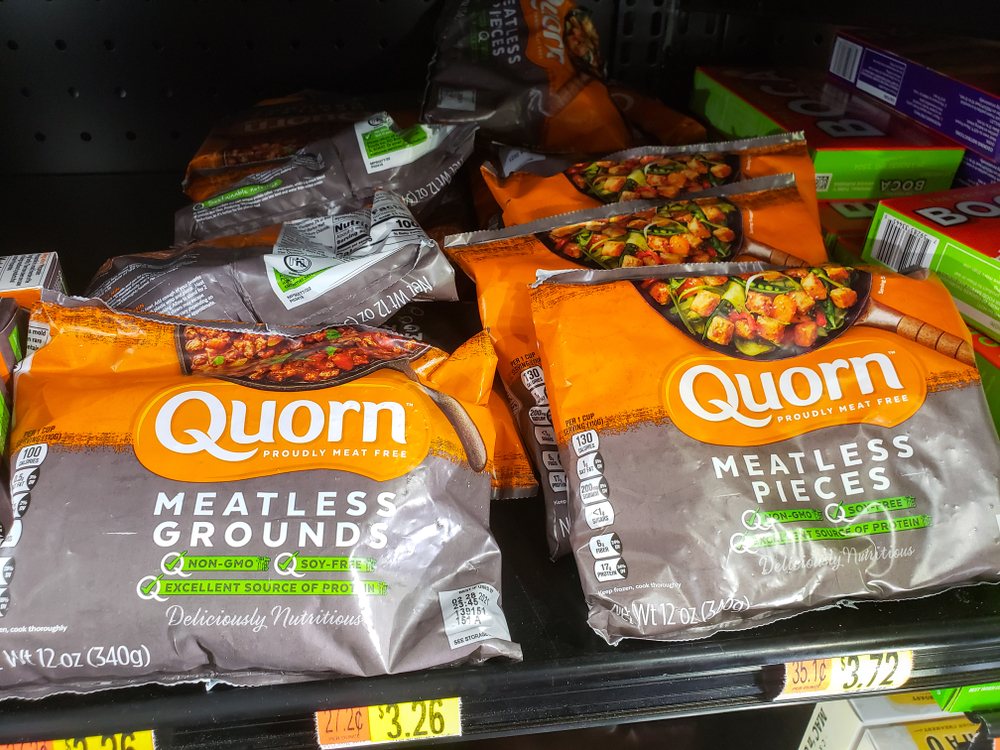
Packs of Quorn products.

Investments in plant-based meat alternatives lead to greater cuts in greenhouse emissions compared to other green investments.

According to a report by the Boston Consulting Group, each dollar invested into improving meat and dairy altenratives resulted in three times more greenhouse gas reduction compared to investment in cement technology.

Green investments into meat substitutes also reduced gases seven times more than green building investments and 11 times more compared to zero-emission cars.

READ MORE: THIS launches frozen plant-based range to appeal to Gen Z

The disaprity is due to the high impact of livestock agriculture, where beef for example results in six to 30 times more emissions than tofu.

Investments in alternative proteins including fermented products and cell-based meat has also soared to $1 billion (£830 million) in 2019 and $5 billion in 2021.

The report also said alternatives currently make up 2% of meat, dairy and egg products sold but is expected to reach 11% in 2035.

“Widespread adoption of alternative proteins can play a critical role tackling climate change,” BCG partner Malte Clausen said.

“We call it the untapped climate opportunity – you’re getting more impact from your investment in alternative proteins than in any other sector of the economy.”

Clausen added: “There’s been a lot of investments into electric vehicles, wind turbines and solar panels, which is all great and helpful to reduce emissions, but we have not seen comparable investment yet [in alternative proteins], even though it’s rising rapidly. “If you really care about impact as an investor, this is an area that you definitely need to understand.”

Currently, meat and dairy products use 83% of farmland and cause 60% of agricultural greenhouse emissions. However, it only provides 18% of calories and 37% of protein.

Click here to sign up to Grocery Gazette’s free daily email newsletter

NewsSustainability

Social

SUBSCRIBE TO OUR DAILY NEWSLETTER

  • This field is for validation purposes and should be left unchanged.

Most Read

NewsSustainability

Leave a Reply

Your email address will not be published. Required fields are marked *

Fill out this field
Fill out this field
Please enter a valid email address.

RELATED STORIES

Most Read

Latest Feature

Menu

Please enter the verification code sent to your email: