
How The Jolly Hog scaled to supermarket shelves without losing its bite

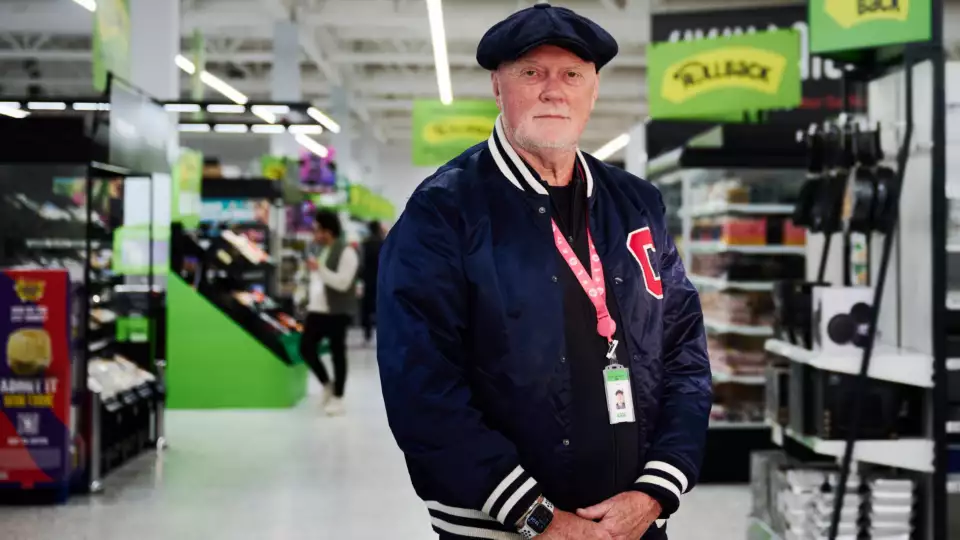
Way back in 2007, Olly Kohn was a man with a vision to change the shelf-dynamics of the UK’s supermarkets.
Sick of seeing what he believed to be increasingly poor-quality meat products stocked in the aisles, and after being gifted a sausage maker by his wife, he set about attempting to make higher quality sausages. This personal obsession soon became the first iteration of The Jolly Hog.
“The plan was just to make the best sausage we could,” says Olly, one of the three brothers behind the Bristol-based food brand. “And that still is the plan.”
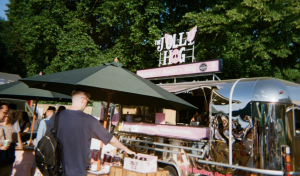
The Jolly Hog began in earnest with Olly, Max and Josh Kohn selling sausages from a small stand behind Twickenham Stoop. On their first day, the brothers made £500 and celebrated, before realising it had cost them £700 to be there.
Almost two decades later, the brand has more than 25 products in UK supermarkets, a Bristol restaurant in Pigsty, a growing foodservice presence and a reputation for bringing personality to a category often dominated by own-label and price.
The challenge has been scaling without sanding off the edges that made the business distinctive. “What feels the same? Well, me, Max and Josh are the same,” Olly says. “We’re just a bit heavier. Quite a lot heavier. I’ve got less hair and a few more greys.
“The essence of the business around not taking ourselves too seriously, having a good time, being jolly, being British, but trying to do things well with welfare and being a good business, is the same. We sold this amazing sausage 18 years ago in a car park, and it’s still our number one.”
From events to retail
That continuity hasn’t stopped the business from maturing. The Jolly Hog is no longer three brothers doing everything themselves. It has built teams, sharpened roles and moved from being events-led to retail-led.
“As we’ve grown, we’ve become a lot more focused on the things that we’re good at individually,” Olly says. “We’ve brought in people who are better than us at doing the other parts of the business as we need to grow.”
Yet the business has not lost its start-up energy. “Every day still feels like a start-up for some reason,” he says. “There’s this slight panic always in the air at Hog HQ, where everyone’s like, are we going to be able to do that? Is that going to happen? And then we do.”
Growth in the category that The Jolly Hog calls home is no mean feat. Chilled meat is competitive, heavily own-label led and exposed to value scrutiny. The brand’s answer has been to occupy the premium end of the market and defend that position through quality.
“We’re in an incredibly competitive space,” says Olly. “It’s obviously dominated by own-label. But we’re here now by sticking to our guns on quality.”
A premium brand built on taste
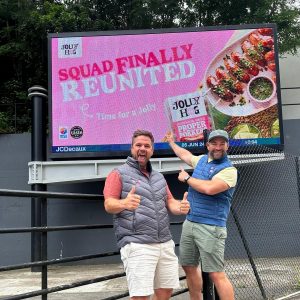
Premiumisation may be a heavily used word in grocery, but for The Jolly Hog it’s not a recent pivot.
“The positioning of the brand has always been in that premium area,” Olly says. “Being in a category that’s dominated by own-label, being super premium has definitely helped us. Having character, having personality, but fundamentally where we sit is that you’ve got to taste good.”
Max agrees that product quality is non-negotiable. “We’ve got a backbone of higher welfare, good quality, good ingredients,” he says. “Ultimately the most important thing is that people buy it, they taste it and they love it. We’ve never lost sight of that.”
Olly says the business is seeing shoppers trade up. “Last year we grew 20 per cent year on year,” he says. “I think that’s because people are trading up and they’re spending more per transaction.”
Keeping the voice founder-led
The same clarity applies to brand voice. The Jolly Hog has a distinct way of talking to consumers, but the founders insist it has not been manufactured by committee. “Authenticity is really important,” says Olly. “We would never be able to sell a product that we’re not fully loving or getting behind.”
As the business has grown, the marketing operation has become more professional, but the founders have fought to keep it feeling close to the source.
“It’s changed from me doing all the social media to a proper team that are really good and know what they’re doing,” Olly says. “But part of the reason we have lots of stuff in-house is because we want to make sure it does feel like us. The minute we start to sound like a corporate beast, we’re in trouble.”
The founders also remain directly involved with buyers, customers and consumers. “We’re in amongst it, whether it’s a buyer’s meeting with a retailer or it’s at a festival,” Olly says. “As soon as we stop doing that bit, I think you do then become a bit detached.”
That closeness also shapes product development. The business has increasingly used surveys to test ideas, including recent collaborations with Marmite and Colman’s.
“We wanted to do a collaborations range for a little while, but it was like, who do you work with?” says Olly. “We put a long list out to our newsletter and asked people in what order they would rank these in terms of a partnership in sausages.”
Marmite and Colman’s came out on top. “We thought, actually, mustard and sausages go so well together, why wouldn’t that work?”
Purpose without the hard sell
Alongside taste and personality, The Jolly Hog has also built a values-led operating model. In 2022, it became the first UK meat business to receive B Corp certification, a milestone the founders are proud of, though they are realistic about how widely understood it is by shoppers.
“How much do people value B Corp? How many people know what it is? I don’t think there’s enough awareness around the UK,” says Olly. “The number one is taste, then welfare, and underneath that there are messages around us being a family business and doing things better for good.”
For retailers and foodservice partners, however, he says the certification carries weight because “they know that you’re operating well as a business” and “trying to do better”. But he is clear that B Corp was not pursued as a sales tool. “Those doing it for a commercial benefit are probably doing it for the wrong reasons.”
The same thinking sits behind Jolly Good Deeds, the company’s community initiative. It began during lockdown, when the business had frozen stock from its restaurant and events operations and no route to sell it.
“A friend of mine works at the local hospital and I offered to come down,” says Max. “That day we were supposed to have 100 people and we did 500. We were like, this is something we really should be doing more of.”
The business continued going back weekly and eventually provided 50,000 Jolly Hog baps over the year. The initiative has since evolved into a monthly programme delivering food boxes to families in need across Bristol through local schools.
“It’s feeding people that otherwise would never be able to buy our products and don’t actually buy protein at all because it’s too expensive,” says Max.
The founders were initially reluctant to discuss the work publicly. “We actually did Jolly Good Deeds for about a year before we talked about it online,” Max says. “We never did this for a LinkedIn post.”
Olly adds: “We don’t mention it on any packaging. It’s not part of our plan at all. It’s not about that.”

What comes next
Looking ahead, The Jolly Hog plans to double the size of the business over the next three years through new product development, more stores within existing retail customers and expansion into new channels, including foodservice.
“It isn’t one big smash-bang thing that’s going to accelerate growth,” says Olly. “It comes from three pots really: NPD, more stores in the customers that we’re in, and new channels.”
The founders also see opportunity beyond the core sausage and bacon ranges. “We’ve been going for 18 years, but there is so much more to go after with this brand,” Olly says. “We’re growing 20 to 25 per cent year-on-year volume.”
It is a long way from a sausage maker in a flat and a loss-making first day at Twickenham Stoop. But the underlying idea remains consistent. Make the food good, keep the brand human, and do not let scale turn personality into polish.

Sign up here to get the latest grocery and food news each morning