Data: January food sales strong despite damp golden quarter

FinanceNews

Food sales increased in January, despite a weak end to 2024 for retail sales, according to new data from the British Retail Consortium (BRC).

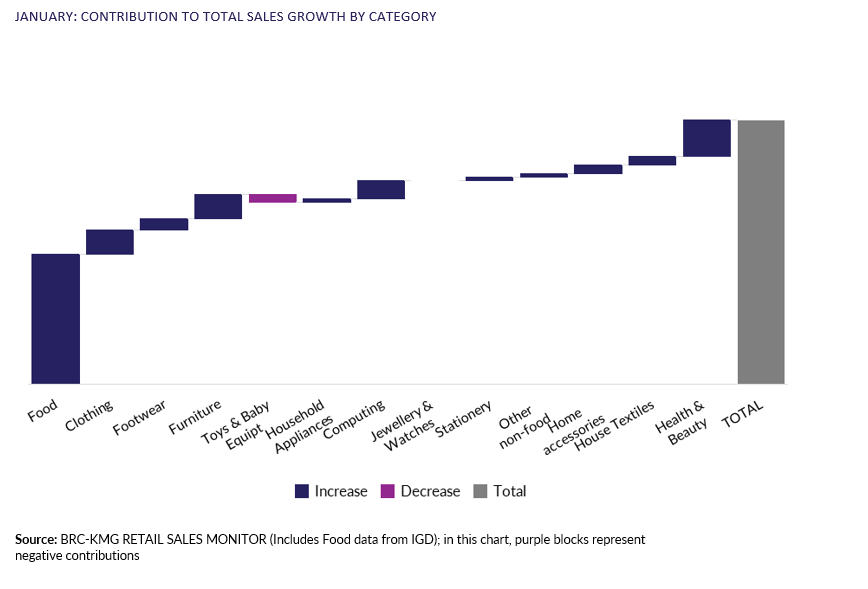
Data from the BRC-KPMG Retail Sales Monitor shows that in the five weeks ending 1 February 2025, UK food sales increased by 2.8% year on year, against a growth of 6.1% for the same period in 2024.

This rise was above the 3-month average growth of 2.3% and below the 12-month average growth of 3%, and slightly higher than the sales increase for all retail of 2.6%. Non-food sales grew by 2.5% over the period.

IGD CEO Sarah Bradbury said shoppers were controlling their spend by a shift towards private label, shown by volume over value and a change in purchasing categories, “as shoppers anticipate further price rises for food and drink”.

KPMG UK head of consumer retail and leisure Linda Ellett said growth over January was “much needed” and ” a welcome start for retailers”, while the sector was still feeling the impact of a dampened golden quarter.


Subscribe to Grocery Gazette for free

Sign up here to get the latest grocery and food news each morning


Ellett said: “Viewed over a three-month period that included Christmas and Black Friday, non-food sales have flatlined. Overall, the golden quarter failed to shine.”

BRC chief executive Helen Dickinson warned that the industry is set to face further inflationary pressure, such as national insurance contributions, higher National Living Wage and the cost of the new packaging levy.

“Many businesses will be left with little choice but to increase prices, and cut investment in jobs and stores. Government can mitigate this by ensuring its proposed business rates reforms do not result in any shop paying more in business rates,” said Dickinson.

Dickinson’s comments follow recent wave of job cuts among the UK leading supermarkets, including Sainsbury’s, which last month announced over 3,000 job cuts as it shut its cafés and remaining hot food and patisserie counters.

It was joined by fellow grocers Morrisons, which cut 200 roles from its retail team, and Tesco, which slashed 400 store and head office jobs. January also saw new Asda chairman Allan Leighton conduct a cost-cutting senior team shakeup, including the axing of 13 regional manager roles.

FinanceNews

Leave a Reply

Your email address will not be published. Required fields are marked *

Fill out this field
Fill out this field
Please enter a valid email address.

FinanceNews

Share:

Data: January food sales strong despite damp golden quarter

Food sales increased in January, despite a weak end to 2024 for retail sales, according to new data from the British Retail Consortium (BRC).

Data from the BRC-KPMG Retail Sales Monitor shows that in the five weeks ending 1 February 2025, UK food sales increased by 2.8% year on year, against a growth of 6.1% for the same period in 2024.

This rise was above the 3-month average growth of 2.3% and below the 12-month average growth of 3%, and slightly higher than the sales increase for all retail of 2.6%. Non-food sales grew by 2.5% over the period.

IGD CEO Sarah Bradbury said shoppers were controlling their spend by a shift towards private label, shown by volume over value and a change in purchasing categories, “as shoppers anticipate further price rises for food and drink”.

KPMG UK head of consumer retail and leisure Linda Ellett said growth over January was “much needed” and ” a welcome start for retailers”, while the sector was still feeling the impact of a dampened golden quarter.


Subscribe to Grocery Gazette for free

Sign up here to get the latest grocery and food news each morning


Ellett said: “Viewed over a three-month period that included Christmas and Black Friday, non-food sales have flatlined. Overall, the golden quarter failed to shine.”
BRC chief executive Helen Dickinson warned that the industry is set to face further inflationary pressure, such as national insurance contributions, higher National Living Wage and the cost of the new packaging levy.

“Many businesses will be left with little choice but to increase prices, and cut investment in jobs and stores. Government can mitigate this by ensuring its proposed business rates reforms do not result in any shop paying more in business rates,” said Dickinson.

Dickinson’s comments follow recent wave of job cuts among the UK leading supermarkets, including Sainsbury’s, which last month announced over 3,000 job cuts as it shut its cafés and remaining hot food and patisserie counters.

It was joined by fellow grocers Morrisons, which cut 200 roles from its retail team, and Tesco, which slashed 400 store and head office jobs. January also saw new Asda chairman Allan Leighton conduct a cost-cutting senior team shakeup, including the axing of 13 regional manager roles.

FinanceNews

Social

SUBSCRIBE TO OUR DAILY NEWSLETTER

  • This field is for validation purposes and should be left unchanged.

Most Read

FinanceNews

Leave a Reply

Your email address will not be published. Required fields are marked *

Fill out this field
Fill out this field
Please enter a valid email address.

RELATED STORIES

Most Read

Latest Feature

Menu

Please enter the verification code sent to your email: