The big grocery trends and winners from Christmas 2024

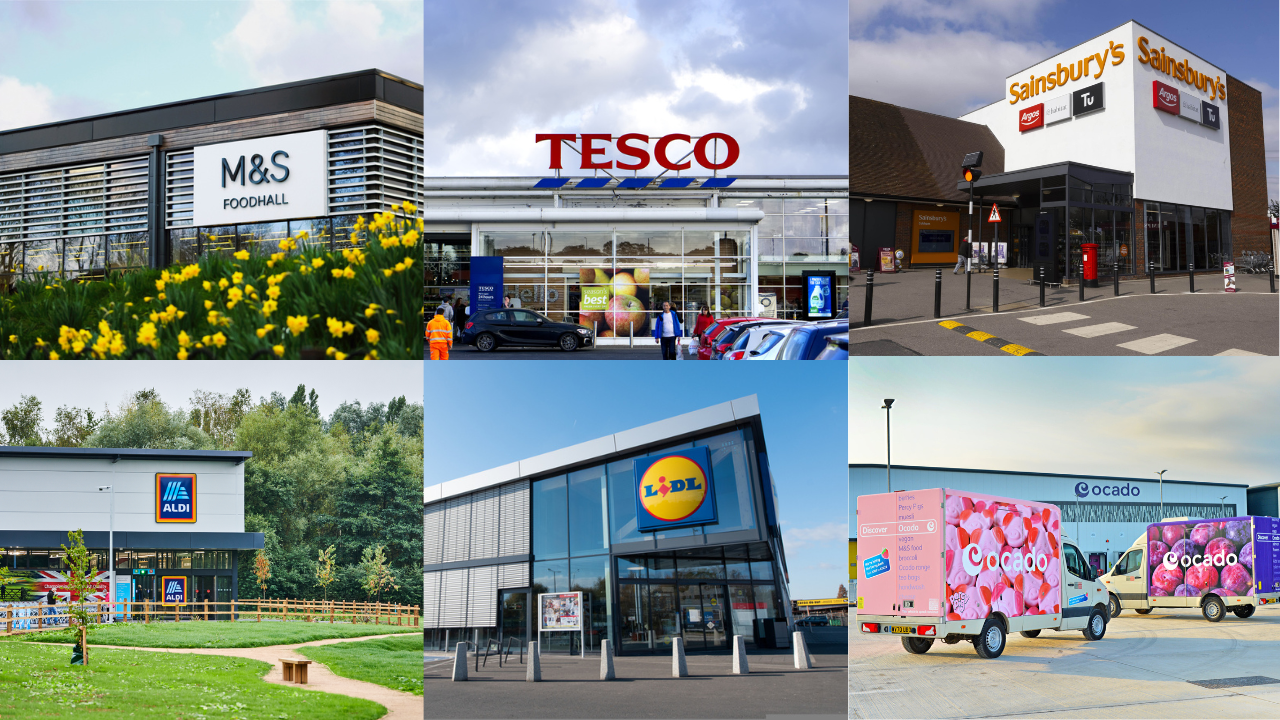
Supermarkets re Christmas
FeaturesSupermarkets

Christmas has been front and centre this week as a raft of supermarkets unveiled their golden quarter results, many of which having reported their “best ever Christmas” trading for 2024.

Kantar describes it as a “solid Christmas at the supermarkets”, with sales surpassing £13 billion during the four weeks of December for the first time ever and household spending on take-home groceries hitting a record high at £460 on average.

Judging by the trading updates released over the past fortnight, many of the big chains finished the year with strong sales growth, with M&S, Tesco and Sainsbury’s all standing in the winners enclosure.

At M&S, it’s food business recorded its “biggest ever day” for sales, jumping 8.7% to £2.5bn for the 13 weeks to 28 December 2024, while sales rose 3.8% at both Tesco and Sainsbury’s.

But what drove the strong Christmas performance across grocery, and what does it tell us about the year ahead?

Premium products take centre stage

According to Kantar, consumers were willing to splash out a little more than usual this Christmas, as premium own-label lines jumped by 14.6% and now account for a record 7% of all sales.

When it came to premium products this Christmas, Sainsbury’s stole the show. Sales of its Taste the Difference range were up 16% on the year and 30% on two years, ahead of all key competitors.

Over the festive season, the supermarket giant launched more than 300 new Taste the Difference products and more than half of big Christmas baskets from the grocer contained at least one of its premium items. 

Sainsbury's festive staples re premium

Meanwhile, Tesco’s Finest sales surged by 15.5%, aided by a range of over 300 Finest festive products, including the grocer’s expanded Finest Chef’s Collection range.

Tesco CEO Ken Murphy says that “over 20 million customers shopped Finest in the period,” which he noted was up 6% on the previous year.

Within this range, the supermarket sold over 1.4m bottle of Finest Prosecco – it’s top selling Finest tipple over Christmas – alongside 18 million Finest pigs in blankets, with Finest Premier Crew Champagne sales up 12.5% year on year, and “great performances” from Finest pâtés, cheeses and turkeys.”

At M&S, its premium Collection range saw double-digit growth in the two weeks to Christmas, as it sold over half a million of its Collection Scottish Salmon En Croute.

The discounters also ramped up their premium offerings.

Lidl, which achieved sales growth of 7% over the Christmas period, saw its premium and party ranges “outperform”, according to GlobalData associate retail director Sofie Willmott, with standout offerings including its Sticky Toffee Crowns and the Christmas Express Belgian chocolate train. 

At Aldi, its premium Specially Selected range jumped by 12% year-on-year, which GlobalData retail analyst Aliyah Siddika attributed to the grocer responding “to evolving consumer preferences by expanding this range to include less traditional meats like goose and duck and seafood dishes like lobster and salmon.”

While premium played a big role in Christmas 2024, UK supermarkets also continued to focus on value.

Tesco’s Murphy says the grocer “went a little bit harder, we really invested in value over Christmas,” while M&S’ Remarksable value range delivered a 14% rise in sales, and its Bigger Pack, Better Value products grew 34%.

A promotional Christmas

While a higher level of promotions is not unusual in the supermarket world at Christmas, 2024’s record grocery sales were driven in large part by the highest levels of promotions seen in three years. According to NIQ, over a quarter (27%) of all FMCG sales were purchased on promotions in the four weeks to 28 December 2024.

NIQ UK head of retailer and business insight Mike Watkins says: “In particular, this was led by Tesco and Sainsbury’s where promotional spending on FMCG increased to 35% and 34% respectively as these retailers engaged shoppers with big loyalty app savings.”

2024 marked Sainsbury’s second festive period with Nectar Prices, and CEO Simon Roberts confirms that the supermarket saw “a record number of customers” using the loyalty scheme at Christmas.

Over the period, the retailer extended Nectar Prices to cover 9,000 products, as customers saved on average £26 on their big Christmas shop.

At Tesco, Murphy says that with the grocer’s Clubcard scheme enabled customers to collect “over half a billion extra points over the period through Clubcard challenges” – the supermarket chain’s personalised reward initiative for the festive season.

To booze or not to booze

Sparkling wine and champagne were the “stars of the festive drinks trolley”, according to Kantar, achieving sales growth of 4.4% at a total of £187m across the month of December.

At Sainsbury’s more than 200 bottles of fizz were sold every minute in key days leading up to Christmas. Tesco sold over 2.8 million bottles of Baileys and rosé sales were up 20% at Ocado, as people “buck[ed] the trend of traditional reds and whites”, according to CEO Hannah Gibson.

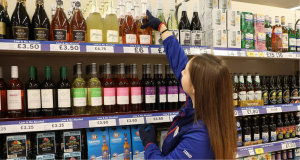
Tesco no and low alcohol drinks

However, Kantar also found that 11% of the population bought a no or low alcohol drink, up from under 10% last year.

At Tesco, no or low alcohol sales were up more than 17% over Christmas, making it a “record Christmas” for the category at grocer.

Ocado also notes the popularity of low and no alcohol drinks during this festive season.

Turning to tradition

While innovation within food ranges was key across the board this Christmas, many UK supermarkets saw shoppers also looking to some more traditional offerings.

At Aldi, shoppers bought around 50 million mince pies and around 25 million British pigs in blankets over the period, while Lidl sold eight million units of stuffing balls and two million litres of gravy.

Murphy says that at Tesco, “frozen turkeys were up quite significantly this year and our meat joints, which we launched early this year [2024], showed very strong growth, up 10%.”

Slow cooked turkey sales were up 22% at M&S, while its double wrapped pigs in blankets and Collection mince pies were also top sellers.

From festive parties to Christmas Eve snacks and Christmas Day starters, party food was also a big winner this year.

At Sainsbury’s, party food sales was up a significant 56% on last year, while GlobalData’s Siddika says that the new items in Lidl’s Partytime range, such as Mini Duck Bao Buns and Arancini Bites, “led to a 32% increase in Partytime sales, making Lidl a go-to destination for all Christmas party essentials”.

She adds that “Aldi also introduced new products into its Specially Selected party food range, with wagyu appetisers, bao buns, and prawn toast.”

Best of British

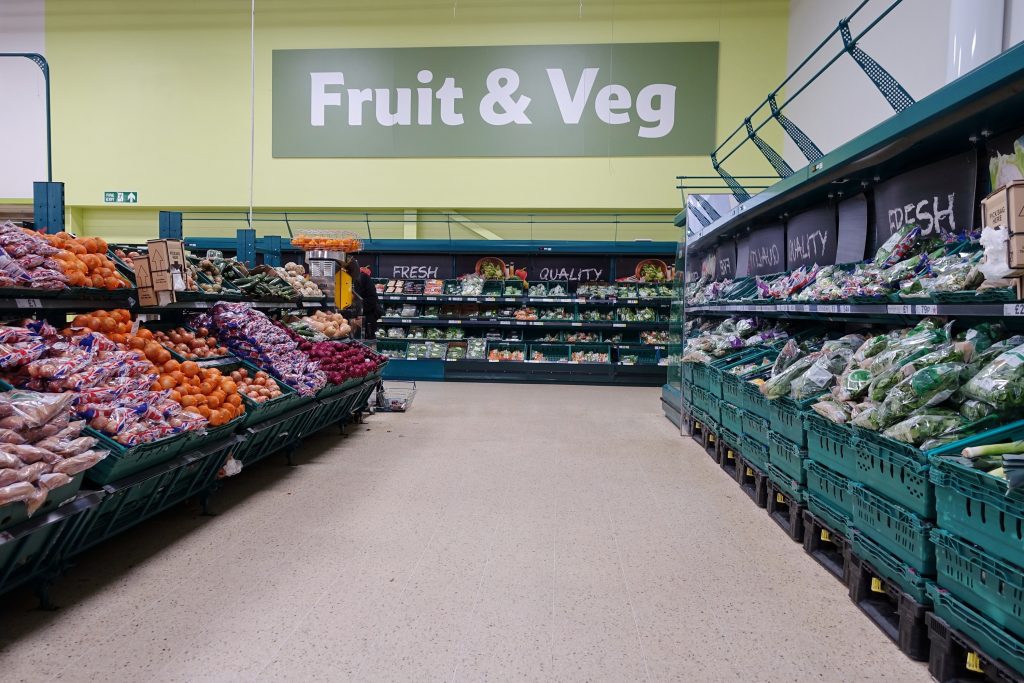
Supermarkets British section

The past year has seen many UK supermarkets encouraging shoppers to opt for British produce, with the likes of Tesco, Morrisons, Sainsbury’s, Co-op, Aldi, Ocado and Waitrose having launched dedicated ‘Best of British’ pages to their websites to signpost consumers to locally sourced produce.

Discounters Aldi and Lidl were two of the supermarkets to continue this commitment through to Christmas.

Lidl increased its British supply base by 20% this holiday season, which saw it sell over 16 million British pigs in blankets, while it sold one British turkey every second between 19 to 24 December.

Siddika says this subsequently meant the discounter was a “destination for turkeys, with shoppers attracted by the assurance of local sourcing, high quality, and good value. This strategy effectively captured the spending of consumers who may have shopped elsewhere for turkey but opted to buy other items at Lidl.”

Aldi also delivered strong sales of British products, with a record 350,000 fresh British turkeys sold, alongside more than 400 tonnes of British beef and almost three million British Brussels sprouts.

The rise of online shopping

Kantar head of retail and consumer insight Fraser McKevitt says that “5.6 million households opted for delivery or click and collect services on at least one occasion”. over the festive period.

He adds: “Online spending for the month reached a record £1.6 billion. This saw Ocado boost its sales by 9.6% over the 12 weeks, taking its overall share to 1.8%.”

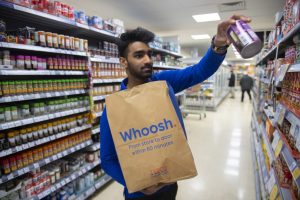
Tesco also benefitted from the online rush with sales up 10.8%, alongside over 1.2 million orders placed via Tesco Whoosh – the grocer’s online rapid delivery service.

Tesco Whoosh delivery

Willmott says that this shows how Tesco is “seizing the opportunity in the online food market”.

“Although the online channel is a small part of the sector and we estimate it accounted for just 10.6% of UK food spend in 2024, the food market is forecast to see the highest online growth in the next five years and Tesco is wise to invest in this channel to capture share,” she explains. 

Ultimately, this Christmas has been a positive one across the board, but with budgets still squeezed, value and promotions will remain important.

Already this year, Tesco boss Murphy says that January has proven to be “intensely competitive” in the grocery sector as consumers “tighten their pockets” post-Christmas period.

With competition rife this New Year, all is set for an interesting 2025.

FeaturesSupermarkets

Leave a Reply

Your email address will not be published. Required fields are marked *

Fill out this field
Fill out this field
Please enter a valid email address.

FeaturesSupermarkets

Share:

The big grocery trends and winners from Christmas 2024
Supermarkets re Christmas
FeaturesSupermarkets

Social

SUBSCRIBE TO OUR DAILY NEWSLETTER

  • This field is for validation purposes and should be left unchanged.

Most Read

Christmas has been front and centre this week as a raft of supermarkets unveiled their golden quarter results, many of which having reported their “best ever Christmas” trading for 2024.

Kantar describes it as a “solid Christmas at the supermarkets”, with sales surpassing £13 billion during the four weeks of December for the first time ever and household spending on take-home groceries hitting a record high at £460 on average.

Judging by the trading updates released over the past fortnight, many of the big chains finished the year with strong sales growth, with M&S, Tesco and Sainsbury’s all standing in the winners enclosure.

At M&S, it’s food business recorded its “biggest ever day” for sales, jumping 8.7% to £2.5bn for the 13 weeks to 28 December 2024, while sales rose 3.8% at both Tesco and Sainsbury’s.

But what drove the strong Christmas performance across grocery, and what does it tell us about the year ahead?

Premium products take centre stage

According to Kantar, consumers were willing to splash out a little more than usual this Christmas, as premium own-label lines jumped by 14.6% and now account for a record 7% of all sales.

When it came to premium products this Christmas, Sainsbury’s stole the show. Sales of its Taste the Difference range were up 16% on the year and 30% on two years, ahead of all key competitors.

Over the festive season, the supermarket giant launched more than 300 new Taste the Difference products and more than half of big Christmas baskets from the grocer contained at least one of its premium items. 

Sainsbury's festive staples re premium

Meanwhile, Tesco’s Finest sales surged by 15.5%, aided by a range of over 300 Finest festive products, including the grocer’s expanded Finest Chef’s Collection range.

Tesco CEO Ken Murphy says that “over 20 million customers shopped Finest in the period,” which he noted was up 6% on the previous year.

Within this range, the supermarket sold over 1.4m bottle of Finest Prosecco – it’s top selling Finest tipple over Christmas – alongside 18 million Finest pigs in blankets, with Finest Premier Crew Champagne sales up 12.5% year on year, and “great performances” from Finest pâtés, cheeses and turkeys.”

At M&S, its premium Collection range saw double-digit growth in the two weeks to Christmas, as it sold over half a million of its Collection Scottish Salmon En Croute.

The discounters also ramped up their premium offerings.

Lidl, which achieved sales growth of 7% over the Christmas period, saw its premium and party ranges “outperform”, according to GlobalData associate retail director Sofie Willmott, with standout offerings including its Sticky Toffee Crowns and the Christmas Express Belgian chocolate train. 

At Aldi, its premium Specially Selected range jumped by 12% year-on-year, which GlobalData retail analyst Aliyah Siddika attributed to the grocer responding “to evolving consumer preferences by expanding this range to include less traditional meats like goose and duck and seafood dishes like lobster and salmon.”

While premium played a big role in Christmas 2024, UK supermarkets also continued to focus on value.

Tesco’s Murphy says the grocer “went a little bit harder, we really invested in value over Christmas,” while M&S’ Remarksable value range delivered a 14% rise in sales, and its Bigger Pack, Better Value products grew 34%.

A promotional Christmas

While a higher level of promotions is not unusual in the supermarket world at Christmas, 2024’s record grocery sales were driven in large part by the highest levels of promotions seen in three years. According to NIQ, over a quarter (27%) of all FMCG sales were purchased on promotions in the four weeks to 28 December 2024.

NIQ UK head of retailer and business insight Mike Watkins says: “In particular, this was led by Tesco and Sainsbury’s where promotional spending on FMCG increased to 35% and 34% respectively as these retailers engaged shoppers with big loyalty app savings.”

2024 marked Sainsbury’s second festive period with Nectar Prices, and CEO Simon Roberts confirms that the supermarket saw “a record number of customers” using the loyalty scheme at Christmas.
Over the period, the retailer extended Nectar Prices to cover 9,000 products, as customers saved on average £26 on their big Christmas shop.

At Tesco, Murphy says that with the grocer’s Clubcard scheme enabled customers to collect “over half a billion extra points over the period through Clubcard challenges” – the supermarket chain’s personalised reward initiative for the festive season.

To booze or not to booze

Sparkling wine and champagne were the “stars of the festive drinks trolley”, according to Kantar, achieving sales growth of 4.4% at a total of £187m across the month of December.

At Sainsbury’s more than 200 bottles of fizz were sold every minute in key days leading up to Christmas. Tesco sold over 2.8 million bottles of Baileys and rosé sales were up 20% at Ocado, as people “buck[ed] the trend of traditional reds and whites”, according to CEO Hannah Gibson.
Tesco no and low alcohol drinks

However, Kantar also found that 11% of the population bought a no or low alcohol drink, up from under 10% last year.

At Tesco, no or low alcohol sales were up more than 17% over Christmas, making it a “record Christmas” for the category at grocer.

Ocado also notes the popularity of low and no alcohol drinks during this festive season.

Turning to tradition

While innovation within food ranges was key across the board this Christmas, many UK supermarkets saw shoppers also looking to some more traditional offerings.

At Aldi, shoppers bought around 50 million mince pies and around 25 million British pigs in blankets over the period, while Lidl sold eight million units of stuffing balls and two million litres of gravy.

Murphy says that at Tesco, “frozen turkeys were up quite significantly this year and our meat joints, which we launched early this year [2024], showed very strong growth, up 10%.”

Slow cooked turkey sales were up 22% at M&S, while its double wrapped pigs in blankets and Collection mince pies were also top sellers.

From festive parties to Christmas Eve snacks and Christmas Day starters, party food was also a big winner this year.

At Sainsbury’s, party food sales was up a significant 56% on last year, while GlobalData’s Siddika says that the new items in Lidl’s Partytime range, such as Mini Duck Bao Buns and Arancini Bites, “led to a 32% increase in Partytime sales, making Lidl a go-to destination for all Christmas party essentials”.

She adds that “Aldi also introduced new products into its Specially Selected party food range, with wagyu appetisers, bao buns, and prawn toast.”

Best of British

Supermarkets British section

The past year has seen many UK supermarkets encouraging shoppers to opt for British produce, with the likes of Tesco, Morrisons, Sainsbury’s, Co-op, Aldi, Ocado and Waitrose having launched dedicated ‘Best of British’ pages to their websites to signpost consumers to locally sourced produce.

Discounters Aldi and Lidl were two of the supermarkets to continue this commitment through to Christmas.

Lidl increased its British supply base by 20% this holiday season, which saw it sell over 16 million British pigs in blankets, while it sold one British turkey every second between 19 to 24 December.

Siddika says this subsequently meant the discounter was a “destination for turkeys, with shoppers attracted by the assurance of local sourcing, high quality, and good value. This strategy effectively captured the spending of consumers who may have shopped elsewhere for turkey but opted to buy other items at Lidl.”

Aldi also delivered strong sales of British products, with a record 350,000 fresh British turkeys sold, alongside more than 400 tonnes of British beef and almost three million British Brussels sprouts.

The rise of online shopping

Kantar head of retail and consumer insight Fraser McKevitt says that “5.6 million households opted for delivery or click and collect services on at least one occasion”. over the festive period.

He adds: “Online spending for the month reached a record £1.6 billion. This saw Ocado boost its sales by 9.6% over the 12 weeks, taking its overall share to 1.8%.”

Tesco also benefitted from the online rush with sales up 10.8%, alongside over 1.2 million orders placed via Tesco Whoosh – the grocer’s online rapid delivery service.
Tesco Whoosh delivery

Willmott says that this shows how Tesco is “seizing the opportunity in the online food market”.

“Although the online channel is a small part of the sector and we estimate it accounted for just 10.6% of UK food spend in 2024, the food market is forecast to see the highest online growth in the next five years and Tesco is wise to invest in this channel to capture share,” she explains. 

Ultimately, this Christmas has been a positive one across the board, but with budgets still squeezed, value and promotions will remain important.

Already this year, Tesco boss Murphy says that January has proven to be “intensely competitive” in the grocery sector as consumers “tighten their pockets” post-Christmas period.

With competition rife this New Year, all is set for an interesting 2025.

FeaturesSupermarkets

Leave a Reply

Your email address will not be published. Required fields are marked *

Fill out this field
Fill out this field
Please enter a valid email address.

RELATED STORIES

Most Read

Latest Feature

Menu

Please enter the verification code sent to your email: