
Abel & Cole MD: ‘Showing why we’re different is our biggest opportunity’

Abel & Cole veg box
FeaturesSupermarkets

Abel & Cole has come a long way since its launch in 1988, growing from a fruit and veg box company to a sustainable online grocer with a vast range of products from fresh and chilled, to pantry, bakery and household items like cleaning products.

For food and drink businesses, the past few years have come with some real highs and lows, but with strong trading and sustainability at the heart of the business, it’s an exciting time for Abel & Cole.

Grocery Gazette sat down with managing director Hannah Shipton to discuss how it plans to lead the way with sustainability, navigate difficult market challenges and why being different is the grocer’s biggest priority in the year ahead.

Abel & Cole managing director Hannah Shipton

Much more than a veg box

While Shipton describes the fruit and veg boxes as a “really important part” of what the company does, she says that it is now “much more than a veg box” firm, with a huge array of products available to compete with other UK supermarkets.

For Abel & Cole, adapting to the ever-changing grocery sector has been vital for its growth.

Back in 2015, the company introduced box swaps, which Shipton says were a “big step forward”, allowing customers to tailor their orders and providing a “real difference to competitors”.

“You could tell us what you didn’t want in your box and that was a real USP because it can be quite challenging if you know no one in your family is going to eat a certain thing.”

She says this also helps to prevent wastage at home – an area Abel & Cole is particularly passionate about.

In 2021, the retailer began working with global environmental action NGO Wrap to track and verify its progress with food waste as it set a target to reduce this by 50% by 2030, and in hitting that reduction, it would mean that no less than 0.8% of food purchased is being wasted.

Already, the grocer has reached 0.15%, which Shipton describes as “quite phenomenal”.

She says that while the food supply chain planning teams are making sure that they’re ordering accurately and have good visibility, Abel & Cole also has a “food guardian” in Andover in Hampshire, where all of its produce arrive and are packed. This individual makes the final decisions of whether food is good enough to be sent to a customer’s door.

“Fundamentally, it’s having someone on the ground who’s making really quick decisions,” Shipton explains.

Food that can’t be used for customers will go to charities for human or animal consumption. Abel & Cole has a partnership with Helen Browning, who is a pork farmer and the CEO of the Soil Association, with the food going “for her pigs to enjoy”.

From 2022 to 2023 the retailer sent 49% more food to food charities, and sent 122% more food to animal feed.

Shipton says: “All of that volume going to animals and food would have probably gone to anaerobic digestion before or landfill, so that was the big switch there.”

Food waste isn’t the only sustainability concern for Abel & Cole. In 2019, it launched its Club Zero range, which is the biggest range of refillable items in the UK. Customers can buy items that pour into their own pots at home and return to the grocer to be washed and refilled again.

While this began with 20 SKUs in areas such as pasta and rice, the initiative now covers nearly 100 SKUs.

“Last year we introduced milk to the Club Zero range. That attracted quite a bit of attention at the time because we were the first people to launch a refillable, washable, plastic milk bottle,” Shipton explains.

The retailer also has a plastic pickup initiative, giving all customers a plastic bag that can hold flexible plastic and is collected every week along with their boxes. The plastic goes on to make building materials and the retailer has so far collected nearly 80,000 tonnes.

It comes after Abel & Cole scrapped its compostable packaging about 18 months ago, which was a “bold move”, according to Shipton.

“We just didn’t believe that the UK is set up to collect and deal with compostable packaging sufficiently. A lot of it was ending up in landfill and not composting properly as it should have done.

“In taking out compostable packaging, obviously that does mean you use all flexible plastic, but we really believe that some food has to be transported in packaging and plastic can keep food in better condition for longer. Plastic definitely has its place as long as you can deal with it appropriately.”

She says that having less plastic alongside a “really wide range of organic fruit and veg that you wouldn’t be able to find in the supermarkets” is a real selling point for the brand.

“We aim to always have at least 77% less plastic in our fruit and veg boxes than buying the equivalent organic fruit and veg from the supermarket. That’s a really key difference and our customers will challenge us if they think there’s too much packaging. So we’re really, really strict with ourselves on that.”

Powering vans with vegetables

While eradicating packaging and food waste are two key parts of Abel & Cole’s sustainability journey, as an online retailer with a need for deliveries, the business is going even further to ensure it’s also keeping an eye on carbon emissions.

In 2021, Abel & Cole became the first organic delivery company in the world to achieve both the carbon neutral international standard and join the UN’s Climate Neutral Now initiative, which it continued to support through to 2023 which maintained its carbon neutral status.

The retailer is always focused on reducing emissions where possible, according to Shipton, however she says that actively reducing them “takes a lot of time and investment”.

“We have still got the same delivery model that we’ve had for years, where we deliver on set days instead of offering customers those timed delivery slots, so we’re not driving up the same street five days a week, multiple times in a day.”

In looking at alternatives to diesel vans, the grocer has retrofitted quite a lot of its delivery vehicles to run on hydro-treated vegetable oil (HVO), which Shipton says has “significantly lower” carbon emissions.

For Abel & Cole, a HVO van results in a 90% reduction in carbon emissions compared to that of a diesel van.

However, looking to go that one step further, the grocer is also introducing electric vehicles.

“We’ve introduced some, and that is our ultimate aim, but it’s a slow process, just in terms of availability of refrigerated electric vehicles and feasibility in terms of where our depots are situated,” she explains.

“A supermarket delivery van might do 20 or 30 deliveries. We do up to 120 in London, 70 in our in other areas. So we are using HVO whilst we roll out our electric fleet.

“By 2028 we’re trying to have all city centres covered with electric vehicles. There’s just a bit of a question mark on the timeline for outside of city centres in more rural areas in terms of the feasibility because all our vehicles are refrigerated as well, which is an extra challenge.”

Navigating market challenges

Like many in the grocery sector, Shipton says the past few years have been a “complete rollercoaster” for Abel & Cole.

“We had that huge peak in Covid where everyone wanted food delivered to their homes. We saw really significant growth, both in terms of our customer numbers and customer spend.

“Obviously we declined as we came out of that peak because people just needed less food in the home less regularly, and we found our new normal in 2022/early 2023 but that was quite a tough year with an onset of the cost-of-living crisis.”

However, she says that for the last 18 months or so, “trading has been really strong”.

“We’ve been back in year on year growth. In 2023, the organic food market grew by about just under 3% and we’re trading broadly in line with that.”

While Shipton says the retailer doesn’t really look at where it stands in terms of market share, it does have direct competitors such as Riverford and Oddbox, and it is also competing with the supermarkets.

“We’re so tiny, we’re not even the size of a Tesco Express store, but if a customer stops shopping with us, they probably just give that bit of the shop back to Ocado or back to Waitrose or Sainsbury’s,” she says.

“Showing why we’re different is our biggest opportunity”

Shipton says that “showing why we’re different and all the positives of shopping with us, that is our biggest opportunity.”

“We’re definitely trying to be bolder in our marketing, to really try and articulate why we’re different, why we really believe in food done right, and the fact that it can be difficult, and it does involve compromises and difficult decisions, but that it’s really worth doing and really important that we all get behind it.”

She adds that “growing the basket” will also be a top priority for Abel & Cole.

“Thinking about what new categories we could move into, what NPD we could do within existing categories, that’s really important, and then to keep customers shopping.

“It’s all about value, but value driven by people really appreciating the service we provide, both from a really high service level, from great quality produce through to all the added extras. And people really trusting us to make the difficult decisions for them. They can shop with a clear conscience.”

Having strong, sustainable values is at the heart of Abel & Cole and with a mission to shout louder about this marks a real opportunity for the grocer to be more competitive and win new shoppers at a time when consumers are becoming more environmentally conscious.

FeaturesSupermarkets

Leave a Reply

Your email address will not be published. Required fields are marked *

Fill out this field
Fill out this field
Please enter a valid email address.

FeaturesSupermarkets

Share:

Abel & Cole MD: ‘Showing why we’re different is our biggest opportunity’

Abel & Cole veg box

Abel & Cole has come a long way since its launch in 1988, growing from a fruit and veg box company to a sustainable online grocer with a vast range of products from fresh and chilled, to pantry, bakery and household items like cleaning products.

For food and drink businesses, the past few years have come with some real highs and lows, but with strong trading and sustainability at the heart of the business, it’s an exciting time for Abel & Cole.

Grocery Gazette sat down with managing director Hannah Shipton to discuss how it plans to lead the way with sustainability, navigate difficult market challenges and why being different is the grocer’s biggest priority in the year ahead.

Abel & Cole managing director Hannah Shipton

Much more than a veg box

While Shipton describes the fruit and veg boxes as a “really important part” of what the company does, she says that it is now “much more than a veg box” firm, with a huge array of products available to compete with other UK supermarkets.

For Abel & Cole, adapting to the ever-changing grocery sector has been vital for its growth.

Back in 2015, the company introduced box swaps, which Shipton says were a “big step forward”, allowing customers to tailor their orders and providing a “real difference to competitors”.

“You could tell us what you didn’t want in your box and that was a real USP because it can be quite challenging if you know no one in your family is going to eat a certain thing.”

She says this also helps to prevent wastage at home – an area Abel & Cole is particularly passionate about.

In 2021, the retailer began working with global environmental action NGO Wrap to track and verify its progress with food waste as it set a target to reduce this by 50% by 2030, and in hitting that reduction, it would mean that no less than 0.8% of food purchased is being wasted.

Already, the grocer has reached 0.15%, which Shipton describes as “quite phenomenal”.

She says that while the food supply chain planning teams are making sure that they’re ordering accurately and have good visibility, Abel & Cole also has a “food guardian” in Andover in Hampshire, where all of its produce arrive and are packed. This individual makes the final decisions of whether food is good enough to be sent to a customer’s door.

“Fundamentally, it’s having someone on the ground who’s making really quick decisions,” Shipton explains.

Food that can’t be used for customers will go to charities for human or animal consumption. Abel & Cole has a partnership with Helen Browning, who is a pork farmer and the CEO of the Soil Association, with the food going “for her pigs to enjoy”.

From 2022 to 2023 the retailer sent 49% more food to food charities, and sent 122% more food to animal feed.

Shipton says: “All of that volume going to animals and food would have probably gone to anaerobic digestion before or landfill, so that was the big switch there.”

Food waste isn’t the only sustainability concern for Abel & Cole. In 2019, it launched its Club Zero range, which is the biggest range of refillable items in the UK. Customers can buy items that pour into their own pots at home and return to the grocer to be washed and refilled again.

While this began with 20 SKUs in areas such as pasta and rice, the initiative now covers nearly 100 SKUs.
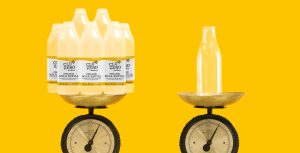
“Last year we introduced milk to the Club Zero range. That attracted quite a bit of attention at the time because we were the first people to launch a refillable, washable, plastic milk bottle,” Shipton explains.

The retailer also has a plastic pickup initiative, giving all customers a plastic bag that can hold flexible plastic and is collected every week along with their boxes. The plastic goes on to make building materials and the retailer has so far collected nearly 80,000 tonnes.

It comes after Abel & Cole scrapped its compostable packaging about 18 months ago, which was a “bold move”, according to Shipton.

“We just didn’t believe that the UK is set up to collect and deal with compostable packaging sufficiently. A lot of it was ending up in landfill and not composting properly as it should have done.

“In taking out compostable packaging, obviously that does mean you use all flexible plastic, but we really believe that some food has to be transported in packaging and plastic can keep food in better condition for longer. Plastic definitely has its place as long as you can deal with it appropriately.”

She says that having less plastic alongside a “really wide range of organic fruit and veg that you wouldn’t be able to find in the supermarkets” is a real selling point for the brand.

“We aim to always have at least 77% less plastic in our fruit and veg boxes than buying the equivalent organic fruit and veg from the supermarket. That’s a really key difference and our customers will challenge us if they think there’s too much packaging. So we’re really, really strict with ourselves on that.”

Powering vans with vegetables
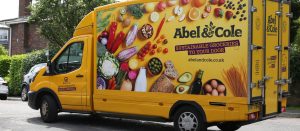
While eradicating packaging and food waste are two key parts of Abel & Cole’s sustainability journey, as an online retailer with a need for deliveries, the business is going even further to ensure it’s also keeping an eye on carbon emissions.

In 2021, Abel & Cole became the first organic delivery company in the world to achieve both the carbon neutral international standard and join the UN’s Climate Neutral Now initiative, which it continued to support through to 2023 which maintained its carbon neutral status.

The retailer is always focused on reducing emissions where possible, according to Shipton, however she says that actively reducing them “takes a lot of time and investment”.

“We have still got the same delivery model that we’ve had for years, where we deliver on set days instead of offering customers those timed delivery slots, so we’re not driving up the same street five days a week, multiple times in a day.”

In looking at alternatives to diesel vans, the grocer has retrofitted quite a lot of its delivery vehicles to run on hydro-treated vegetable oil (HVO), which Shipton says has “significantly lower” carbon emissions.

For Abel & Cole, a HVO van results in a 90% reduction in carbon emissions compared to that of a diesel van.

However, looking to go that one step further, the grocer is also introducing electric vehicles.

“We’ve introduced some, and that is our ultimate aim, but it’s a slow process, just in terms of availability of refrigerated electric vehicles and feasibility in terms of where our depots are situated,” she explains.

“A supermarket delivery van might do 20 or 30 deliveries. We do up to 120 in London, 70 in our in other areas. So we are using HVO whilst we roll out our electric fleet.

“By 2028 we’re trying to have all city centres covered with electric vehicles. There’s just a bit of a question mark on the timeline for outside of city centres in more rural areas in terms of the feasibility because all our vehicles are refrigerated as well, which is an extra challenge.”

Navigating market challenges

Like many in the grocery sector, Shipton says the past few years have been a “complete rollercoaster” for Abel & Cole.

“We had that huge peak in Covid where everyone wanted food delivered to their homes. We saw really significant growth, both in terms of our customer numbers and customer spend.

“Obviously we declined as we came out of that peak because people just needed less food in the home less regularly, and we found our new normal in 2022/early 2023 but that was quite a tough year with an onset of the cost-of-living crisis.”

However, she says that for the last 18 months or so, “trading has been really strong”.

“We’ve been back in year on year growth. In 2023, the organic food market grew by about just under 3% and we’re trading broadly in line with that.”

While Shipton says the retailer doesn’t really look at where it stands in terms of market share, it does have direct competitors such as Riverford and Oddbox, and it is also competing with the supermarkets.

“We’re so tiny, we’re not even the size of a Tesco Express store, but if a customer stops shopping with us, they probably just give that bit of the shop back to Ocado or back to Waitrose or Sainsbury’s,” she says.

“Showing why we’re different is our biggest opportunity”

Shipton says that “showing why we’re different and all the positives of shopping with us, that is our biggest opportunity.”

“We’re definitely trying to be bolder in our marketing, to really try and articulate why we’re different, why we really believe in food done right, and the fact that it can be difficult, and it does involve compromises and difficult decisions, but that it’s really worth doing and really important that we all get behind it.”

She adds that “growing the basket” will also be a top priority for Abel & Cole.

“Thinking about what new categories we could move into, what NPD we could do within existing categories, that’s really important, and then to keep customers shopping.

“It’s all about value, but value driven by people really appreciating the service we provide, both from a really high service level, from great quality produce through to all the added extras. And people really trusting us to make the difficult decisions for them. They can shop with a clear conscience.”

Having strong, sustainable values is at the heart of Abel & Cole and with a mission to shout louder about this marks a real opportunity for the grocer to be more competitive and win new shoppers at a time when consumers are becoming more environmentally conscious.

FeaturesSupermarkets

Social

SUBSCRIBE TO OUR DAILY NEWSLETTER

  • This field is for validation purposes and should be left unchanged.

Most Read

Most Read

FeaturesSupermarkets

Leave a Reply

Your email address will not be published. Required fields are marked *

Fill out this field
Fill out this field
Please enter a valid email address.

RELATED STORIES

Latest Feature

Menu

Please enter the verification code sent to your email: