Growing change: How Weetabix is redefining wheat farming for a net zero future

FeaturesResourcesSustainability

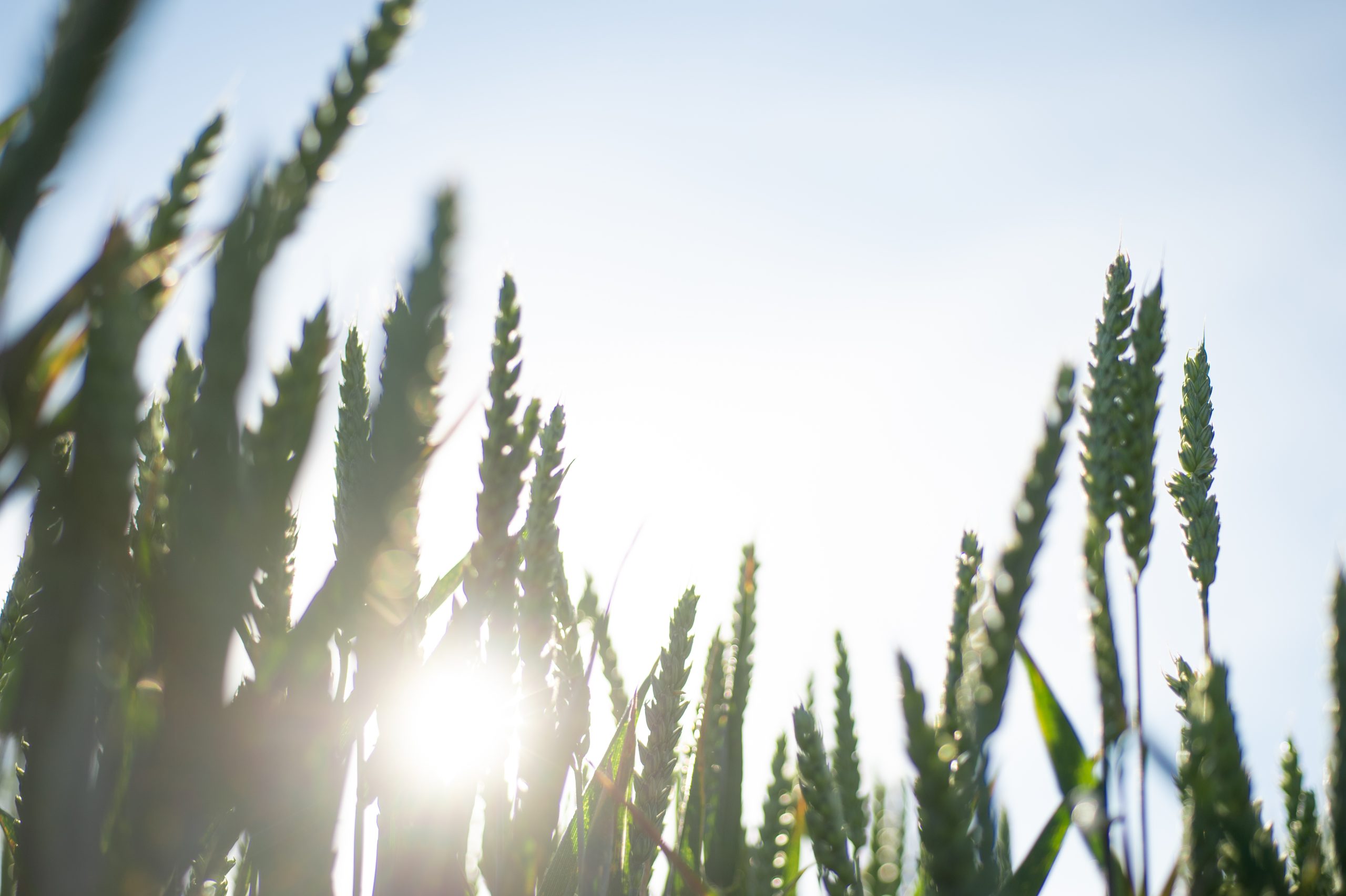
Few brands command as much trust or emotional equity as Weetabix. For most Brits, it’s been a familiar breakfast table staple since childhood – simple, wholesome, and reassuringly unchanged. But behind the iconic yellow box, the business is evolving in bold new ways. At the centre of this transformation lies an ambitious and far-reaching sustainability initiative that could help reshape the future of UK farming.

The Weetabix Net Zero Carbon Wheat project, now entering its fourth year, is doing more than reducing emissions. It’s quietly redefining what a responsible food brand can truly look like and extending the deep bonds it has with vital stakeholders in the process. Led by a close-knit partnership with local farmers, supported by grain merchants ADM and Frontier, and underpinned by rigorous science and transparent measurement, the initiative sets out a roadmap for sustainable wheat production that’s as commercially pragmatic as it is environmentally ambitious.

Peter Chandley, Head of Quality and Food Safety at Weetabix, is one of the initiative’s most passionate advocates. Speaking to Grocery Gazette, he describes the project as both a technical and cultural shift – one driven by ethics as much as economics.

“We want to source sustainable wheat from local farmers for the next 90 years,” he says. “And to do that, we need to make the supply chain more resilient, more environmentally conscious, and more data driven.”

Why wheat, why now?

Wheat isn’t just the core ingredient in Weetabix’s Original product. Whilst it’s vital in the creation of the iconic Weetabix ‘biscuit’ (the oval product we all know so well), it’s also the company’s single biggest source of scope 3 emissions. Recognising this, the brand set out in 2021 to rethink its sourcing strategy from the ground up.

“The project started with a simple but urgent insight,” Chandley explains. “Wheat is our number one raw material, and our number one source of scope 3 emissions. If we’re serious about net zero, we have to tackle it head-on.”

So far, that commitment has translated into a granular, multi-year project involving everything from fertiliser trials and crop rotation strategies to precision farming using probes and drones  In partnership with its Growers Group, a cohort of farmers located within 50 miles of the Weetabix factory, the brand is testing and scaling techniques that could transform cereal farming in the UK.

“This isn’t just a box-ticking exercise for us. It’s about doing the right thing and doing it in a way that makes business sense.”

Data first, farmer-friendly

One of the project’s core challenges has been measurement. In the early stages, Weetabix realised that asking growers to carry out data collection themselves would risk inconsistency, not to mention add a major burden to already time-poor farmers.

Instead, the team brought in external partner Map of Ag, a data-driven agrifood consultancy, to manage the measurement protocols.

“The science is complex, and we didn’t want farmers to feel like they had to become data scientists,” Chandley says. “Map of Ag has taken on the reporting and tracking side, so the growers can focus on the fieldwork.”

With three years of farm-specific data now in hand, the initiative has already begun to show tangible results. The average emissions intensity of the wheat sourced by Weetabix over the last three years stands at 271 KgCO2e/tonne, already around 35% lower than the UK standard. More impressively, trials have shown that emissions as low as 190–200 KgCO2e/tonne are achievable through nitrogen optimisation.

“That’s a 55% reduction compared to the baseline for UK wheat,” Chandley adds. “It shows the potential is real.”

Matt Knight, a member of the Growers’ Group

Innovation in the field

The past 12 months have focused heavily on live field trials. These include adjusting fertiliser application rates, experimenting with green fertilisers, and assessing the benefits of improved soil health and carbon sequestration.

“One farmer trialled different fertiliser rates, another used nitrogen testers to apply exactly what was needed – no more, no less,” says Chandley. “It’s precision agriculture, but with real-world constraints.”

The team has also been careful to balance ambition with economic viability. Any strategy that reduces emissions must also protect growers’ livelihoods.

“The last thing we want is to push an approach that puts a farm at risk financially,” he says. “We’re here to support, not dictate.”

“We’ve modelled the economics of using less fertiliser versus potential yield loss,” Chandley explains. “We can’t cross that line where the crop becomes uneconomic – that’s not sustainable for anyone.”

Community-powered change

The initiative’s success is as much about collaboration as it is about carbon. Weetabix has steadily grown its Pioneer group – a collective of growers leading the trials and sharing best practice. This year, three new farmers joined after hearing about the project through word of mouth.

“That organic growth is important,” says Chandley. “We are privileged to be working with some great growers who are passionate and curious and want to collaborate with other growers. “

The project isn’t just staying within the farm gate either. Weetabix has welcomed supermarket buyers from Asda and Aldi to visit farms and see the sustainability efforts in action. Meanwhile, packaging has been updated with QR codes linking to growers’ stories – nearly 1,000 consumers scanned the code in April 2024 alone.

“We’ve had a great response from the retailers,” Chandley notes. “It helps them see the full picture; that sustainability isn’t just marketing; it’s something we’re living every day.”

“Consumers care,” Chandley says. “They want to know where their food comes from, and we’re proud to show them.”

Growing the next generation

There’s also a strong educational aspect to the project. Later this year, the Weetabix team will be attending New Scientist Live alongside Farmers Weekly to inspire young people about careers in agriculture and sustainability.

“It’s a career path that’s not celebrated enough,” says Chandley. “We want to show how much care, and innovation goes into growing food.”

“If we can get young people excited about sustainable farming, that’s a win not just for Weetabix, but for the planet,” he adds.

What’s next for net zero wheat?

Looking ahead, 2025 will be a pivotal year. The plan is to scale the low-emissions growing standard across a wider base and begin proving that reduced-emissions wheat can be commercially sourced at scale.

Already, the project has contracted 190 hectares of wheat – enough to supply Weetabix’s factory for over a month. More farmers are taking up enhanced crop analytics to fine-tune plant nutrition and boost nitrogen use efficiency.

The end goal is clear. Net zero wheat that supports biodiversity, improves soil health, and sustains farmer livelihoods.

“We want to be in a position where we can include this data in our company carbon footprint,” Chandley says. “It has to meet rigorous standards, and we’re on the right track.”

“There’s no shortcut to real sustainability. It’s about consistency, collaboration, and continuous learning,” he adds.

Legacy in the making

At its core, the initiative is about legacy – not just for the Weetabix brand, but for the broader agricultural landscape in the UK. Chandley may be a technical leader, but his passion for the long game is palpable.

“Weetabix is over 90 years old,” he says. “We want to still be sourcing wheat locally, sustainably, 90 years from now. That’s what drives us.”

It’s a bold vision, but one that feels rooted in reality. From science-backed trials to a tight-knit farmer community, from corporate targets to consumer storytelling, Weetabix is building a model for sustainable food that goes far beyond box-ticking.

And for Chandley and the growers walking the fields every day, it’s all about doing the right thing.

“This is our passion. This is how we make a difference.”

Weetabix’s Net Zero Carbon Wheat initiative continues to demonstrate how legacy brands can lead on sustainability. Not by marketing ambition alone, but by collaborating, measuring, and learning every step of the way.


Subscribe to Grocery Gazette for free

Sign up here to get the latest grocery and food news each morning

FeaturesResourcesSustainability

Leave a Reply

Your email address will not be published. Required fields are marked *

Fill out this field
Fill out this field
Please enter a valid email address.

Growing change: How Weetabix is redefining wheat farming for a net zero future
FeaturesResourcesSustainability

Social

SUBSCRIBE TO OUR DAILY NEWSLETTER

  • This field is for validation purposes and should be left unchanged.

Most Read

Few brands command as much trust or emotional equity as Weetabix. For most Brits, it’s been a familiar breakfast table staple since childhood – simple, wholesome, and reassuringly unchanged. But behind the iconic yellow box, the business is evolving in bold new ways. At the centre of this transformation lies an ambitious and far-reaching sustainability initiative that could help reshape the future of UK farming.

The Weetabix Net Zero Carbon Wheat project, now entering its fourth year, is doing more than reducing emissions. It’s quietly redefining what a responsible food brand can truly look like and extending the deep bonds it has with vital stakeholders in the process. Led by a close-knit partnership with local farmers, supported by grain merchants ADM and Frontier, and underpinned by rigorous science and transparent measurement, the initiative sets out a roadmap for sustainable wheat production that’s as commercially pragmatic as it is environmentally ambitious.

Peter Chandley, Head of Quality and Food Safety at Weetabix, is one of the initiative’s most passionate advocates. Speaking to Grocery Gazette, he describes the project as both a technical and cultural shift – one driven by ethics as much as economics.

“We want to source sustainable wheat from local farmers for the next 90 years,” he says. “And to do that, we need to make the supply chain more resilient, more environmentally conscious, and more data driven.”

Why wheat, why now?

Wheat isn’t just the core ingredient in Weetabix’s Original product. Whilst it’s vital in the creation of the iconic Weetabix ‘biscuit’ (the oval product we all know so well), it’s also the company’s single biggest source of scope 3 emissions. Recognising this, the brand set out in 2021 to rethink its sourcing strategy from the ground up.

“The project started with a simple but urgent insight,” Chandley explains. “Wheat is our number one raw material, and our number one source of scope 3 emissions. If we’re serious about net zero, we have to tackle it head-on.”

So far, that commitment has translated into a granular, multi-year project involving everything from fertiliser trials and crop rotation strategies to precision farming using probes and drones  In partnership with its Growers Group, a cohort of farmers located within 50 miles of the Weetabix factory, the brand is testing and scaling techniques that could transform cereal farming in the UK.

“This isn’t just a box-ticking exercise for us. It’s about doing the right thing and doing it in a way that makes business sense.”

Data first, farmer-friendly

One of the project’s core challenges has been measurement. In the early stages, Weetabix realised that asking growers to carry out data collection themselves would risk inconsistency, not to mention add a major burden to already time-poor farmers.

Instead, the team brought in external partner Map of Ag, a data-driven agrifood consultancy, to manage the measurement protocols.

“The science is complex, and we didn’t want farmers to feel like they had to become data scientists,” Chandley says. “Map of Ag has taken on the reporting and tracking side, so the growers can focus on the fieldwork.”

With three years of farm-specific data now in hand, the initiative has already begun to show tangible results. The average emissions intensity of the wheat sourced by Weetabix over the last three years stands at 271 KgCO2e/tonne, already around 35% lower than the UK standard. More impressively, trials have shown that emissions as low as 190–200 KgCO2e/tonne are achievable through nitrogen optimisation.

“That’s a 55% reduction compared to the baseline for UK wheat,” Chandley adds. “It shows the potential is real.”
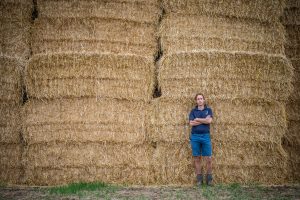
Matt Knight, a member of the Growers’ Group

Innovation in the field

The past 12 months have focused heavily on live field trials. These include adjusting fertiliser application rates, experimenting with green fertilisers, and assessing the benefits of improved soil health and carbon sequestration.

“One farmer trialled different fertiliser rates, another used nitrogen testers to apply exactly what was needed – no more, no less,” says Chandley. “It’s precision agriculture, but with real-world constraints.”

The team has also been careful to balance ambition with economic viability. Any strategy that reduces emissions must also protect growers’ livelihoods.

“The last thing we want is to push an approach that puts a farm at risk financially,” he says. “We’re here to support, not dictate.”

“We’ve modelled the economics of using less fertiliser versus potential yield loss,” Chandley explains. “We can’t cross that line where the crop becomes uneconomic – that’s not sustainable for anyone.”

Community-powered change

The initiative’s success is as much about collaboration as it is about carbon. Weetabix has steadily grown its Pioneer group – a collective of growers leading the trials and sharing best practice. This year, three new farmers joined after hearing about the project through word of mouth.

“That organic growth is important,” says Chandley. “We are privileged to be working with some great growers who are passionate and curious and want to collaborate with other growers. “

The project isn’t just staying within the farm gate either. Weetabix has welcomed supermarket buyers from Asda and Aldi to visit farms and see the sustainability efforts in action. Meanwhile, packaging has been updated with QR codes linking to growers’ stories – nearly 1,000 consumers scanned the code in April 2024 alone.

“We’ve had a great response from the retailers,” Chandley notes. “It helps them see the full picture; that sustainability isn’t just marketing; it’s something we’re living every day.”

“Consumers care,” Chandley says. “They want to know where their food comes from, and we’re proud to show them.”

Growing the next generation

There’s also a strong educational aspect to the project. Later this year, the Weetabix team will be attending New Scientist Live alongside Farmers Weekly to inspire young people about careers in agriculture and sustainability.

“It’s a career path that’s not celebrated enough,” says Chandley. “We want to show how much care, and innovation goes into growing food.”

“If we can get young people excited about sustainable farming, that’s a win not just for Weetabix, but for the planet,” he adds.

What’s next for net zero wheat?

Looking ahead, 2025 will be a pivotal year. The plan is to scale the low-emissions growing standard across a wider base and begin proving that reduced-emissions wheat can be commercially sourced at scale.

Already, the project has contracted 190 hectares of wheat – enough to supply Weetabix’s factory for over a month. More farmers are taking up enhanced crop analytics to fine-tune plant nutrition and boost nitrogen use efficiency.

The end goal is clear. Net zero wheat that supports biodiversity, improves soil health, and sustains farmer livelihoods.

“We want to be in a position where we can include this data in our company carbon footprint,” Chandley says. “It has to meet rigorous standards, and we’re on the right track.”

“There’s no shortcut to real sustainability. It’s about consistency, collaboration, and continuous learning,” he adds.

Legacy in the making

At its core, the initiative is about legacy – not just for the Weetabix brand, but for the broader agricultural landscape in the UK. Chandley may be a technical leader, but his passion for the long game is palpable.

“Weetabix is over 90 years old,” he says. “We want to still be sourcing wheat locally, sustainably, 90 years from now. That’s what drives us.”

It’s a bold vision, but one that feels rooted in reality. From science-backed trials to a tight-knit farmer community, from corporate targets to consumer storytelling, Weetabix is building a model for sustainable food that goes far beyond box-ticking.

And for Chandley and the growers walking the fields every day, it’s all about doing the right thing.

“This is our passion. This is how we make a difference.”

Weetabix’s Net Zero Carbon Wheat initiative continues to demonstrate how legacy brands can lead on sustainability. Not by marketing ambition alone, but by collaborating, measuring, and learning every step of the way.


Subscribe to Grocery Gazette for free

Sign up here to get the latest grocery and food news each morning

FeaturesResourcesSustainability

Leave a Reply

Your email address will not be published. Required fields are marked *

Fill out this field
Fill out this field
Please enter a valid email address.

RELATED STORIES

Most Read

Latest Feature

Menu

Please enter the verification code sent to your email: