What if your biggest shrink problem never reaches the checkout?

Trigo
Resources

You can watch it happen on the footage. A shopper moves through the store, picks up several items, passes the tills — and just keeps walking. No failed payment. No self-checkout alert. No confrontation. The cameras capture it. The trouble is, that doesn’t mean anyone knows it’s happened.

Behind closed doors, one grocery retailer told us they had started to wonder just how much of their shrink was leaving the store this way. They suspected walkouts were responsible for a significant share of their loss — somewhere between 30 per cent to 40 per cent — but, like many retailers, they had never had a reliable way to see the full picture.

That matters because walkouts can hide in plain sight. Trigo’s internal data indicates that while loss events at self-checkout may occur more frequently, a walkout typically involves two to five times more items at once, depending on the store. In other words, the incidents getting less attention may be carrying a disproportionate amount of merchandise straight out of the door.

For the retailer we spoke to, that was what made the problem so infuriating: the evidence was already there, buried in hours of video. They could watch people walk out with unpaid goods again and again. What they hadn’t had was a practical way to turn what the cameras were seeing into something they could actually act on.

The problem isn’t seeing it, it’s finding it

Most grocery stores already have plenty of cameras. What they don’t have is a loss prevention team with enough hours in the day to sit and watch them.

That is the gap Physical AI can help close. Rather than asking a person to hunt through footage for the moment something went wrong, computer vision can understand what is happening in the physical store — following the movement of products from the shelf, through the shopping journey and towards the exit.

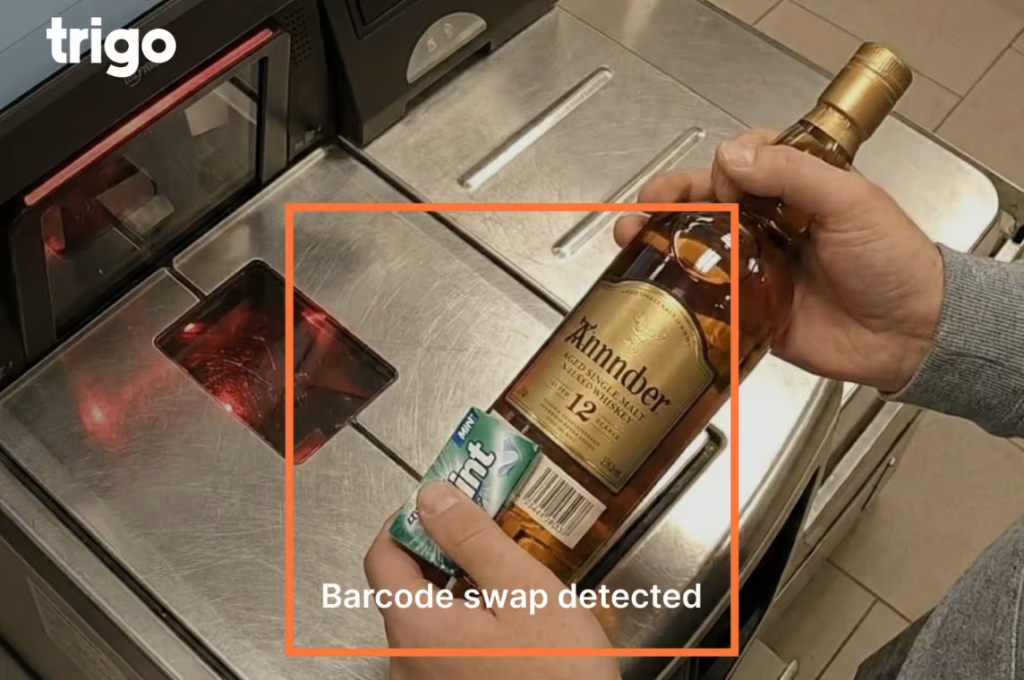
Trigo’s IMPACT platform applies that approach to loss prevention. Using existing store camera infrastructure, it can detect walkouts: incidents where products leave the store without passing through a completed checkout. Instead of starting with hours of footage and searching for the loss, teams can start with the event itself — what was taken, when it happened and the relevant video surrounding it.

For the retailer we spoke to, that changes the conversation. The question is no longer simply, “How much are we losing to walkouts?” It becomes: “Now that we can find them, what can we do about them?”


Subscribe to Grocery Gazette for free

Sign up here to get the latest grocery and food news each morning


Knowing who they are is not the same as knowing what they did

Once you can find the walkouts, another question follows pretty quickly: what about the people who keep doing it?

Facial recognition has an obvious role to play here. For retailers that choose to use it, it can help identify known offenders, connect repeat visits and support investigations into organised retail crime. But there is an important distinction. Facial recognition can tell you who someone might be. On its own, it cannot tell you whether they walked out with £5 or £50 of unpaid groceries — or whether they stole anything at all.

Recent events show why that distinction matters. A major grocer recently had to temporarily pause facial recognition at one store after a shopper was wrongly ejected — an incident the retailer and technology provider attributed to human error rather than the facial recognition system itself. Whatever technology sits behind the decision, getting an intervention wrong is something no retailer wants.

That is why Trigo starts somewhere different: with the product.

Its Physical AI follows merchandise through the store and establishes whether products actually left without being paid for. With IMPACT, Trigo can then turn existing CCTV footage and transaction data into structured investigations, surfacing walkout detections, multi-item walkouts and other deliberate evasion without using facial recognition.

That does not mean retailers have to choose one technology or the other. Where facial recognition or other identity tools form part of a retailer’s existing security stack, they can serve the purpose they were designed for. Trigo provides another piece of the puzzle: evidence of what actually happened to the merchandise. Identity can help answer who? Product accountability answers what did they do?

Stop wondering what is walking out the door

Physical AI changes the problem from “we think this is happening” to “here are the incidents worth investigating.”

Trigo’s IMPACT Investigation solution uses existing CCTV to surface high-value and multi-item walkouts, helping loss prevention teams move from hours of footage to focused, evidence-led investigations.

For the retailer we spoke to, that was the real breakthrough: a practical way to act on what their cameras were already seeing.

You can’t reduce the walkouts you can’t find.

Resources

Leave a Reply

Your email address will not be published. Required fields are marked *

Fill out this field
Fill out this field
Please enter a valid email address.

Resources

Share:

What if your biggest shrink problem never reaches the checkout?

Trigo

You can watch it happen on the footage. A shopper moves through the store, picks up several items, passes the tills — and just keeps walking. No failed payment. No self-checkout alert. No confrontation. The cameras capture it. The trouble is, that doesn’t mean anyone knows it’s happened.

Behind closed doors, one grocery retailer told us they had started to wonder just how much of their shrink was leaving the store this way. They suspected walkouts were responsible for a significant share of their loss — somewhere between 30 per cent to 40 per cent — but, like many retailers, they had never had a reliable way to see the full picture.

That matters because walkouts can hide in plain sight. Trigo’s internal data indicates that while loss events at self-checkout may occur more frequently, a walkout typically involves two to five times more items at once, depending on the store. In other words, the incidents getting less attention may be carrying a disproportionate amount of merchandise straight out of the door.

For the retailer we spoke to, that was what made the problem so infuriating: the evidence was already there, buried in hours of video. They could watch people walk out with unpaid goods again and again. What they hadn’t had was a practical way to turn what the cameras were seeing into something they could actually act on.

The problem isn’t seeing it, it’s finding it

Most grocery stores already have plenty of cameras. What they don’t have is a loss prevention team with enough hours in the day to sit and watch them.

That is the gap Physical AI can help close. Rather than asking a person to hunt through footage for the moment something went wrong, computer vision can understand what is happening in the physical store — following the movement of products from the shelf, through the shopping journey and towards the exit.

Trigo’s IMPACT platform applies that approach to loss prevention. Using existing store camera infrastructure, it can detect walkouts: incidents where products leave the store without passing through a completed checkout. Instead of starting with hours of footage and searching for the loss, teams can start with the event itself — what was taken, when it happened and the relevant video surrounding it.

For the retailer we spoke to, that changes the conversation. The question is no longer simply, “How much are we losing to walkouts?” It becomes: “Now that we can find them, what can we do about them?”


Subscribe to Grocery Gazette for free

Sign up here to get the latest grocery and food news each morning


Knowing who they are is not the same as knowing what they did

Once you can find the walkouts, another question follows pretty quickly: what about the people who keep doing it?

Facial recognition has an obvious role to play here. For retailers that choose to use it, it can help identify known offenders, connect repeat visits and support investigations into organised retail crime. But there is an important distinction. Facial recognition can tell you who someone might be. On its own, it cannot tell you whether they walked out with £5 or £50 of unpaid groceries — or whether they stole anything at all.

Recent events show why that distinction matters. A major grocer recently had to temporarily pause facial recognition at one store after a shopper was wrongly ejected — an incident the retailer and technology provider attributed to human error rather than the facial recognition system itself. Whatever technology sits behind the decision, getting an intervention wrong is something no retailer wants.

That is why Trigo starts somewhere different: with the product.

Its Physical AI follows merchandise through the store and establishes whether products actually left without being paid for. With IMPACT, Trigo can then turn existing CCTV footage and transaction data into structured investigations, surfacing walkout detections, multi-item walkouts and other deliberate evasion without using facial recognition.

That does not mean retailers have to choose one technology or the other. Where facial recognition or other identity tools form part of a retailer’s existing security stack, they can serve the purpose they were designed for. Trigo provides another piece of the puzzle: evidence of what actually happened to the merchandise. Identity can help answer who? Product accountability answers what did they do?

Stop wondering what is walking out the door

Physical AI changes the problem from “we think this is happening” to “here are the incidents worth investigating.”

Trigo’s IMPACT Investigation solution uses existing CCTV to surface high-value and multi-item walkouts, helping loss prevention teams move from hours of footage to focused, evidence-led investigations.

For the retailer we spoke to, that was the real breakthrough: a practical way to act on what their cameras were already seeing.

You can’t reduce the walkouts you can’t find.

Resources

Social

SUBSCRIBE TO OUR DAILY NEWSLETTER

  • This field is for validation purposes and should be left unchanged.

Most Read

Most Read

Resources

Leave a Reply

Your email address will not be published. Required fields are marked *

Fill out this field
Fill out this field
Please enter a valid email address.

RELATED STORIES

Latest Feature

Menu

Please enter the verification code sent to your email: