
Does the future of retail media lie in convenience stores?
Will retail media be bigger than television by the end of the year?
The retail media channel is by no means a new concept, but recent years have seen it evolve rapidly, particularly in the supermarket sector.
One of its chief exponents, retail giant Tesco, last year made the prediction that retail media will be “bigger than TV” by the end of 2025. And while supermarkets, from Tesco and Sainsbury’s to Morrisons and Asda, are all ramping up their retail media operations, Co-op has found that the medium might actually provide brands with even more benefits when applied in convenience stores.
In February a global-first attention study, released by Co-op Media Network (CMN), found that convenience retail media can “supercharge” brand recall four times more effectively than campaigns in larger stores. The rise in effectiveness is credited to increased shopper frequency and the “unique” c-store format.
So how are UK supermarkets tapping into the space? Can retail media be as significant as retailers are hoping and could the future of retail media actually lie in convenience stores?
What is retail media?
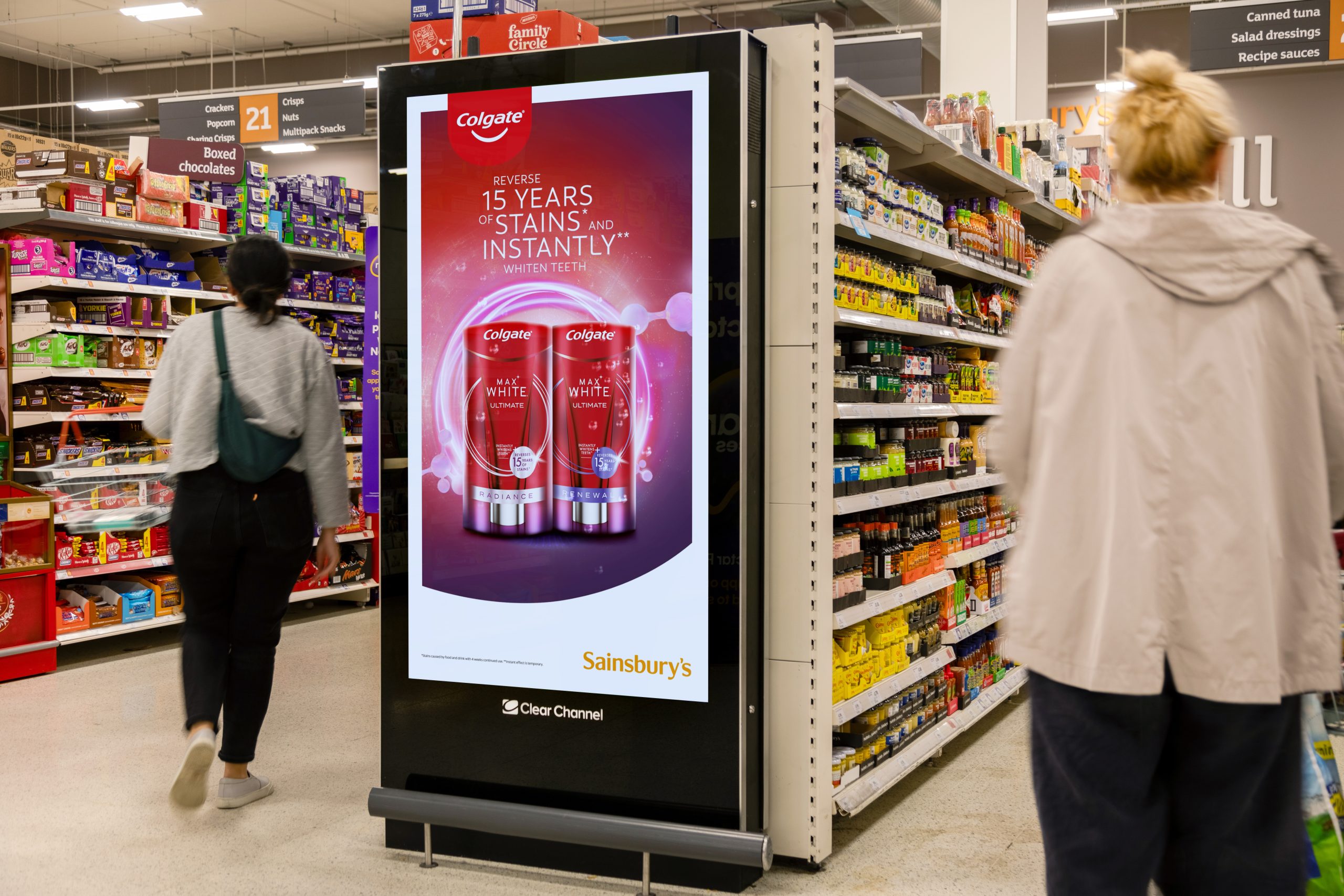
Retail media is the marketing that consumers see at or near their point of purchase, using a retailer’s customer and growing loyalty scheme data to help brands reach shoppers more effectively, with a targeted approach.
Retail media networks are now offering brands new opportunities to reach consumers through channels such as in-store advertising, promotions, and online adverts, while retailers are able to monetise their digital assets.
Which UK supermarkets are paving the way in retail media?
“Tesco and Co-op are setting the benchmark”, according to creative solutions agency Cheil UK’s CEO Chris Camacho.
“Tesco’s bold digital strategy and Co-op’s impressive performance in convenience retail media are clear indicators of the potential in this space. Sainsbury’s and Asda are making progress, but the winners will be those who embrace a data-driven, innovative approach,” he adds.
Last June, Tesco forged a “landmark” retail media partnership with the world’s largest media investment group, GroupM, in a bid to bolster its retail media business. Notably, the supermarket delivered a staggering 7,600 campaigns in the first half of 2024 alone.
More recently, the supermarket giant unveiled a raft of enhancements to its retail media offer, including video advertising online and via its app, store wrapping, and several new media channels.
In January, Co-op launched the UK’s first convenience retail media network and, just this week, launched a first-party data solution called ‘Co-op Compass’. This offers advertisers a quick and effective way to manage their offsite digital advertising. It promises to let them reach curated ready-to-use audiences, enabling “seamless activation across several touch points”.
For marketing agency Art of the Possible managing director Kat Patterson, Tesco and Asda are leading the charge in retail media in the UK. She says they provide “Highly developed platforms that give brands more opportunities to engage”.
In May 2024, Asda debuted a dedicated retail media unit in partnership with software company SMG, which uses first-party customer data to offer brands more “customer-centric media planning” for campaigns and a “more connected omnichannel experience.”
Earlier this year, Asda expanded its offering, using customer information and data from the grocer’s loyalty scheme to create insight-led, creative omnichannel campaigns across targeted touchpoints via social, digital, TV and in-store.
How far can retail media go?

Speaking at an IGD event last year, Tesco cited data from the National Retail Federation, which put worldwide retail media ad spend on track to surpass £80bn ($100bn) by 2025, making it “bigger than TV”.
According to IGD, advertising spend has continued to shift from traditional channels such as linear TV, press, radio, and OOH to retail media, with linear TV “particularly at risk due to changing media consumption habits”.
Camacho says that the idea that retail media will rival traditional TV is a “distinct possibility”.
“If you had told me five years ago that retail media would be competing with TV in terms of scale, I probably would have laughed. However, with the convergence of digital innovation, in-store technology and the discomposure of the linear path to purchase, coupled with a consumer journey that now demands personalised, context-driven experiences, this growth is unstoppable,” he explains.
Patterson agrees that Tesco’s prediction “isn’t far-fetched”, however, she adds that it is also “a sign of the shifting power dynamics in advertising”.
She warns that brands need to be “smart about how they navigate this space, or they risk being ‘supercharged’ in a way that benefits the retailer more than them”.
“Retailers aren’t just selling products; they’re selling access to consumers at the most critical point of purchase. Brands are being pushed to invest more just to be seen in the very stores that profit from their sales – a perfect closed-loop system for retailers, but a costly necessity for brands.”
Does the future of retail media lie in c-stores?

While larger stores might provide more desired space and a higher footfall for brand advertisement, according to Co-op, the future of retail media could actually lie in convenience stores.
Its study, which highlighted that convenience retail media can “supercharge” brand recall by four times compared to campaigns in larger stores, hypothesised that due to the grocer’s smaller store sizes, busy formats and high shopper frequency, advertising messages within convenience stores would be seen and recalled by more people, more often.
In a convenience store, the presence of mixed category aisles also leads to customers encountering a wide variety of advertisements within the same space.
In fact, Co-op chief membership and customer officer Kenyatte Nelson says that in c-stores, retail media is “one of the most powerful brand recall tools”.
Camacho says that Co-op’s findings suggest that the future of retail media “may well lie in smaller, agile formats where every transaction is maximised”.
“With household budgets under constant pressure, these hyper-localised environments offer brands an opportunity to connect with consumers in a meaningful and immediate way, ultimately creating experiences, connection and value for the customer,” he says.
Given these trends, brands should reassess their ad spend, he says: “Shifting investment towards retail media in the convenience channel isn’t just logical, it’s essential”.
In a different study unveiled by Co-op last year, just six months after it initially launched its retail media network, the grocer found that convenience retail media provided an “immediate positive” sales impact in both its stores and in surrounding grocery shops, which can lead to longer term incremental sales uplifts of up to four times the amount of the immediate sales.
In Co-op’s study, one retail media campaign involving a global beer brand generated a brand sales uplift of 12% in its stores and a further 3% in other local stores.
How can brands navigate the changing landscape?
Co-op’s claim that convenience retail media can ‘supercharge’ brand recall is “exactly what supermarkets do to brands – supercharge them, but on their own terms”, Patterson says.
While she notes the frequency of visits to convenience stores makes them a “powerful environment for recall”, Patterson says that brands should be asking: “At what cost? With limited shelf space and high investment requirements, brands risk paying heavily just to hold their ground.”
Camacho adds that while there are benefits to brands investing in convenience retail media, its future is “not about abandoning traditional channels but recognising where true value lies in today’s retail landscape”.
“With so many players launching their own retail media networks, the key for brands is to invest where granular insights and demonstrable ROI [return on investment] are available. In addition, it’s also critical for brands to look at the type of content they are rolling onto their retail media buys.”
IGD says that as convenience represents only 20% of the market but over-indexes in impulse categories such as drinks, confectionery, and snacking, brands in these categories will likely prioritize convenience retailers and cash and carry branches. Conversely, brands such as washing detergents will target the weekly shop and supermarkets, discounters, and online retailers that cater better to that mission.
While Patterson acknowledges that when considering ad spend, brands will “inevitably shift more into retail media, especially in convenience” she notes that the bigger question revolves around who ‘owns’ the audience.
“Right now, it’s the retailers,” she explains. “They control the data, the insights, and the access to shoppers – meaning brands are renting visibility rather than owning relationships.
“The real winners will be those who invest strategically – understanding where their audience is most engaged, rather than blindly spending across every retailer network. The more brands own their data and their audience, the less power retailers have over them.”
With retail media, particularly in the supermarket sector, being ever evolving and rapidly expanding, it’s hard for brands to know exactly where and with who to spend their advertising budget.
While the major UK supermarkets are providing brands with the opportunity for large-scale advertising in-stores, the opportunity that convenience retail media has to “supercharge” brand recall cannot be ignored.
The future of retail media is unlikely to lie in convenience stores alone. But with shopping missions changing and a real opportunity for brands to be noticed in this format, it may not be long before we see other retailers investing a little more heavily in their c-store retail media offers.