
As costs mount, are supermarkets right to scale back on Aldi price match?

Morrisons Aldi Lidl price match
DiscountersFeaturesSupermarkets

Aldi Price Match became a copycat trend among the traditional supermarkets in recent years. However, it seems a u-turn is now taking place.

Earlier this month, Asda kicked off the changes as it completely axed its Aldi and Lidl price match after a mere 12 months. Meanwhile Tesco and Sainsbury’s have trimmed the number of products included in their campaigns.

The changes come despite the retailers having ramped up their schemes over the years. Sainsbury’s became the first UK grocer to price match Aldi in convenience stores, while Morrisons recently expanded its scheme to over 500 everyday essentials.

Why are these retailers scaling back or ditching their schemes, is it the right move and is there a bright future for price matching the discounters?

Why are supermarkets scaling back?

Sainsbury's Aldi price match

Five years ago, Tesco was the first traditional supermarket to launch a ‘Price Match’ scheme, promising to meet Aldi’s prices on a selection of products.

In 2021, Sainsbury’s launched its version of the scheme and, a year later, chief executive Simon Roberts said the grocer would “take on Aldi” and “invest £550m over two years in being more competitive”.

Early last year, Asda became the first supermarket to offer hundreds of weekly essentials at the same price or lower than at both Aldi and Lidl, with Morrisons jumping on the bandwagon a month later.

However, data from private label consultancy IPLC partner Paul Stainton for The Grocer found that the number of products featured in Tesco’s Price Match had fallen from 790 as of August 2024 to 645 this month.

The move has been attributed to a change in methodology. Tesco will now only include products in the campaign where its Aldi equivalent can be found in at least 10 of the discounter’s stores. Previously, five stores were sufficient.

Meanwhile, Sainsbury’s has cut the number of items in its campaign by 75 since November last year, to 606 as of 12 February 2025. A spokesperson attributed this to the fact that much like the price of its individual products, “the number of items in our Aldi Price Match campaign can go up as well as down”.

Speaking to Grocery Gazette, Stainton says that matching Aldi’s prices on so many products week-in, week-out, was “always going to be a big challenge for the supermarkets”.

“Aldi is able to offer very low retail prices because it buys in huge volumes and operates on much lower operational costs due to its smaller stores, more limited range, and smart logistical processes.”

He notes that matching Aldi’s prices on over 600 products will have cost the supermarkets “significant margin loss, and it is no surprise that they have recently scaled back on the number of products featured.”

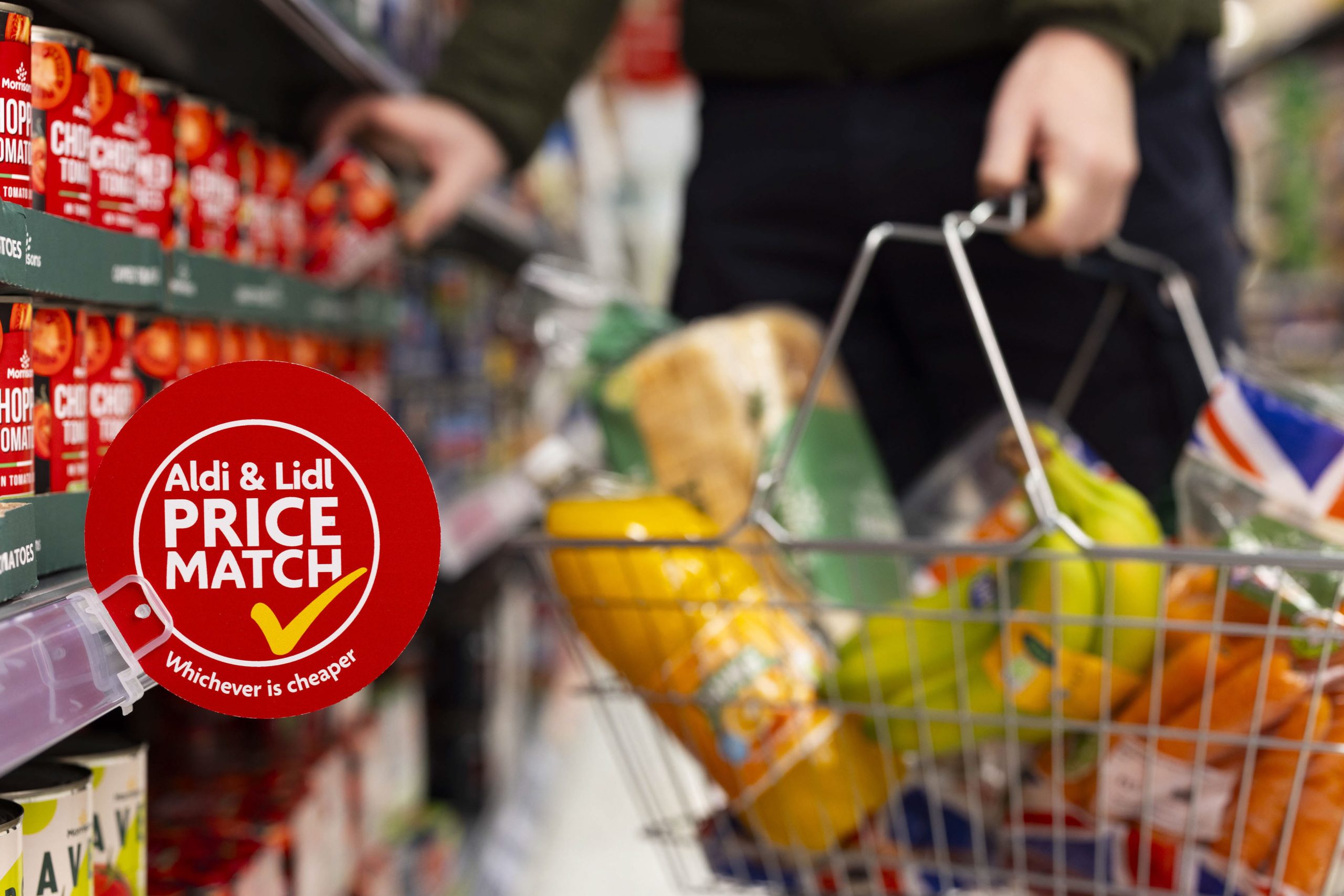
While Morrisons had seemed to be going against the grain, having increased the number of products featured in its Aldi & Lidl Price Match earlier this year to over 500, Stainton said the grocer has “already reduced the number slightly from 518 back in January to 473 today”.

Gartner senior director analyst Matt Moorut adds that while supermarkets are aware of the need to “remain price competitive”, there are now added cost pressures to deal with. The industry is currently £7bn in additional costs as a result of changes including an increase to National Insurance Contributions (NICs) and the Extended Producer Responsibility (EPR) environmental levy.

“There’s a greater focus on resilience compared to market growth than we’ve seen in the past couple of years,” says Moorut.

Ged Futter, founder of industry consultant The Retail Mind, cites other reasons for the move away from price matching. These include supermarkets not being “fully in control of price match” and “shouting about someone else’s value all the time.”

When the campaigns first launched, they caused much discussion as to whether they were helping or hurting the conventional supermarkets. Having Aldi’s name plastered everywhere in-store, and in advertising, risked reminding shoppers that the discounters offered consistently lower prices.

In fact, last May, Aldi went as far as to mock competitors attempts to ‘price match’ its products in a TV ad campaign that shouted about its position as the “cheapest supermarket”.

Aldi TV ad

Aldi ‘Cant Match This’ TV ad

Was Asda right to scrap the scheme entirely?

According to Futter, Asda’s decision to fully step away from its Aldi and Lidl Price Match was “absolutely the right thing to do”.

“Asda wants to get back to its roots, which is all about value, and you can’t do that and be serious about value if you’re price matching somebody else.”

At the time of the axing, a spokesperson for Asda told Grocery Gazette that it is instead focused on its own prices, rather than competition with rival retailers.

“We’ve started 2025 as we mean to go on by cutting prices on thousands of products and there’s much more to come with Rollback,” they said.

Asda Rollback campaign

Asda has unveiled plans to cut prices across more than 4,000 popular products, marking the return of its famous Rollback campaign, as new chairman Allan Leighton aims to lead the supermarket’s price-cut revival.

Stainton adds that this gives Asda “the blank canvas in which to totally push the price message”, adding that from an in-store execution the returning campaign is “very strong”.

Will it have an influence on consumers?

For the average consumer, knowing every promotion a supermarket offers, let alone what specific items are included in them to allow comparison, is a job in itself. Futter says scaling back on Price Match will only have an impact if shoppers “start to see a material increase in prices”.

Stainton agrees that Sainsbury’s and Tesco’s recent reduction in the number of price matched products “won’t affect their shoppers’ loyalty”. He states that they both, “Still have a decent number of price-matched products (over 500), and their Nectar and Clubcard prices are very strong.”

KPMG head of consumer, retail and leisure Linda Ellett also notes that consumer perception of value is not based on price alone.

According to a poll by KPMG, nearly three quarters of consumers say that price is their top purchasing driver for everyday items, though quality is the second most important factor for more than half, followed by convenience and loyalty benefits.

“Supermarket chains scaling back direct price-matching, to focus on other promotional strategies, will be hoping this combination of factors helps to maintain their customer base and market position,” Ellett explains. However, she adds that “We could well see a change of strategy if it doesn’t.”

Is there a future in Aldi price match?

An Aldi Price Match sign in Tesco - re Morrisons price matches Aldi and Lidl

“Time will tell,” says Stainton as he notes that the schemes “do promote the name of the discounters” in stores and to customers.

He suggests an alternative could be to simply match the discounters on price for high volume, everyday products on a like-for-like quality, which he says is something retailers such as Edeka, Rewe and Albert Heijn choose to do across mainland Europe.

“This has also cost them some considerable margin but it has helped stem the growth of the discounters. It also means they are not reminding their customers of the names Aldi or Lidl day-in-day-out.”

Futter doesn’t believe that Tesco and Sainsbury’s will need to scale back any further, as he says the campaign for both is “doing its job”.

“The Aldi match has certainly worked for Sainsbury’s with its price perception. Both have both built up confidence with their customers that their value is strong enough, so all they need then is actually just to maintain that position.”

He says that the traditional supermarkets are “never going to win the battle if all they’re doing is competing on price” and that ramping up loyalty card offerings will help them find a point of difference. This will “have a far bigger impact than just saying we’re the same price as Aldi and Lidl,” he says.

While KPMG’s Ellett warns that the consequence of changes to the price match scheme’s is not yet clear, but adds, “The decision won’t have been taken lightly, especially given that some brands heralded price match as being key to market growth in recent years.”

Ultimately, despite Asda’s move away from the scheme entirely, Morrisons, Tesco and Sainsbury’s continue to be active in price matching the discounters.

Futter, like Stainton, doesn’t believe the era of Aldi Price Match is coming to an end, describing the latest changes simply being a “tweaking of a scheme that’s working”.

What’s right for one retailer isn’t always the best for another. At a time when the entire retail sector has to be particularly cost-conscious, it’s inevitable that some changes will have to be made.

DiscountersFeaturesSupermarkets

Leave a Reply

Your email address will not be published. Required fields are marked *

Fill out this field
Fill out this field
Please enter a valid email address.

As costs mount, are supermarkets right to scale back on Aldi price match?
Morrisons Aldi Lidl price match
DiscountersFeaturesSupermarkets

Social

SUBSCRIBE TO OUR DAILY NEWSLETTER

  • This field is for validation purposes and should be left unchanged.

Most Read

Aldi Price Match became a copycat trend among the traditional supermarkets in recent years. However, it seems a u-turn is now taking place.

Earlier this month, Asda kicked off the changes as it completely axed its Aldi and Lidl price match after a mere 12 months. Meanwhile Tesco and Sainsbury’s have trimmed the number of products included in their campaigns.

The changes come despite the retailers having ramped up their schemes over the years. Sainsbury’s became the first UK grocer to price match Aldi in convenience stores, while Morrisons recently expanded its scheme to over 500 everyday essentials.

Why are these retailers scaling back or ditching their schemes, is it the right move and is there a bright future for price matching the discounters?

Why are supermarkets scaling back?

Sainsbury's Aldi price match

Five years ago, Tesco was the first traditional supermarket to launch a ‘Price Match’ scheme, promising to meet Aldi’s prices on a selection of products.

In 2021, Sainsbury’s launched its version of the scheme and, a year later, chief executive Simon Roberts said the grocer would “take on Aldi” and “invest £550m over two years in being more competitive”.

Early last year, Asda became the first supermarket to offer hundreds of weekly essentials at the same price or lower than at both Aldi and Lidl, with Morrisons jumping on the bandwagon a month later.

However, data from private label consultancy IPLC partner Paul Stainton for The Grocer found that the number of products featured in Tesco’s Price Match had fallen from 790 as of August 2024 to 645 this month.

The move has been attributed to a change in methodology. Tesco will now only include products in the campaign where its Aldi equivalent can be found in at least 10 of the discounter’s stores. Previously, five stores were sufficient.

Meanwhile, Sainsbury’s has cut the number of items in its campaign by 75 since November last year, to 606 as of 12 February 2025. A spokesperson attributed this to the fact that much like the price of its individual products, “the number of items in our Aldi Price Match campaign can go up as well as down”.

Speaking to Grocery Gazette, Stainton says that matching Aldi’s prices on so many products week-in, week-out, was “always going to be a big challenge for the supermarkets”.

“Aldi is able to offer very low retail prices because it buys in huge volumes and operates on much lower operational costs due to its smaller stores, more limited range, and smart logistical processes.”

He notes that matching Aldi’s prices on over 600 products will have cost the supermarkets “significant margin loss, and it is no surprise that they have recently scaled back on the number of products featured.”

While Morrisons had seemed to be going against the grain, having increased the number of products featured in its Aldi & Lidl Price Match earlier this year to over 500, Stainton said the grocer has “already reduced the number slightly from 518 back in January to 473 today”.

Gartner senior director analyst Matt Moorut adds that while supermarkets are aware of the need to “remain price competitive”, there are now added cost pressures to deal with. The industry is currently £7bn in additional costs as a result of changes including an increase to National Insurance Contributions (NICs) and the Extended Producer Responsibility (EPR) environmental levy.

“There’s a greater focus on resilience compared to market growth than we’ve seen in the past couple of years,” says Moorut.

Ged Futter, founder of industry consultant The Retail Mind, cites other reasons for the move away from price matching. These include supermarkets not being “fully in control of price match” and “shouting about someone else’s value all the time.”

When the campaigns first launched, they caused much discussion as to whether they were helping or hurting the conventional supermarkets. Having Aldi’s name plastered everywhere in-store, and in advertising, risked reminding shoppers that the discounters offered consistently lower prices.

In fact, last May, Aldi went as far as to mock competitors attempts to ‘price match’ its products in a TV ad campaign that shouted about its position as the “cheapest supermarket”.

Aldi TV ad

Aldi ‘Cant Match This’ TV ad

Was Asda right to scrap the scheme entirely?

According to Futter, Asda’s decision to fully step away from its Aldi and Lidl Price Match was “absolutely the right thing to do”.

“Asda wants to get back to its roots, which is all about value, and you can’t do that and be serious about value if you’re price matching somebody else.”

At the time of the axing, a spokesperson for Asda told Grocery Gazette that it is instead focused on its own prices, rather than competition with rival retailers.

“We’ve started 2025 as we mean to go on by cutting prices on thousands of products and there’s much more to come with Rollback,” they said.

Asda Rollback campaign

Asda has unveiled plans to cut prices across more than 4,000 popular products, marking the return of its famous Rollback campaign, as new chairman Allan Leighton aims to lead the supermarket’s price-cut revival.

Stainton adds that this gives Asda “the blank canvas in which to totally push the price message”, adding that from an in-store execution the returning campaign is “very strong”.

Will it have an influence on consumers?

For the average consumer, knowing every promotion a supermarket offers, let alone what specific items are included in them to allow comparison, is a job in itself. Futter says scaling back on Price Match will only have an impact if shoppers “start to see a material increase in prices”.

Stainton agrees that Sainsbury’s and Tesco’s recent reduction in the number of price matched products “won’t affect their shoppers’ loyalty”. He states that they both, “Still have a decent number of price-matched products (over 500), and their Nectar and Clubcard prices are very strong.”

KPMG head of consumer, retail and leisure Linda Ellett also notes that consumer perception of value is not based on price alone.

According to a poll by KPMG, nearly three quarters of consumers say that price is their top purchasing driver for everyday items, though quality is the second most important factor for more than half, followed by convenience and loyalty benefits.

“Supermarket chains scaling back direct price-matching, to focus on other promotional strategies, will be hoping this combination of factors helps to maintain their customer base and market position,” Ellett explains. However, she adds that “We could well see a change of strategy if it doesn’t.”

Is there a future in Aldi price match?
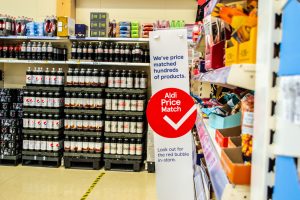
An Aldi Price Match sign in Tesco - re Morrisons price matches Aldi and Lidl

“Time will tell,” says Stainton as he notes that the schemes “do promote the name of the discounters” in stores and to customers.

He suggests an alternative could be to simply match the discounters on price for high volume, everyday products on a like-for-like quality, which he says is something retailers such as Edeka, Rewe and Albert Heijn choose to do across mainland Europe.

“This has also cost them some considerable margin but it has helped stem the growth of the discounters. It also means they are not reminding their customers of the names Aldi or Lidl day-in-day-out.”

Futter doesn’t believe that Tesco and Sainsbury’s will need to scale back any further, as he says the campaign for both is “doing its job”.

“The Aldi match has certainly worked for Sainsbury’s with its price perception. Both have both built up confidence with their customers that their value is strong enough, so all they need then is actually just to maintain that position.”

He says that the traditional supermarkets are “never going to win the battle if all they’re doing is competing on price” and that ramping up loyalty card offerings will help them find a point of difference. This will “have a far bigger impact than just saying we’re the same price as Aldi and Lidl,” he says.

While KPMG’s Ellett warns that the consequence of changes to the price match scheme’s is not yet clear, but adds, “The decision won’t have been taken lightly, especially given that some brands heralded price match as being key to market growth in recent years.”

Ultimately, despite Asda’s move away from the scheme entirely, Morrisons, Tesco and Sainsbury’s continue to be active in price matching the discounters.

Futter, like Stainton, doesn’t believe the era of Aldi Price Match is coming to an end, describing the latest changes simply being a “tweaking of a scheme that’s working”.

What’s right for one retailer isn’t always the best for another. At a time when the entire retail sector has to be particularly cost-conscious, it’s inevitable that some changes will have to be made.

DiscountersFeaturesSupermarkets

Leave a Reply

Your email address will not be published. Required fields are marked *

Fill out this field
Fill out this field
Please enter a valid email address.

RELATED STORIES

Most Read

Latest Feature

Menu

Please enter the verification code sent to your email: