
As supermarkets slash jobs, can pay and discounts boost staff morale?

Retail worker
FeaturesSupermarkets

The past few months have seen a number of challenges in the retail sector, from mounting costs resulting from tax changes set out in the Budget, to fierce competition. The impact of those challenges is now hitting home.

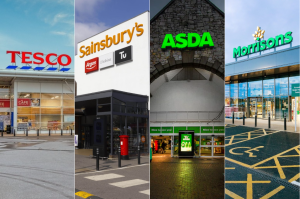
Last month a wave of job cuts hit the supermarket sector, with the UK’s traditional ‘Big 4’ supermarkets leading the surge.

Asda was the first, announcing the axing of 13 regional managers as part of a shake-up designed to improve performance and cut costs.

Sainsbury’s then revealed the loss of over 3,000 jobs as it shut 61 cafes, closed its remaining patisserie, hot food and pizza counters, and updated its central divisions and management structures. The changes come in the second year of a three-year ‘Next Level’ strategy, which aims to deliver £1 billion of operating cost savings.

Just days later, Morrisons unveiled plans to cut over 200 jobs in its retail people team, a month after chief executive Rami Baitieh called on the government to space out the “avalanche of costs” set to hit businesses following the October Budget.

Changes set out in the Budget, from an increase to National Insurance Contributions (NICs) paid by employers to the Extended Producer Responsibility (EPR) environmental levy, are estimated to leave the retail sector facing £7bn in additional costs.

Before the end of the month, Tesco set out plans to slash 400 store and head office jobs, as UK CEO Matthew Barnes said the supermarket searched for “new, more efficient ways of working” as part of a plan to “simplify” the business amid a “more competitive than ever” grocery sector.

As employee confidence in the sector is bruised, we take a look at why supermarkets are cutting jobs, how it’s affecting retail staff and if monetary incentives are enough to boost morale moving forward.

A wave of job cuts

Rising labour costs “have certainly added pressure” on supermarkets, says Retail Economics senior consultant Josh Holmes. He says it is “likely accelerating decisions or confirming changes that were already under consideration”.

“The jump in the National Minimum Wage and higher National Insurance contributions have put further strain on an industry already operating on wafer-thin margins, making some of these tough choices unavoidable.”

From April 2025, employers’ National Insurance Contributions will rise from 13.8% to 15% on a worker’s earnings above £175 per week. The threshold at which employers start paying the tax on each employee’s salary will be reduced from £9,100 per year to £5,000.

Meanwhile, the National Living Wage is set to rise by 6.7% to £12.21 an hour for those over 21 and increase to £10 per hour for 18 to 20-year-olds.

While these changes will add significant costs to retailer’s bills, Holmes say that its “easy to pin all the blame” on the recent Budget while in reality the job cuts across the major grocers are also “part of a longer-term drive for efficiency”.

“Supermarkets regularly review their cost bases, and it’s not unusual to see restructuring at the start of the year as businesses take stock and adjust to shifting shopping habits,” he says. He notes “fierce competition from discounters, changing customer expectations, and the increasing role of technology” as reasons that have played a part in shaping the decisions.

How much of an affect could this have on employee morale?

Suzanna Duke, partnerships director at WorkL –  the world’s largest live workplace happiness database, which was founded by former Waitrose managing director Mark Price – says that job cuts will “significantly” impact the happiness scores of businesses due to the “uncertainty” it creates for employees.

“Frequent job cuts can harm overall satisfaction and productivity in the retail sector. A reduced workforce often means heavier workloads, increasing pressure and unhappiness. Additionally, customer service may suffer due to fewer staff, affecting overall business performance,” she explains.

WorkL currently offers six steps to ‘Workplace Happiness’, one of which is information sharing, a step that Duke describes as “critical” when job cuts happen.

“For a team to perform at its best, transparency is essential. Employees at all levels should have a clear understanding of the business, its strategy, performance, customers, competitors.”

Boosting morale
work-life benefits

GG finds out what work-life benefits are on offer as supermarkets put their money – and their flexible working schemes – where their mouths are.

Just weeks before announcing the job cuts, Sainsbury’s increased staff pay after delivering its ‘biggest ever’ Christmas.

Chief executive Simon Roberts said that the grocer would raise pay for its hourly-paid colleagues by 5% in the year ahead, splitting the pay hike into two separate increases to allow it to navigate the challenging cost environment while ensuring it continues to support staff.

Last month, Asda said that it would be investing in lowering prices further for colleagues by increasing its staff discount to 15%.

Previously 10%, the new discount is a permanent change for colleagues and comes as the supermarket giant described its employees as its “biggest champions”, adding that they are ” key in helping us to meet the needs of hard-working families daily”.

Duke says that financial benefits such as pay rises and staff discounts “play a significant role in employee satisfaction and motivation”.

“Many employees prioritise higher pay as it provides immediate and tangible rewards for their efforts. Additionally, staff discounts can enhance the perceived value of employment, especially in retail.”

Shore Capital retail analyst Clive Black notes: “Firms work in a market and they need to pitch their labour incentives appropriately so that they can remain viable and invest in their propositions.

“It may surprise some people but shareholders invest in firms, with some risk, to generate a capital return, they are not charitable social clubs.”

In terms of improving morale and job satisfaction in the months ahead, Black adds: “Staying viable is quite key in this respect and fundamental to long term job security with all that entails in terms of investing in store and the online propositions, effective central functions, the assortment, price and service levels. Within this context appropriate pay and conditions must rest.”

Tackling rising costs

For those unaffected by job cuts, a boost in pay or staff discount is a welcome benefit.

However, it’s highly unlikely the current round of redundancies is over.

Earlier this week, campaign group the Retail Jobs Alliance (RJA) – whose members include Tesco, Sainsbury’s, Asda and Morrisons – warned that at least 300,000 retail jobs will be lost from physical stores over the next three years as cost pressures mount.

It said this figure could rise further as it had not included tax changes unveiled in the Budget in its calculations.

Despite the likes of Aldi continuing to expand its store estate, and as a result, creating 1,600 jobs this year, Black says that “the competitive intensity of the UK grocery arena means that firms will have to keep a close eye on costs full stop”.

“That so many costs are driven by government is too often overlooked, consumers will also have to pay more for their food for the system to remain viable, to comply, to invest, to employ.”

To ease costs, the RJA is urging the government to give shops an exemption from the higher rate business rates multiplier. It warned that changes to the business rates system, which will see an increase in tax rates for large properties and lower rates for small stores, will ultimately lead to store closures and see more employees leaving the sector.

An RJA spokesperson says this change would provide “much-needed relief for at-risk stores, enabling them to reinvest in their businesses, retain staff, and grow their footprint on the high street.”

Ultimately, Holmes describes supermarkets as “walking a tightrope, balancing the need to keep prices low, maintain service levels, and manage rising costs”.

“Automation and further cost-cutting will inevitably continue, but how retailers handle these changes will be just as important, not only for their long-term competitiveness, but also for the employees and communities they serve.”

It’s undoubtedly a challenging period for businesses and their employees, and while incentives help to instil a more positive environment for staff at UK supermarkets, job cuts, are going to cause a sense of unease.

Without government changes urged for by the retail sector, the raft of “unexpected” costs coming through may inevitably go further than job cuts, trickling down to prices and the consumer.

To ensure customer satisfaction doesn’t falter further, it’s important that supermarkets continue to invest in colleagues where possible to maintain morale and ultimately the shopping experience. In an ever-competitive market, now is not the time for supermarkets to slip up.

FeaturesSupermarkets

1 Comment. Leave new

  • Les 2 years ago

    I’m a grunt at Waitrose. Since the “charities” started getting the unsold yellow ticket stuff, there has been less and less for staff. It was a way to eke out wages (50p over min hourly wage constantly, and no chance of a 36hr a week job, only much shorter shifts available,). However, a job’s a job, so at least I do have 2 days work a week …….

    Reply

Leave a Reply

Your email address will not be published. Required fields are marked *

Fill out this field
Fill out this field
Please enter a valid email address.

FeaturesSupermarkets

Share:

As supermarkets slash jobs, can pay and discounts boost staff morale?

Retail worker

The past few months have seen a number of challenges in the retail sector, from mounting costs resulting from tax changes set out in the Budget, to fierce competition. The impact of those challenges is now hitting home.

Last month a wave of job cuts hit the supermarket sector, with the UK’s traditional ‘Big 4’ supermarkets leading the surge.

Asda was the first, announcing the axing of 13 regional managers as part of a shake-up designed to improve performance and cut costs.

Sainsbury’s then revealed the loss of over 3,000 jobs as it shut 61 cafes, closed its remaining patisserie, hot food and pizza counters, and updated its central divisions and management structures. The changes come in the second year of a three-year ‘Next Level’ strategy, which aims to deliver £1 billion of operating cost savings.

Just days later, Morrisons unveiled plans to cut over 200 jobs in its retail people team, a month after chief executive Rami Baitieh called on the government to space out the “avalanche of costs” set to hit businesses following the October Budget.

Changes set out in the Budget, from an increase to National Insurance Contributions (NICs) paid by employers to the Extended Producer Responsibility (EPR) environmental levy, are estimated to leave the retail sector facing £7bn in additional costs.

Before the end of the month, Tesco set out plans to slash 400 store and head office jobs, as UK CEO Matthew Barnes said the supermarket searched for “new, more efficient ways of working” as part of a plan to “simplify” the business amid a “more competitive than ever” grocery sector.

As employee confidence in the sector is bruised, we take a look at why supermarkets are cutting jobs, how it’s affecting retail staff and if monetary incentives are enough to boost morale moving forward.

A wave of job cuts
Rising labour costs “have certainly added pressure” on supermarkets, says Retail Economics senior consultant Josh Holmes. He says it is “likely accelerating decisions or confirming changes that were already under consideration”.

“The jump in the National Minimum Wage and higher National Insurance contributions have put further strain on an industry already operating on wafer-thin margins, making some of these tough choices unavoidable.”

From April 2025, employers’ National Insurance Contributions will rise from 13.8% to 15% on a worker’s earnings above £175 per week. The threshold at which employers start paying the tax on each employee’s salary will be reduced from £9,100 per year to £5,000.

Meanwhile, the National Living Wage is set to rise by 6.7% to £12.21 an hour for those over 21 and increase to £10 per hour for 18 to 20-year-olds.

While these changes will add significant costs to retailer’s bills, Holmes say that its “easy to pin all the blame” on the recent Budget while in reality the job cuts across the major grocers are also “part of a longer-term drive for efficiency”.

“Supermarkets regularly review their cost bases, and it’s not unusual to see restructuring at the start of the year as businesses take stock and adjust to shifting shopping habits,” he says. He notes “fierce competition from discounters, changing customer expectations, and the increasing role of technology” as reasons that have played a part in shaping the decisions.

How much of an affect could this have on employee morale?

Suzanna Duke, partnerships director at WorkL –  the world’s largest live workplace happiness database, which was founded by former Waitrose managing director Mark Price – says that job cuts will “significantly” impact the happiness scores of businesses due to the “uncertainty” it creates for employees.

“Frequent job cuts can harm overall satisfaction and productivity in the retail sector. A reduced workforce often means heavier workloads, increasing pressure and unhappiness. Additionally, customer service may suffer due to fewer staff, affecting overall business performance,” she explains.

WorkL currently offers six steps to ‘Workplace Happiness’, one of which is information sharing, a step that Duke describes as “critical” when job cuts happen.

“For a team to perform at its best, transparency is essential. Employees at all levels should have a clear understanding of the business, its strategy, performance, customers, competitors.”

Boosting morale

work-life benefits

GG finds out what work-life benefits are on offer as supermarkets put their money – and their flexible working schemes – where their mouths are.

Just weeks before announcing the job cuts, Sainsbury’s increased staff pay after delivering its ‘biggest ever’ Christmas.

Chief executive Simon Roberts said that the grocer would raise pay for its hourly-paid colleagues by 5% in the year ahead, splitting the pay hike into two separate increases to allow it to navigate the challenging cost environment while ensuring it continues to support staff.

Last month, Asda said that it would be investing in lowering prices further for colleagues by increasing its staff discount to 15%.

Previously 10%, the new discount is a permanent change for colleagues and comes as the supermarket giant described its employees as its “biggest champions”, adding that they are ” key in helping us to meet the needs of hard-working families daily”.

Duke says that financial benefits such as pay rises and staff discounts “play a significant role in employee satisfaction and motivation”.

“Many employees prioritise higher pay as it provides immediate and tangible rewards for their efforts. Additionally, staff discounts can enhance the perceived value of employment, especially in retail.”

Shore Capital retail analyst Clive Black notes: “Firms work in a market and they need to pitch their labour incentives appropriately so that they can remain viable and invest in their propositions.

“It may surprise some people but shareholders invest in firms, with some risk, to generate a capital return, they are not charitable social clubs.”

In terms of improving morale and job satisfaction in the months ahead, Black adds: “Staying viable is quite key in this respect and fundamental to long term job security with all that entails in terms of investing in store and the online propositions, effective central functions, the assortment, price and service levels. Within this context appropriate pay and conditions must rest.”

Tackling rising costs

For those unaffected by job cuts, a boost in pay or staff discount is a welcome benefit.

However, it’s highly unlikely the current round of redundancies is over.

Earlier this week, campaign group the Retail Jobs Alliance (RJA) – whose members include Tesco, Sainsbury’s, Asda and Morrisons – warned that at least 300,000 retail jobs will be lost from physical stores over the next three years as cost pressures mount.

It said this figure could rise further as it had not included tax changes unveiled in the Budget in its calculations.

Despite the likes of Aldi continuing to expand its store estate, and as a result, creating 1,600 jobs this year, Black says that “the competitive intensity of the UK grocery arena means that firms will have to keep a close eye on costs full stop”.

“That so many costs are driven by government is too often overlooked, consumers will also have to pay more for their food for the system to remain viable, to comply, to invest, to employ.”

To ease costs, the RJA is urging the government to give shops an exemption from the higher rate business rates multiplier. It warned that changes to the business rates system, which will see an increase in tax rates for large properties and lower rates for small stores, will ultimately lead to store closures and see more employees leaving the sector.

An RJA spokesperson says this change would provide “much-needed relief for at-risk stores, enabling them to reinvest in their businesses, retain staff, and grow their footprint on the high street.”

Ultimately, Holmes describes supermarkets as “walking a tightrope, balancing the need to keep prices low, maintain service levels, and manage rising costs”.

“Automation and further cost-cutting will inevitably continue, but how retailers handle these changes will be just as important, not only for their long-term competitiveness, but also for the employees and communities they serve.”

It’s undoubtedly a challenging period for businesses and their employees, and while incentives help to instil a more positive environment for staff at UK supermarkets, job cuts, are going to cause a sense of unease.

Without government changes urged for by the retail sector, the raft of “unexpected” costs coming through may inevitably go further than job cuts, trickling down to prices and the consumer.

To ensure customer satisfaction doesn’t falter further, it’s important that supermarkets continue to invest in colleagues where possible to maintain morale and ultimately the shopping experience. In an ever-competitive market, now is not the time for supermarkets to slip up.

FeaturesSupermarkets

Social

SUBSCRIBE TO OUR DAILY NEWSLETTER

  • This field is for validation purposes and should be left unchanged.

Most Read

Most Read

FeaturesSupermarkets

1 Comment. Leave new

  • Les 2 years ago

    I’m a grunt at Waitrose. Since the “charities” started getting the unsold yellow ticket stuff, there has been less and less for staff. It was a way to eke out wages (50p over min hourly wage constantly, and no chance of a 36hr a week job, only much shorter shifts available,). However, a job’s a job, so at least I do have 2 days work a week …….

    Reply

Leave a Reply

Your email address will not be published. Required fields are marked *

Fill out this field
Fill out this field
Please enter a valid email address.

RELATED STORIES

Latest Feature

Menu

Please enter the verification code sent to your email: