Co-op AI predictions reveal Brits will eat cricket salads in 30 years time

Co-op has called upon AI to predict what meals could be eaten in the UK in the next 30 years, including cricket salads, lab-grown steaks and azolla burgers.
NewsSupermarkets

Co-op has called upon AI to predict what meals could be eaten in the UK in the next 30 years, including cricket salads, lab-grown steaks and azolla burgers.

An image of lab-grown meat

An image of lab-grown meat

Released as part of Co-op’s ‘Responsible Retailing Report’, the convenience retailer has created AI-generated images to explore the country’s changing views on food ethics and sustainability.

Using experts from FixOurFood and the University of York, the grocer predicted that by 2054 current British classics, such as the traditional Sunday roast of family favourite fish and chips, will be altered or replaced entirely by more adventurous options.

Co-op has said the next 30 years will see farmers and producers more values in society, alongside a rise in urban indoor farming, leading to increase lab-grown meat and seafood. This would see meals where the meat would be cultivated from animal tissues to produce steaks, burgers, tuna and even lobster.


Subscribe to Grocery Gazette for free

Sign up here to get the latest grocery and food news each morning


Co-op has also predicted that the 2050s would see consumers become more health conscious and embrace ‘flexitarian’-based diets, as well as the inclusion of alternative insect proteins including locusts, grasshoppers and crickets becoming popular snacks or main protein element of the main meal.

Other predictions include the impact of climate change seeing the likes of avocado and olives being grown in Surrey, a renewed importance on supporting Fairtrade and the 4-day work week allowing more Brits to have time to cook dishes.

Co-op head of ethics sustainability and policy Cathryn Higgs said: “As a food industry we’ve made a lot of progress, but rightly shoppers are calling on us to do more, with honesty and integrity at the core of our decision making.

“At Co-op, we remain committed to providing our members and customers with responsibly sourced and innovative food options, and we’re proud to champion home-grown produce and source only 100% British fresh meat, poultry and dairy.

“We also have an ambitious climate plan to reduce absolute emissions from our value chain by 48%, and own operations by 66% by 2030, and as part of this we continue to ensure all our packaging is easy to recycle at home or through film collection points in selected Co-op stores.”

NewsSupermarkets

1 Comment. Leave new

  • Bob Levin 2 years ago

    OK. If I’m still around in 30 years time I’ll give it ago. I will be 100.

    Reply

Leave a Reply

Your email address will not be published. Required fields are marked *

Fill out this field
Fill out this field
Please enter a valid email address.

NewsSupermarkets

Share:

Co-op AI predictions reveal Brits will eat cricket salads in 30 years time

Co-op has called upon AI to predict what meals could be eaten in the UK in the next 30 years, including cricket salads, lab-grown steaks and azolla burgers.

Co-op has called upon AI to predict what meals could be eaten in the UK in the next 30 years, including cricket salads, lab-grown steaks and azolla burgers.
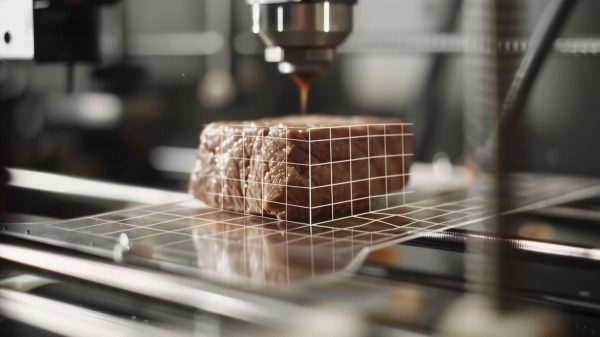
An image of lab-grown meat

An image of lab-grown meat

Released as part of Co-op’s ‘Responsible Retailing Report’, the convenience retailer has created AI-generated images to explore the country’s changing views on food ethics and sustainability.

Using experts from FixOurFood and the University of York, the grocer predicted that by 2054 current British classics, such as the traditional Sunday roast of family favourite fish and chips, will be altered or replaced entirely by more adventurous options.

Co-op has said the next 30 years will see farmers and producers more values in society, alongside a rise in urban indoor farming, leading to increase lab-grown meat and seafood. This would see meals where the meat would be cultivated from animal tissues to produce steaks, burgers, tuna and even lobster.


Subscribe to Grocery Gazette for free

Sign up here to get the latest grocery and food news each morning


Co-op has also predicted that the 2050s would see consumers become more health conscious and embrace ‘flexitarian’-based diets, as well as the inclusion of alternative insect proteins including locusts, grasshoppers and crickets becoming popular snacks or main protein element of the main meal.

Other predictions include the impact of climate change seeing the likes of avocado and olives being grown in Surrey, a renewed importance on supporting Fairtrade and the 4-day work week allowing more Brits to have time to cook dishes.

Co-op head of ethics sustainability and policy Cathryn Higgs said: “As a food industry we’ve made a lot of progress, but rightly shoppers are calling on us to do more, with honesty and integrity at the core of our decision making.

“At Co-op, we remain committed to providing our members and customers with responsibly sourced and innovative food options, and we’re proud to champion home-grown produce and source only 100% British fresh meat, poultry and dairy.

“We also have an ambitious climate plan to reduce absolute emissions from our value chain by 48%, and own operations by 66% by 2030, and as part of this we continue to ensure all our packaging is easy to recycle at home or through film collection points in selected Co-op stores.”

NewsSupermarkets

Social

SUBSCRIBE TO OUR DAILY NEWSLETTER

  • This field is for validation purposes and should be left unchanged.

Most Read

Most Read

NewsSupermarkets

1 Comment. Leave new

  • Bob Levin 2 years ago

    OK. If I’m still around in 30 years time I’ll give it ago. I will be 100.

    Reply

Leave a Reply

Your email address will not be published. Required fields are marked *

Fill out this field
Fill out this field
Please enter a valid email address.

RELATED STORIES

Latest Feature

Menu

Please enter the verification code sent to your email: